
Large and diverse enough to almost be a country in its own right. One for history buffs as well as beach lovers.
First visited in 1979. Most recently visited in 2019.
As Crete is the largest island in Greece and the first island in the country that I visited way back in 1979, it seems appropriate to start my musings there.
With a long history, spectacular scenery and beautiful beaches, Crete has always been ripe for modern tourism development. It has no less than three airports, two of which attract regular international and domestic flights. It is also served by numerous fast hydrofoil and ferry services to Piraeus and many Greek islands. However, it’s location on the southern tip of Greece, means that ferries to and from Piraeus generally take at least 10 hours each way and a lot longer if they stop other islands along the route.
There are five main towns on Crete. All of them are located on the more populated and developed north coast. Moving from west to east, they are Chania, Rethymnon, Heraklion (the island capital), Ayios Nikolaos and Sitia. Ierapetra is the only town of any significant size on the south coast. All of the towns have some historical and scenic interest and most are adjacent to smaller, more recently developed holiday resort areas built beside local beaches.
Parts of Crete have been tastelessly overdeveloped for mass tourism markets, especially along its north east coast. However there are still many quieter corners, as well as more upmarket resorts that retain some of Greek authentic charm. In a nutshell, Crete has something for everyone, be it booze fuelled sunbed factories that party from dusk to dawn, or sleepy rural villages that have changed little in the past two or three centuries.
Given its size and diversity, I have divided Crete into a number of discrete areas rather than try to cover the whole island in one entry. I have been to most parts of the island. However, I cannot claim to know every inch of it intimately. In particular, I have never got round to fully exploring the central part of its south coast. Nonetheless, I hope this may be a helpful initial guide to what is a beautiful and interesting island.
As it doesn’t fit into any specific island group, I have also included eccentric little Gavdos, Crete’s remote, southerly satellite island, in this section.
Heraklion
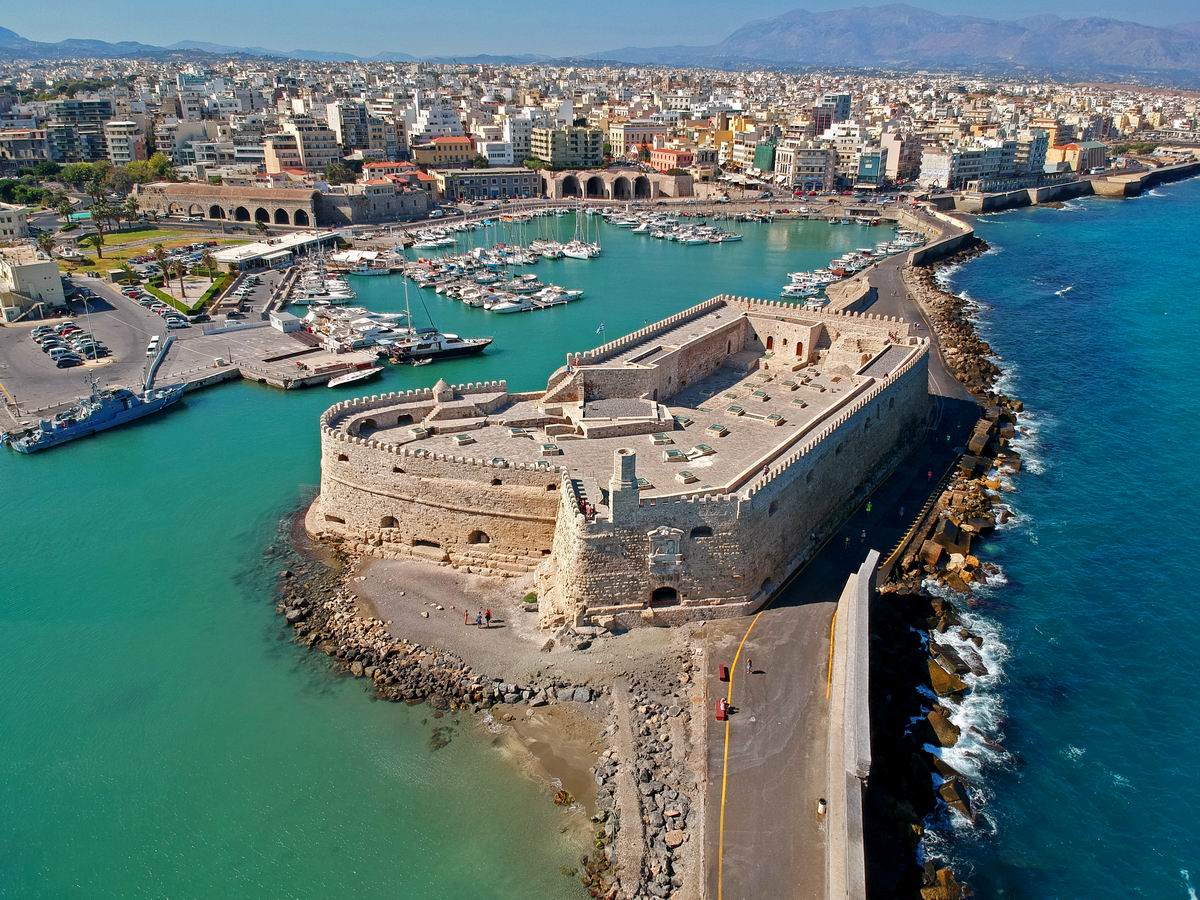
Heraklion – Venetian Fort & Old Harbour
Crete’s capital is a largely modern city of around 150,000 people. It is centrally located on the north coast and is the main air and sea point of access into the island. It is also the main start point for the extensive network of bus services that spread out across the island in all directions.
The airport is only 4 km east of the city and has regular buses into the centre although they stop at around 11 o’clock in the evening. However, taxis are plentiful and relatively cheap.
The modern port area where ferries arrive and depart stretches east from a medieval harbour that is overlooked by a Venetian fort and is now mainly used by small fishing boats and pleasure craft. There is a cluster of mid-range hotels overlooking the modern port. Most visitors head there if arriving late at night or for a single night stay before moving on elsewhere. The two main bus stations are adjacent to most of these hotels. One is for local services in and around the city and the other is the departure point for services to other parts of the island. It’s a short five minute walk between the two.

Heraklion
There are a few restaurants and bars down at the port area, which, like all such localities around the world, has a slightly rough and seedy atmosphere at night, although I personally have never felt uneasy or threatened there. A particularly good traditional waterfront taverna is hidden away behind some warehouses and is where I usually head for the first grilled octopus and Mythos beer of my holiday. It stays open until the last customer leaves. Or so I assume. I’ve never been the last customer in the place despite often arriving after 11pm and leaving well after midnight.
25-Avgoustou, the main street in Heraklion, is a short 10 minute walk west of the new port and climbs uphill from the old harbour. It is lined with lively restaurants and cafes as well as shops, banks, travel agencies and some attractive historic buildings. It ends at Venizelou Square from where more shopping streets run east to Eleftherias, the main city square. This houses the most upmarket shops and restaurants and is adjacent to both the main tourist office and the archaeological museum. There are other museums scattered around the city centre.

Heraklion Archaeological Museum
Knossos, the most significant ancient site on Crete, lies just to the south of Heraklion and is served by regular local buses. A large Minoan palace dating back more than 3,000 years, it was extensively excavated and somewhat controversially partly reconstructed in the early 20th century. To be honest, I’ve never been there myself despite many visits to Crete. I’m not sure why, maybe oversight on my part. However, it is heavily promoted as a must-see element of any visit to the island.
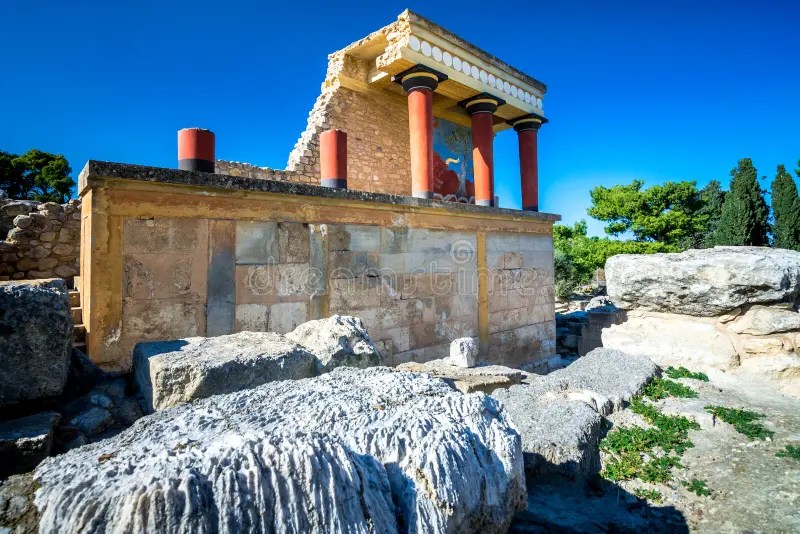
Knossos
Heraklion is maybe not a place to spend a relaxing week or fortnight on a sunbed, although there are some good beaches within a short bus ride. However, the nearby beachside villages are largely nondescript, modern constructs with little character or charm.
For me, Heraklion has always very much been a place to pass through as quickly as possible. That said, it also has more than enough to see and do to justify a short break of two or three nights.
The North East Coast
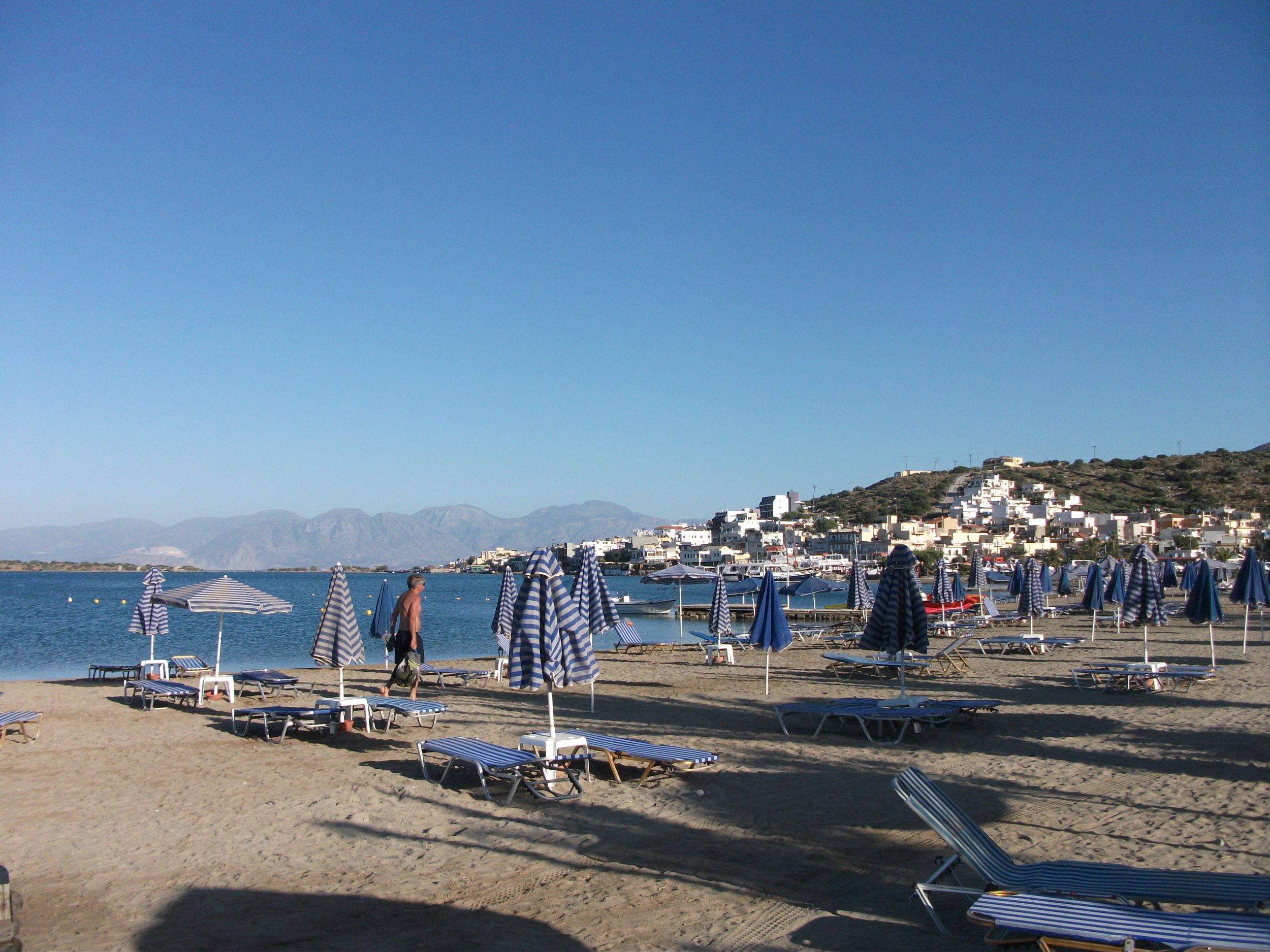
Elounda
The north coast immediately to the east of Heraklion is disparagingly known in some quarters as “the package holiday coast”. Its proximity to Crete’s main airport made it one of the first areas on the island to be developed for mass tourism.
On my first visit to Crete, I initially stayed on this coast at a campsite at Hersonissos, then a quiet fishing village with some early signs of tourism development. At that time, Hersonissos was clearly separated from its neighbouring villages of Stalis and Malia. Nowadays the three villages have merged into each other in an ugly and unedifying sprawl of characterless hotels and apartment blocks, British bars with endless happy hours, and more recently, secretive looking fur outlets catering for the Russian market. Avoid at all costs if looking for peace and quiet.

Ayios Nikolaos
Further east, Ayios Nikolaos is Crete’s fourth biggest town with a population of about 20,000. It’s a town of modern, nondescript apartment blocks attractively located on the Gulf of Mirabello and spreads out from a small lake that local legend claims is bottomless. I can’t vouch for that, but I can confirm that the lakeside is the night time place to go for restaurants and bars. While the coastline at Ayios Nikolaos is extremely picturesque, the beaches tend to be small, cramped and pebbly.
Elounda, a few kilometres to the north, is probably Crete’s most upmarket resort and the road between it and Ayios Nikolaos is lined with a succession of international brand, four and five star resort hotels. However, there are also cheaper places to stay and Elounda itself retains some of its original fishing village character despite the creation of manmade beaches to compensate for the lack of natural sand. Just offshore, the small island of Spinalonga is a popular excursion destination to see its Venetian fortifications, which later housed a leper colony that closed as recently as the 1950s.
Just inland from Ayios Nikolaos, the large village of Neapolis is a particularly attractive access point to the expansive Lassithi plateau, a scenic farming area famed for its whitewashed windmills and dotted with pretty little villages whose houses increasingly pop up on accommodation websites targeting foreign incomers..
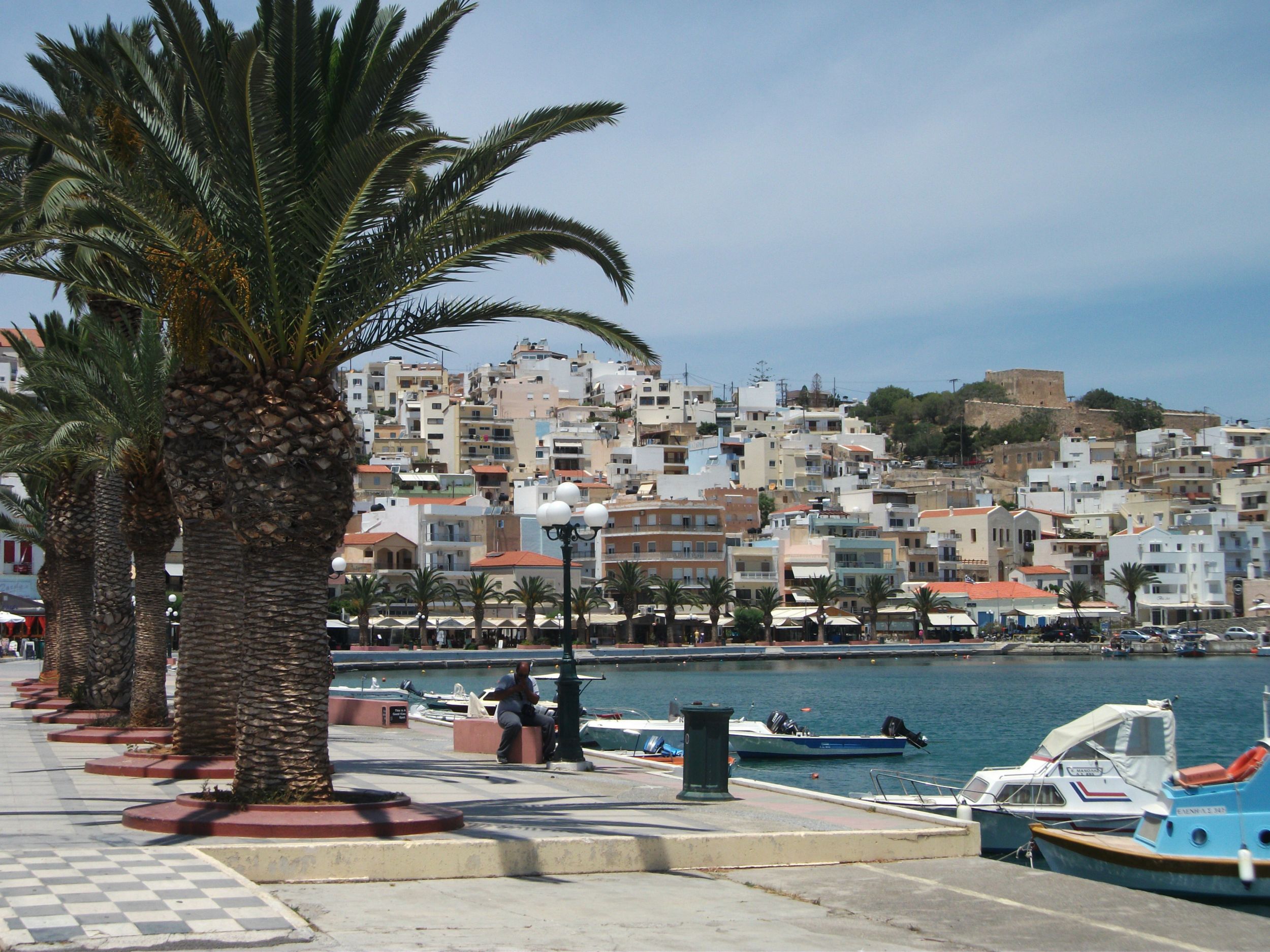
Sitia
From Ayios Nikolaos, the Gulf of Mirabello stretches eastwards past sizeable but often busy sandy beaches towards Sitia, Crete’s fifth biggest town which has an airport and ferry terminus for travel to other islands. Sitia is a cheery modern town with good beaches, a pleasing waterfront and some eccentric local signage for a tourism/sightseeing trail. “This is a good kissing spot” is just one example.
Beyond Sitia lies pretty villages and excellent beaches that tend to attract wild campers and visitors seeking a more authentic Greek atmosphere. The main draw here is the spectacular beach at Vai, one of the most popular day trip destinations on the island. It is famed for its palm trees that reputedly grew from seeds discarded by Roman soldiers. Now it probably has more sunbeds and umbrellas than gently swaying palms but hasn’t lost all of its appeal.
The South East Coast
As you head east from Ayios Nikolaos along the main road beside the Gulf of Mirabello, a road branches south across a narrow neck of land to Ierapetra. This is the largest town on Crete’s south coast and the centre of a rich agricultural area where fruit and veg is grown in a seemingly endless succession of polytunnels.

Ierapetra
Ierapetra has pretensions to being a tourist resort but is a somewhat windswept looking, workaday place with a long straggly beach of rough sand and pebbles, which is backed by a number of undistinguished hotels catering for package holiday markets. The most notable local excursions are the boat trips out to uninhabited Donkey Island (Gadhouronisi in Greek), which lies 10 km offshore and boasts cedar forests and sandy beaches.
To the west of Ierapetra, the main road runs through the pretty coastal village of Myrtos before heading inland towards the foothills of the Dhikti Mountains, which house the Dhiktean Cave where local legend claims Zeus, the king of the ancient gods, was born. Thereafter the road continues inland with a series of southerly cul de sac spurs heading towards quiet coastal villages.
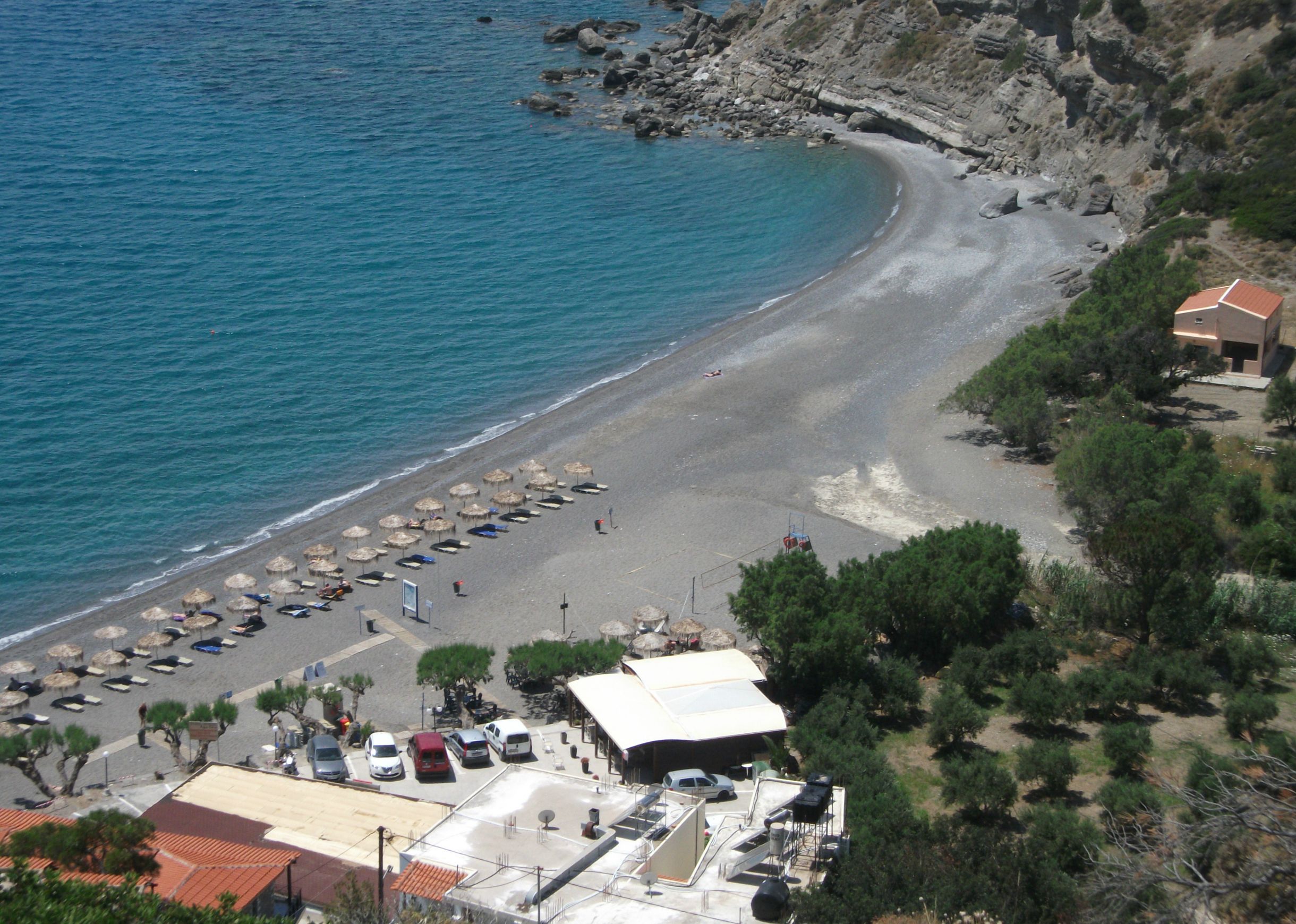
Agia Fotia
The road to the east of Ierapetra snakes its way past the aforementioned polytunnels to the turnoff for Agia Fotia, and its wide beach of rough sand. On my first visit to Greece in 1979, I spent a week wild camping here in the company of an army of German hippies who lit evening campfires and sang Bob Dylan and Leonard Cohen songs as guitars and joints were passed round.
At that time Agia Fotia had one rough taverna that served cold food and warm beer. It has developed a little since then and now has three or four tavernas, a few places to stay and some sunbeds on the beach. However, it is still far from being a fully fledged tourist resort and the beach retains more than enough space for everyone, especially as the hippies appear to have moved on elsewhere.
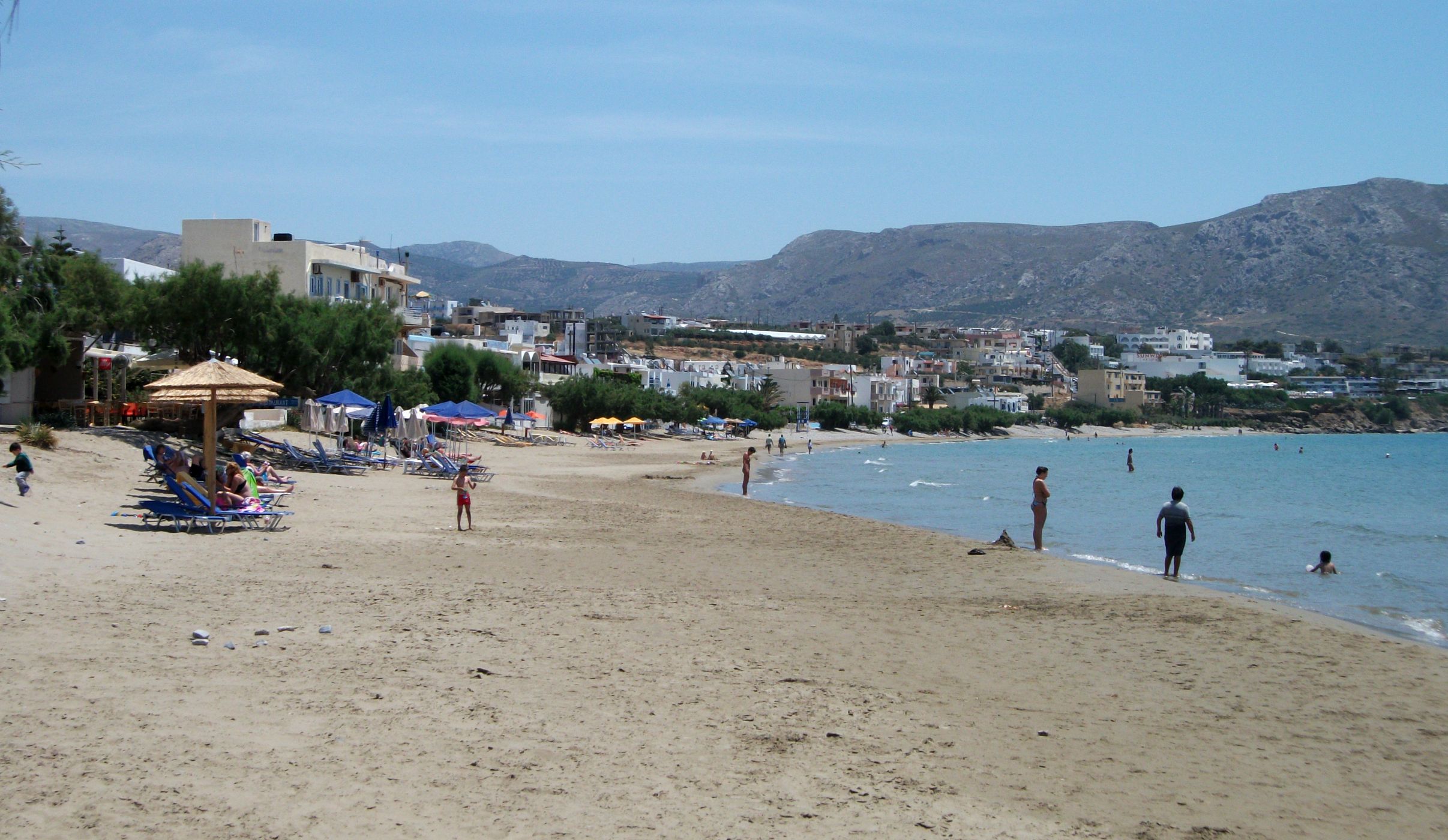
Makriyialos
A few kilometres further east, Makriyialos is the main resort village on this stretch of coast. It’s a bit of a sprawl with no obvious focal point other than the gently shelving beach of particularly soft sand which appears to make it very popular with families. There is a wide choice of places to stay and I enjoyed a tasty fish lunch in one of the beachside tavernas.
Beyond Makryialos, the main road runs through attractive mountain scenery to Sitia on the north coast. There is a turnoff to the coastal village of Xerocambos on the south eastern tip of Crete, after which another road continues north along the less visited east coast to the extensive ruins of the Minoan Palace of Zakros and the twin villages of Ano Zakros (inland) and Kato Zakros (on the coast). Both have a limited amount of visitor accommodation, which can fill up quickly in peak season. Paleokastro to the north is a larger farming village with a good infrastructure of visitor facilities and excellent beaches nearby.
The North West Coast
The north west coast is the most populated part of Crete with a major highway running west from Heraklion towards Rethymnon and Chania, the island’s third and second largest cities respectively. Both are predominantly modern cities with attractive historic areas.
Rethymnon lies about an hour west of Herkalion by bus and spreads out from a huge Venetian fortress that stands guard over its waterfront. A few steps inland is a beautiful area of narrow lanes full of tightly packed shops and tavernas. The feel of a Turkish bazaar is emphasised when you stumble across fountains and a mosque. This is where to head in the evenings although the quality of food can be questionable in some places.
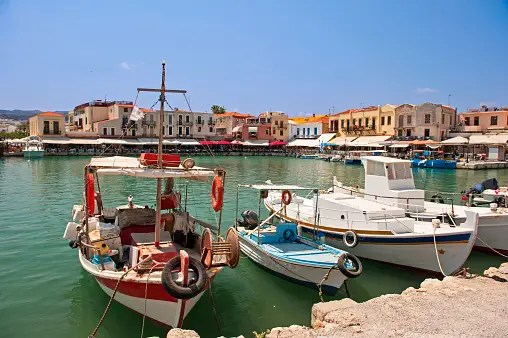
Rethymnon
The city itself has a reasonable, sandy beach but most visitors on package holidays find themselves staying in the series of smaller beach side villages that stretch eastwards back towards Heraklion. A couple of these are large enough to be viable destinations in their own right, but many are little more than a large resort hotel surrounded by a few houses and tavernas (and inevitably car hire outlets). However, the beaches in this area are predominantly sandy if a little narrow, and there are regular bus services to and from Rethymnon itself.
Chania lies about 60 km to the west of Reythmnon and was the capital of Crete until the early 1970s. The main coastal road between the two passes through a number of resort villages of which Georgiopolis is the largest and best known. However, many other coastal villages have seen a fairly large scale expansion of apartment and villa developments in recent years.

Chania
The highlight of Chania is its waterfront with historic Venetian and Turkish buildings and a harbour where tavernas and bars line the quayside. The harbour itself can be quite noisy, especially if there is a cruise ship in port, but it is easy to find quieter corners in the back streets just inland or in the Kastelli area to the east, which tends to have more upmarket visitor accommodation.
To the north of Chania, the Akrotiri peninsula houses an important military base as well as the city’s international airport, which lies some 15km out of the centre. It’s also worth noting that ferries to Chania dock at Souda, 10km to the east. It is better served by local buses than the airport.
A number of guide books eulogise the north coast to the west of Chania. This area does boast some attractive beaches but the villages next to them often feel like ribbon strip developments with little character or charm.
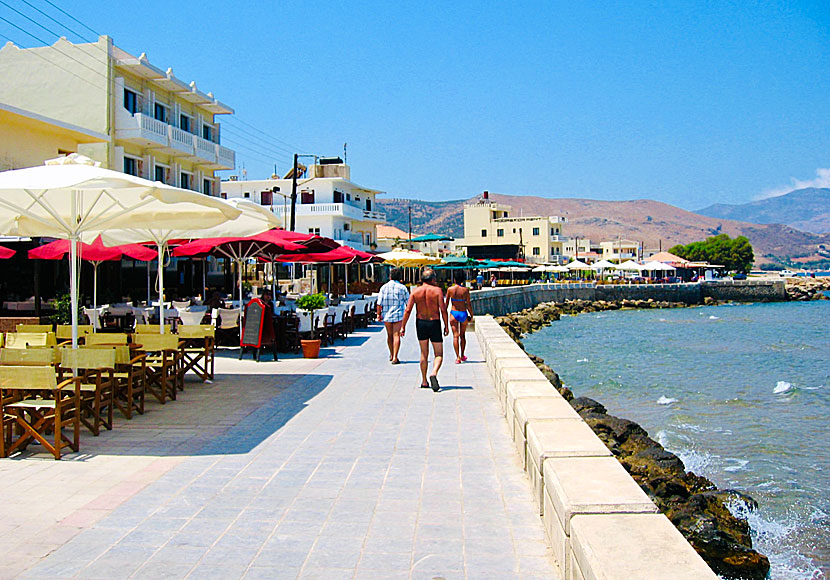
Kissamos
The main coastal road runs on to the small, friendly town of Kissamos (also known as Kasteli), which has an attractive waterfront and acts as the gateway to the vast sandy and largely undeveloped beaches of Balos and Phalasarna. Regular ferries leave from just outside Kissamos for Kythira and the Peloponnese.

Balos Beach
If I had to pick between Rethymnon and Chania I would probably go for the former. It’s a bit smaller with a more obvious traditional or historic feel. However, it’s a hard call and I would certainly also consider Kissamos as an attractive but quieter option.
The South West Coast Part 1 – Sfakia and the Samaria Gorge

Loutro
The south west coast is probably my favourite part of Crete for its scenery, beaches and laidback, relaxed atmosphere. It is easily reached by regular buses from both Rethymnon and Chania and many of the villages are linked by enjoyable coastal ferry services.
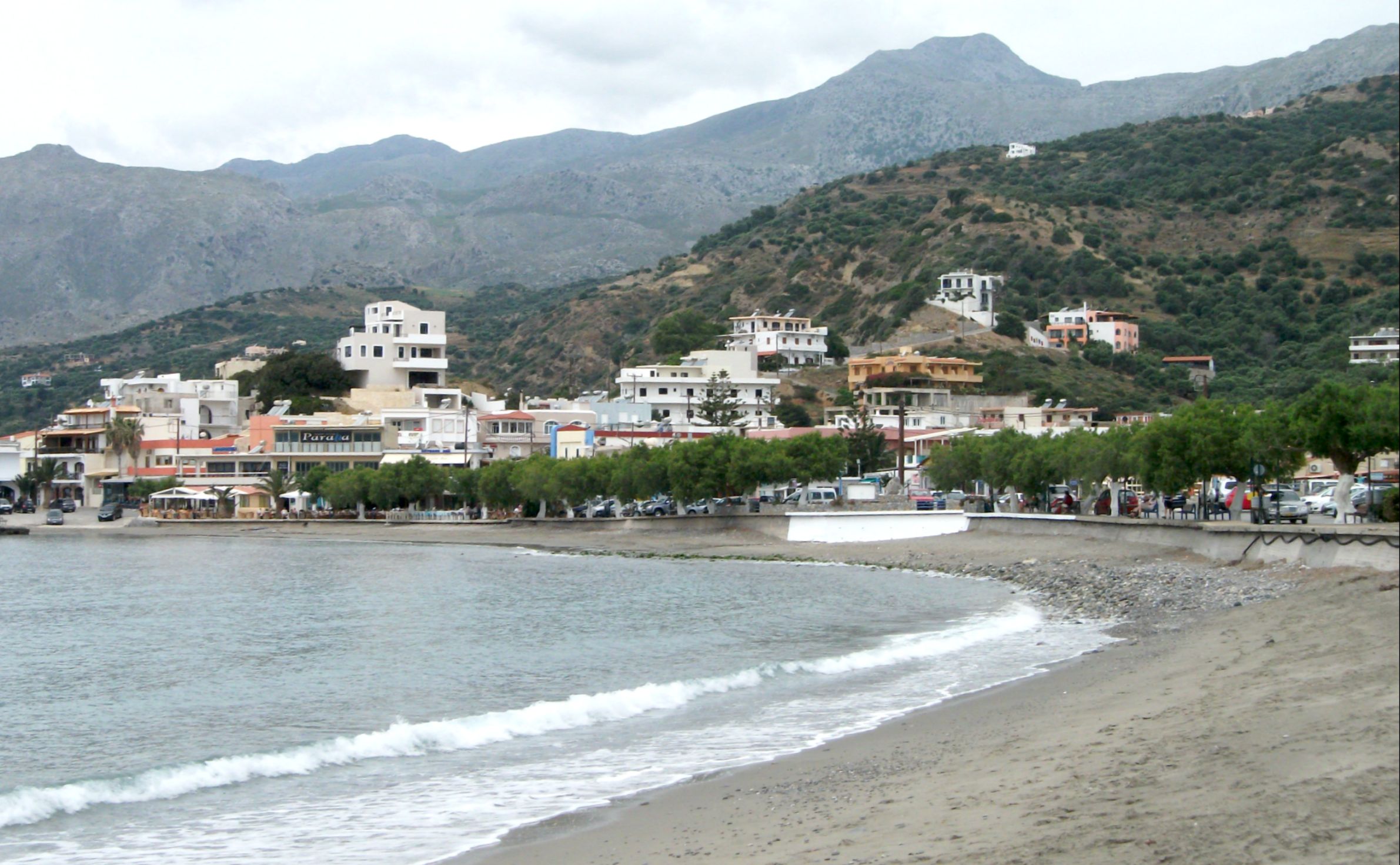
Plakias
If heading south from Reythmnon, Plakias is probably the first coastal village you come to after a scenic drive through the mountains. Personally I found it a bit disappointing. It had the feel of a purpose built seaside adjunct to a larger nearby inland village and the much vaunted beach, although huge, was mostly composed of dull, greyish sand. I abandoned plans to stay there and jumped on a rather expensive taxi west along the spectacular coastal scenery to Hora Sfakion.
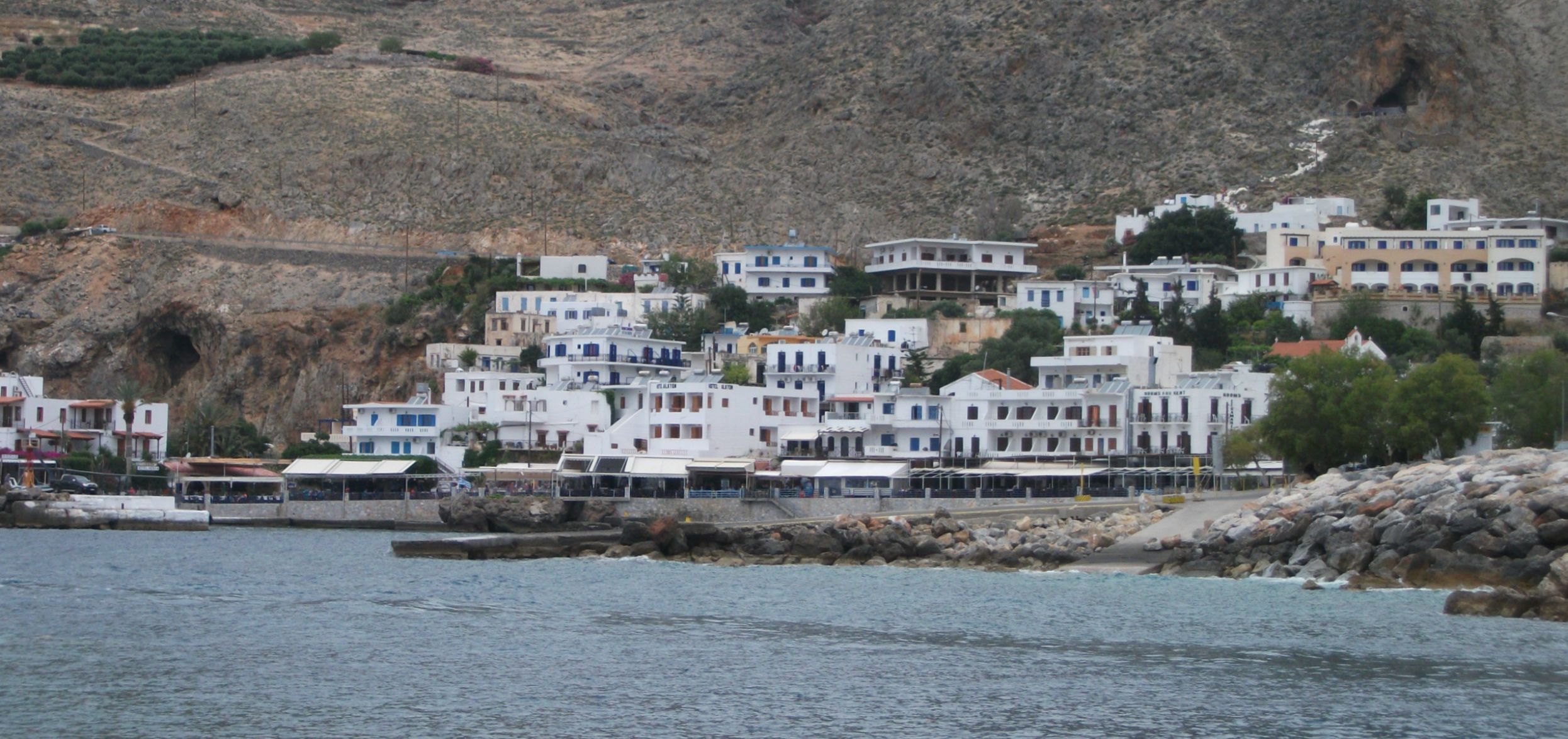
Hora Sfakion
The “capital” of the famed mountain bandit area of Sfakia, Hora Sfakion is a small village of about 300 souls clustered around a picturesque harbour area. It is the main port for ferries to the well known Samaria Gorge, which claims to be the longest gorge in Europe. The approach to the village is dominated by a large coach park catering for the day visitors to the gorge who pile through the village in the morning and flood back off the ferry in the late afternoon without barely looking at Hora Sfakion.
The village itself has a reasonable choice of places to stay, a good mix of bars and tavernas, a small beach and a memorial marking the site of the final Allied evacuation of Crete after the German invasion in World War 2, which left the locals behind to continue a covert, effective but costly guerrilla war.
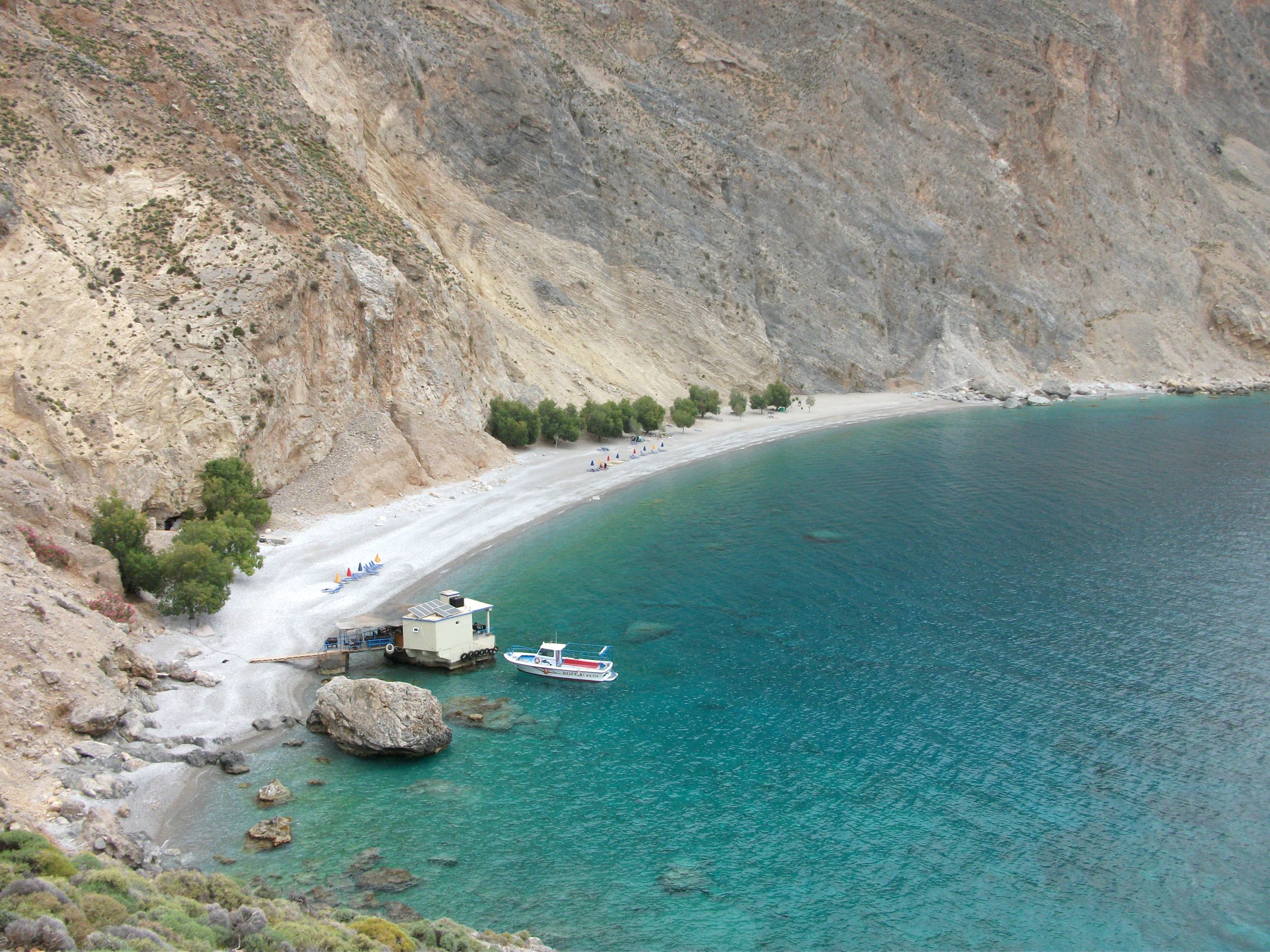
Sweetwater Beach
The ferries to the Samaria Gorge stop first at the tiny village of Loutro which has no road link to the outside world. Loutro is a curve of about 30 – 40 buildings on a pebbly beach. Most of them house tavernas, bars and/or visitor accommodation. It’s picturesque, peaceful and quite lovely. A walk of just under an hour along the fairly rough footpath back towards Hora Sfakion brings you to Sweetwater Beach, a pleasant strand of sand and pebbles with a single taverna. When I visited, it was a summer home for a small colony of elderly Scandinavian nudists wild camping.
Ferries continue on from Loutro to Agia Roumeli, a slightly larger, road-less village that is the main southerly start and end point for exploring the Samaria Gorge, one of the most popular day trips in Crete. I didn’t get off the ferry here but I did watch several hundred visitors descend on the village, which looked fairly characterless and a bit like it only existed to cater for them. By all accounts the Gorge itself is spectacular but, if heading this way, I would plan to stay in Hora Sfakion or Loutra. Agia Roumeli looked like a place best passed through rather than stayed in.
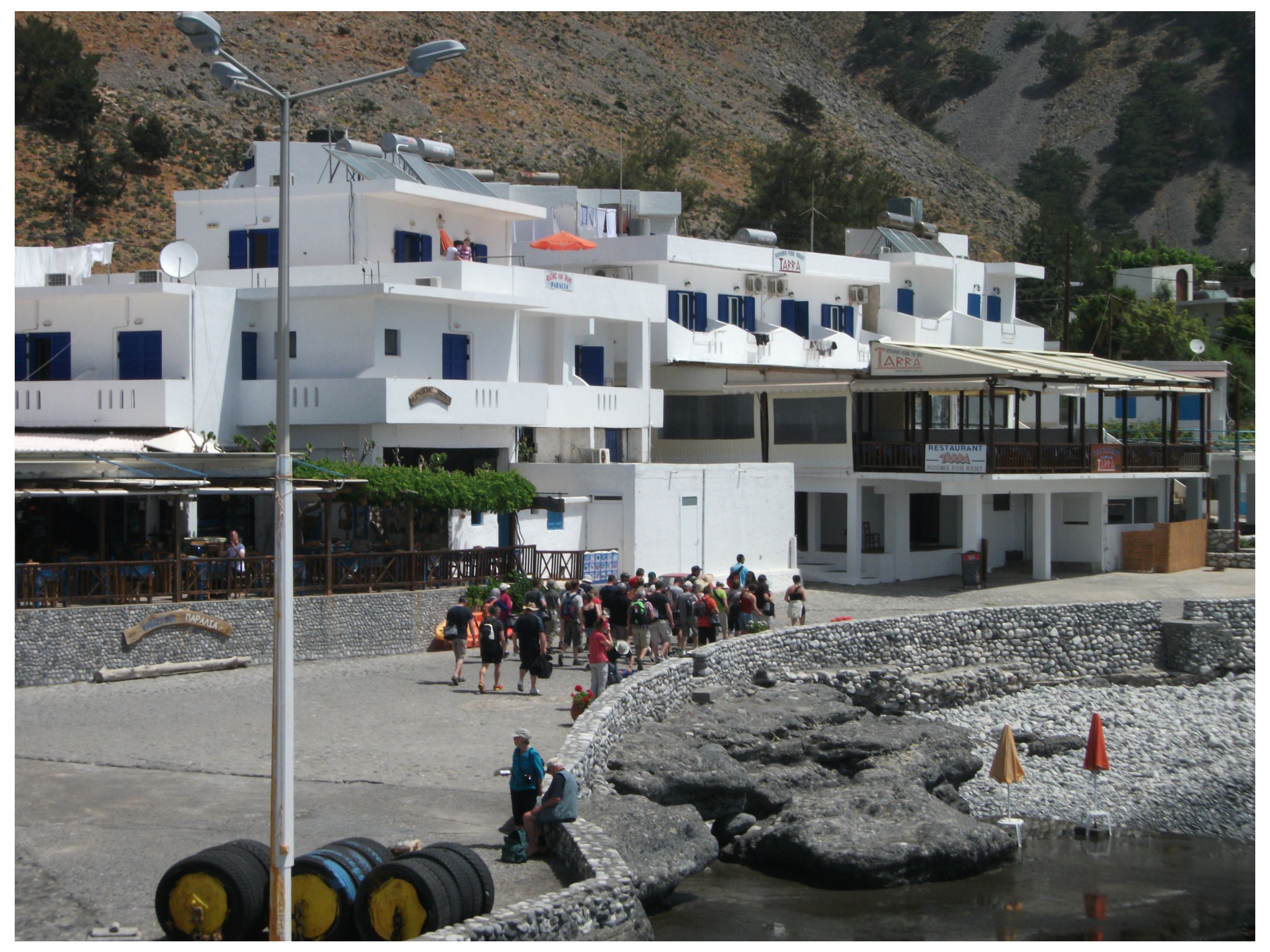
Another Walking Group Pass Through Agia Roumeli On Their Way To The Samaria Gorge
The South West Coast Part 2 – Paleochora and Elafonissi

Paleochora
Paleochora is the largest town on Crete’s south west coast but, with a population of around 2,000, it is by no means a metropolis.
The town is beautifully situated on a headland between two beaches. To the east lies the harbour and the narrow Pebble Beach. To the west is Sandy Beach, a huge, wide expanse of soft sand that curves round a vast bay. This is the best place to head if looking for accommodation, which has the added bonus of awesome sunsets.
The town between the two beaches has a degree of tourism development but retains an authentic Greek atmosphere with a bit of an alternative/bohemian vibe in its organic tavernas and cafes, craft workshops and wellbeing centres. It’s laid back, relaxing and quite lovely.

Paleochora
There are regular buses (about three a day) to and from Chania and coastal ferry services link Paleochora to Hora Sfakion via Sougia, Agia Roumeli and Loutra. There are also ferries to the little island of Gavdos, 3 – 4 hours sail to the south.
The best known excursion from Paleochora is to Elafonissi, a tiny island that shelters a lagoon with bright turquoise water and stunning white sands. Elafonissi is regularly included in lists of the Top 10 beaches in the world and it’s easy to see why. The island itself is just a short wade off shore and is a protected nature reserve. It’s a quieter alternative to the sunbeds and tavernas encroaching on the main beach on the mainland.

Elafonissi
I visited Elafonissi in May when it was still relatively quiet. However, the huge car and coach parks on the adjacent mainland do highlight its peak season popularity and there are local concerns about the impact that growing visitor numbers are having on the natural environment. If you do visit, do so responsibly. It’s a special place. Please treat it as such.
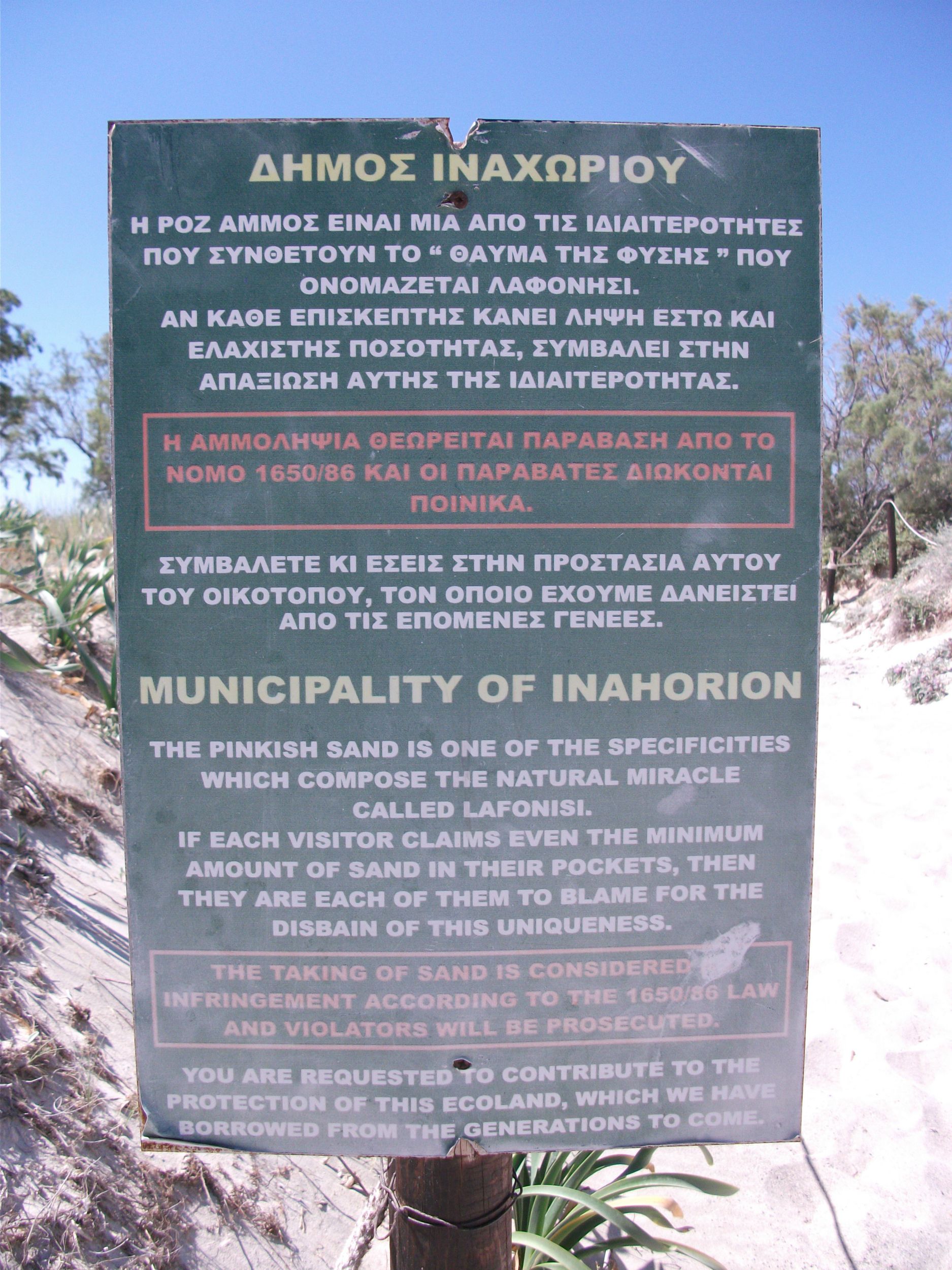
Elafonissi Sign
Elafonissi lies on the point where Crete’s south coast meets its largely unexplored west coast. I spent a day driving along the west coast and was entranced by its magnificent scenery which reminded me of the wild north coast of Madeira. There are successive, sleepy mountain villages; twisting roads down to quiet pebble beaches; and numerous signs for Slow Food tavernas and artisan producers.
Eventually the road joins the north coast at Kissamos from where it is possible to make a loop inland through the scenic White Mountains back to Paleochora. Do take time to get out the car to walk around a few villages and admire the scenery. There is little point in travelling along the road of life if you don’t sometimes stop to smell the roses (and eat the seafood).
Gavdos
Visited in 2014.

Korfas
Little Gavdos claims to be the most southerly outpost of Europe, which it is if you don’t include the Canary Islands in the Atlantic. Located about 50km and 3 – 4 hours sail south of Crete across the often rough Libyan Sea, it is home to less than 50 year-round residents who somehow manage to spread themselves across 4 tiny settlements.
Ferries dock at Karave, where signs announce that recent harbour improvements have attracted millions of euros of funding from the EU. Karave itself has about four buildings: one with a shop; one with a taverna and one with holiday accommodation. That’s it really.
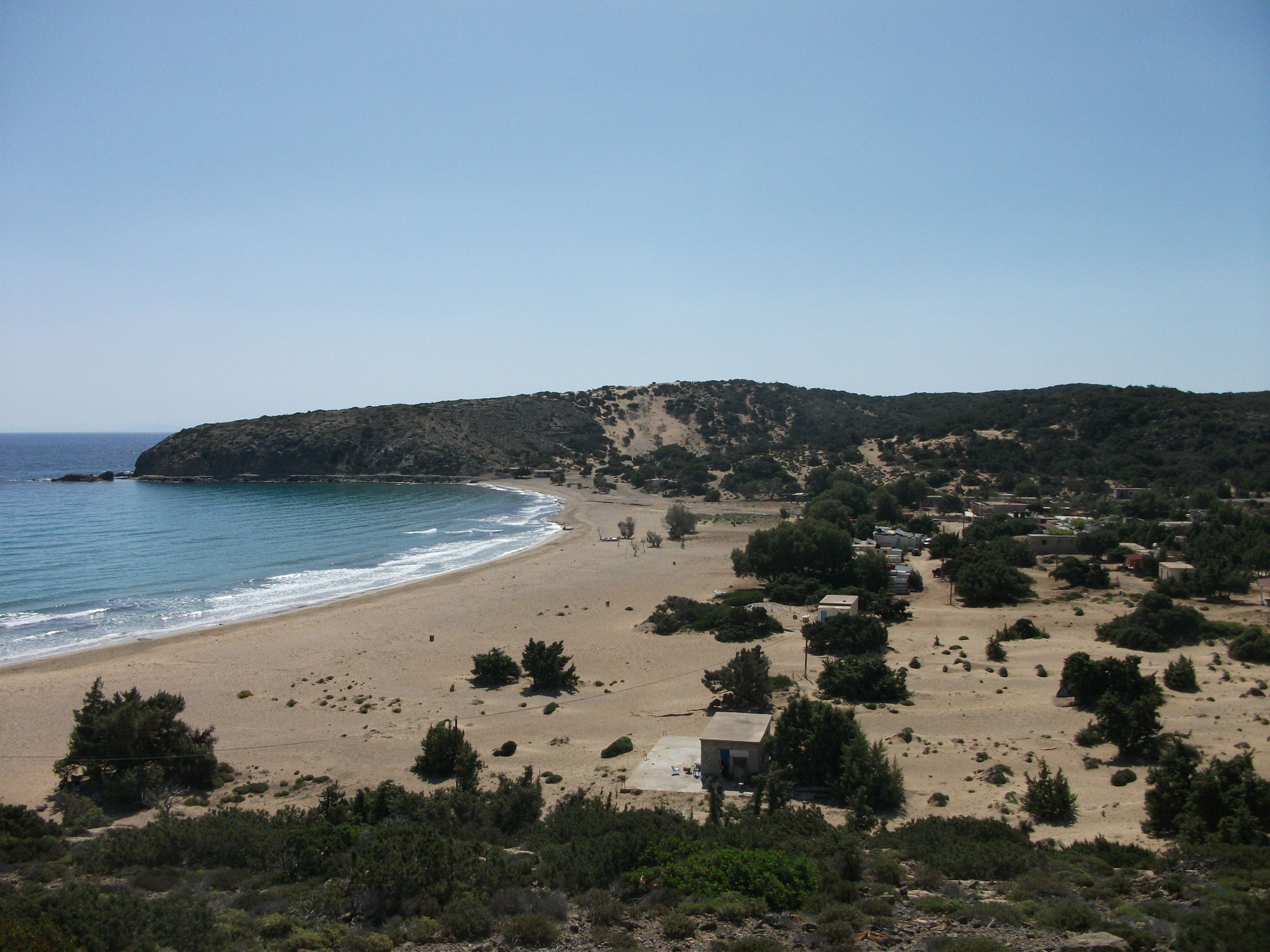
Sarakiniko
Gavdos attracts a significant number of young summer visitors who mainly head for the huge beach at Sarakiniko on the north coast. A minibus meets most ferries to transport them there. In May, Sarakiniko looked rather windswept and desolate with the occasional taverna or apartment block struggling to stay visible above the sand dunes. However, I was informed that it – and some other local beaches – have a pretty wild rave and drugs scene in peak season when hundreds of rich hippy kids from Northern Europe descend on the island and, in the words of one local, “go about naked, fuck in the open air, take drugs and leave their garbage and shit everywhere for us to clean up after they leave”. Deaths from drug overdoses are not unknown – allegedly.
I headed south for Korfas, a cluster of two tavernas with rooms, two other houses and an abandoned campsite overlooking another large sandy beach. Korfas is the main start point for the well-marked walking trail to Cape Tripiti, the most southerly point on Gavdos and, by local insistence, the most southerly point in Europe.
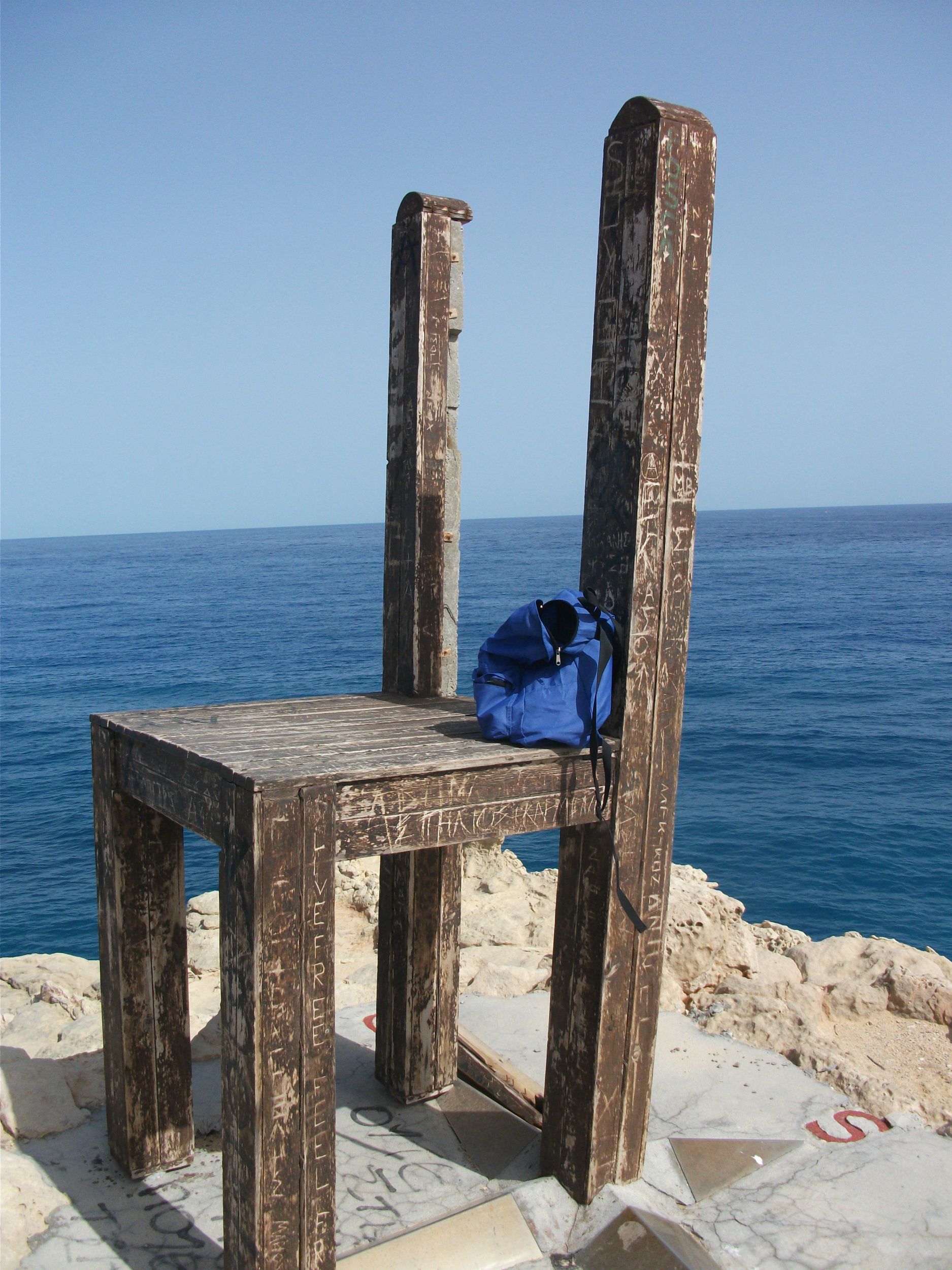
Cape Tripiti
Cape Tripiti is a wild, exposed pebble beach with a spectacular natural rock arch through which the sea foams. On the top of the arch is an oversized wooden chair on which to sit to admire the sea views. I was told this had been erected by a group of mysterious Russians who live in a house on the island and are reputed to be scientists from Chernobyl. Gavdos appears to attract strange people (or locals with unlikely but possibly true stories).
Russian scientists and naked, drug taking hippies apart, Gavdos does have a somewhat other worldly atmosphere, possibly due to its isolation. When I visited in May, only about half a dozen people got off the ferry with me and the island was comatose rather than sleepy and all the better for it. I was one of only two tourists staying in Korfas to complement the single family who stay there all year round. I was their first customer of the year and they opened up their rooms especially for me.
If you really want to escape the crowds, Gavdos off season is the place to go. There is excellent walking, great beaches and plenty of time and space to disappear and contemplate whatever you might wish to consider.
 Skimming Greece