
The Cyclades islands tend to provide the best known and most iconic visual images of Greek island destinations. In particular, Santorini and Mykonos feature in every Greek calendar and the island group, as a whole, is most noted for its white cubist houses, blue domed churches and prominent windmills. However, there are a lot of islands in the Cyclades and a great deal of variety between them.
The group gets its name from the notion that they circle the sacred island of Delos, nowadays a small, bare, uninhabited rock that was a key commercial and religious centre in ancient times. Its extensive ruins make it a major day trip destination from its nearby neighbours, Mykonos in particular. However, Syros is the modern day administrative centre of the group, although Naxos is its largest island.
The Cyclades are criss-crossed by numerous ferry and hydrofoil routes that make them ideal for island hopping. Some are only 1 – 2 hours sail from the mainland; others can take the best part of a day to reach if they are located at the end of a long multi-island ferry route from Piraeus.
Mykonos and Santorini have busy international airports and have seen a large recent growth in cruise ship visits. Milos, Naxos, Paros and Syros have local airports with one or two flights a day to and from Athens and the odd connection elsewhere in Greece.
Santorini and Mykonos may be the most photogenic islands of the group, but they are far from being unspoiled, tranquil idylls and are struggling to cope with the sheer weight of visitor numbers that now descend on them during a lengthening peak season.
Ios was once the all night party island of the group. However, it has quietened down a little in recent years, although its visitor profile is still much younger than most of its neighbours.
Naxos and Paros also attract significant numbers of visitors, which they are large enough to absorb without losing all of their traditional atmosphere. Folegandros and Sifnos are growing in popularity with the wealthier end of the Greek visitor market, while Tinos remains an important site of Orthodox Greek Christian pilgrimage.
Amorgos is an island of which connoisseurs tend to speak in awe, especially if they are keen walkers, while Milos offers a variety of landscapes and an appealing mix of tourism and every day working life. Andros and Kea, the nearest islands to the mainland, are popular weekend destinations for Athenians.
The greatest tranquillity can be found in far flung Anafi, sleepy but somewhat dull Kythnos, under rated Sikinos, or the Lesser Cyclades, a group of four attractive small islands lying to the south and east of Naxos.
Their sheer number and variety ensure that the Cyclades have something for every type of visitor. However, a bit of online research is a good idea to identify which of the group are most likely to meet individual requirements and expectations.
Amorgos
Visited in 2016
Large and scenically spectacular with unobtrusive but limited tourism development. Getting there can involve a lengthy ferry journey, but it’s very much worth it.
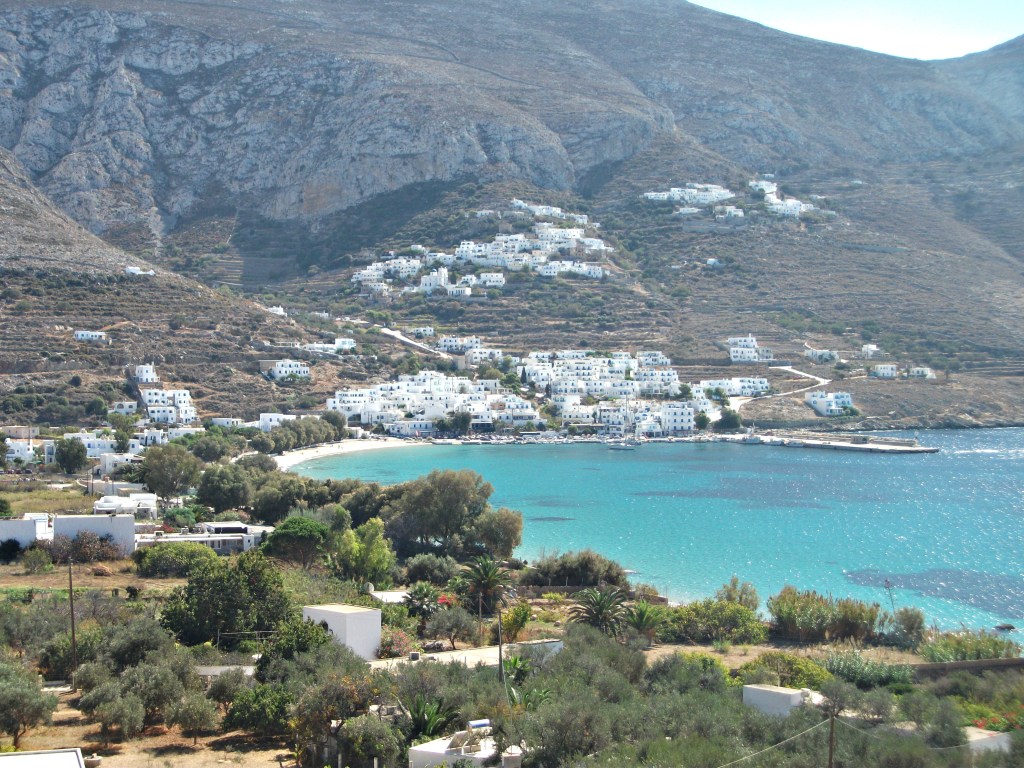
It took me 37 years of visiting Greek islands before I finally got round to Amorgos, by which time it had attained almost mythical status in my mind. It’s an island that many people I have spoken to over the years described with enthusiasm and a sense of awe. The classic “Greece as it used to be” sort of island, particularly loved by older couples keen on walking. As I entered that particular demographic, I decided it was time to find out for myself what all of the fuss is about.
Amorgos is not a particularly easy island to get to. There is no airport and ferries from Piraeus can take over nine hours with numerous stops at other islands along the way. Even travelling from Naxos, it’s nearest large neighbour, can take over 5 hours on the redoubtable Express Skopelitis ferry, which usually stops at most of the Lesser Cyclades en route. However, this friendly local ferry is the best and most interesting way to travel to Amorgos. Why hurry anyway? You just miss out on the sights, smells and sounds of Greece.
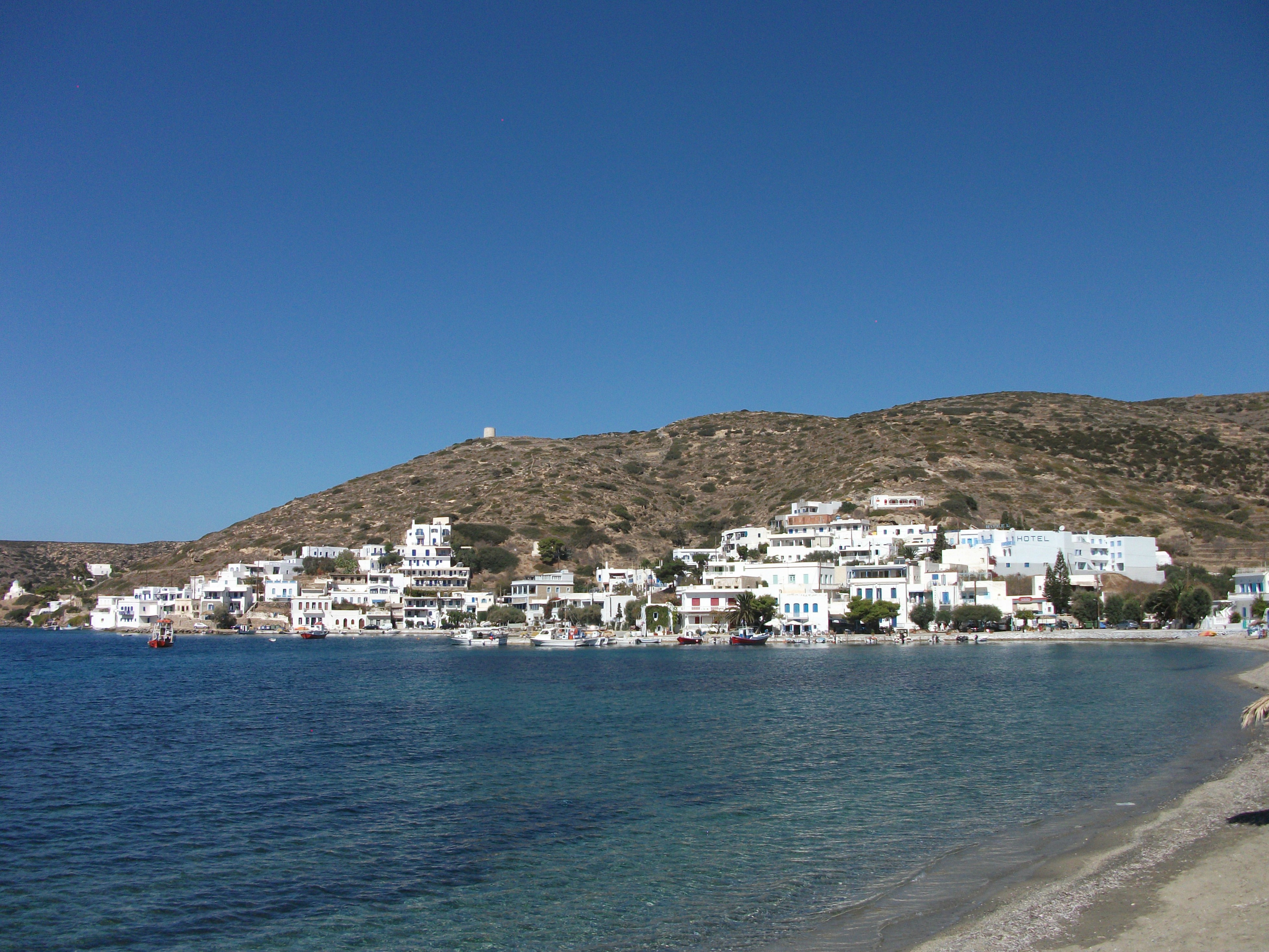
Katapola
Amorgos is a long, thin island with a choice of two ferry ports – Katapola in the south and Aegali in the north. Most, but not all, ferries stop at both. Katapola is the larger of the two, spread out in two distinct districts on a wide circular bay ringed by high mountains. Aegali is a bit smaller but has a much better beach and the added bonus of a trio of attractive mountain villages within easy walking distance. I stayed in Aegali and loved it.
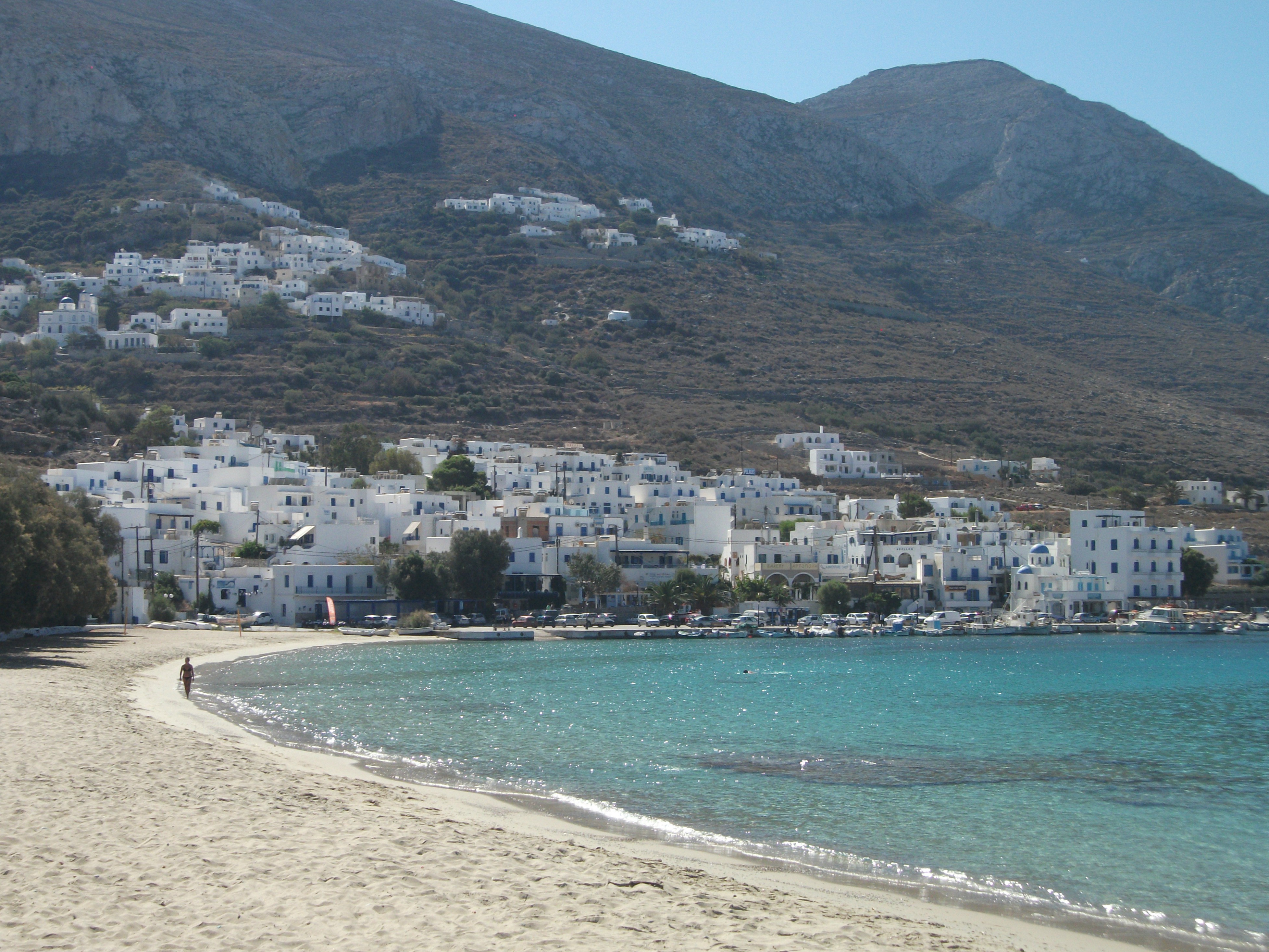
Aegali
In particular, early evenings were a joy as locals and visitors converged to view spectacular sunsets from a line of bars that tumble up from the harbour. Thereafter everyone disperses to small tavernas dotted around the village where one of my evening meals was only slightly spoiled by the unfortunate proximity of the local chain smoking society at the next table. The concept of no smoking in covered public places is still somewhat alien in many parts of Greece.
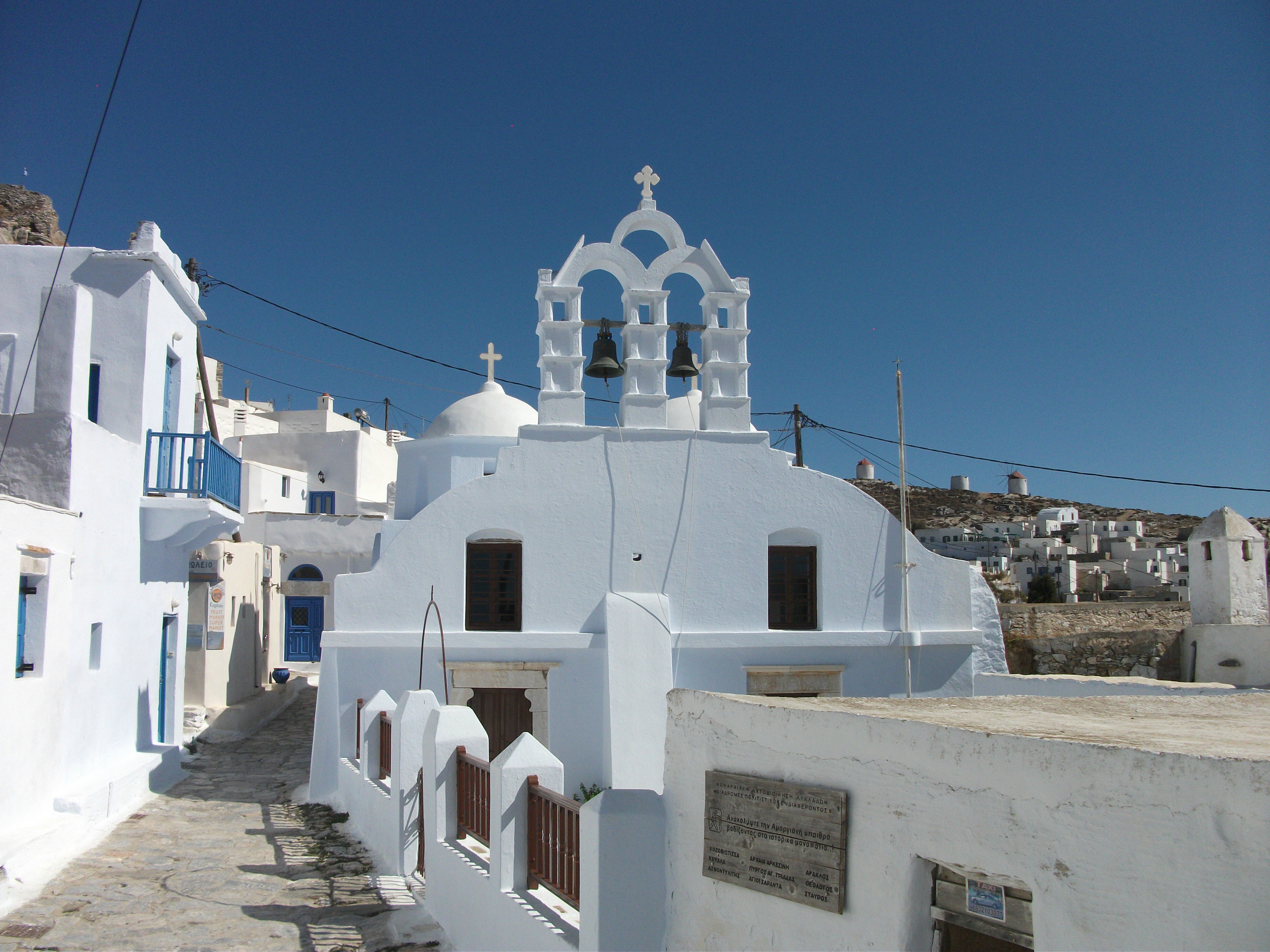
Chora
There are regular buses between Aegali and Katapola as well as car and scooter hire in both. The island’s Chora, or capital, lies between the two and is a charming warren of paths and lanes that belies its rather rough initial appearance. It’s well worth an hour or two of anyone’s time. South of Katapoula, the main road continues for a few more kilometres past sleepy farming villages and quiet, undeveloped beaches before it just peters out at sandy Paradissa Bay.

Hozoviotissas Monastery
The island’s best known visitor attraction is the gleaming, white washed monastery of Hozoviotissas, which clings to a towering cliff and is open daily to visitors. It’s a fair climb up from the small car park, but the sea views reward the effort.
Amorgos is quite simply a beautiful island and great walking country with networks of well-marked paths and trails. It is indeed Greece as it was 20 – 30 years ago but with better food and sanitation. It can be a bit of pain to get to with long ferry rides, but is more than worth the effort. Highly recommended. Take time to explore it fully. It’s not a place to rush in and out of.
Anafi
Visited in 2014
Barren, small, remote and sleepy. An island for those who want to experience “Greece as it used to be”. Large, undeveloped and uncrowded beaches.

Lonely little Anafi is probably the most remote of the Cyclades, lying at the southern edge of the group almost 12 hours sail from Piraeus and 4 hours from Crete to the south. Santorini, its nearest neighbour, is 90 minutes to the west and the difference between the two islands could not be more marked, despite them sharing the same barren volcanic landscape.
Anafi is home to around 300 people, most of whom live in the Hora, a hill top village a couple of kilometres inland from the dusty, run down port of Ayios Nikolaos. Hora is an appealing little place where white washed houses gleam against the dull brown soil around them. The best place to view it is from the little church at the top of the village, from where the expansive views across the barrel shaped roofs of houses, tavernas and shops are only slightly spoiled by intrusive power lines.
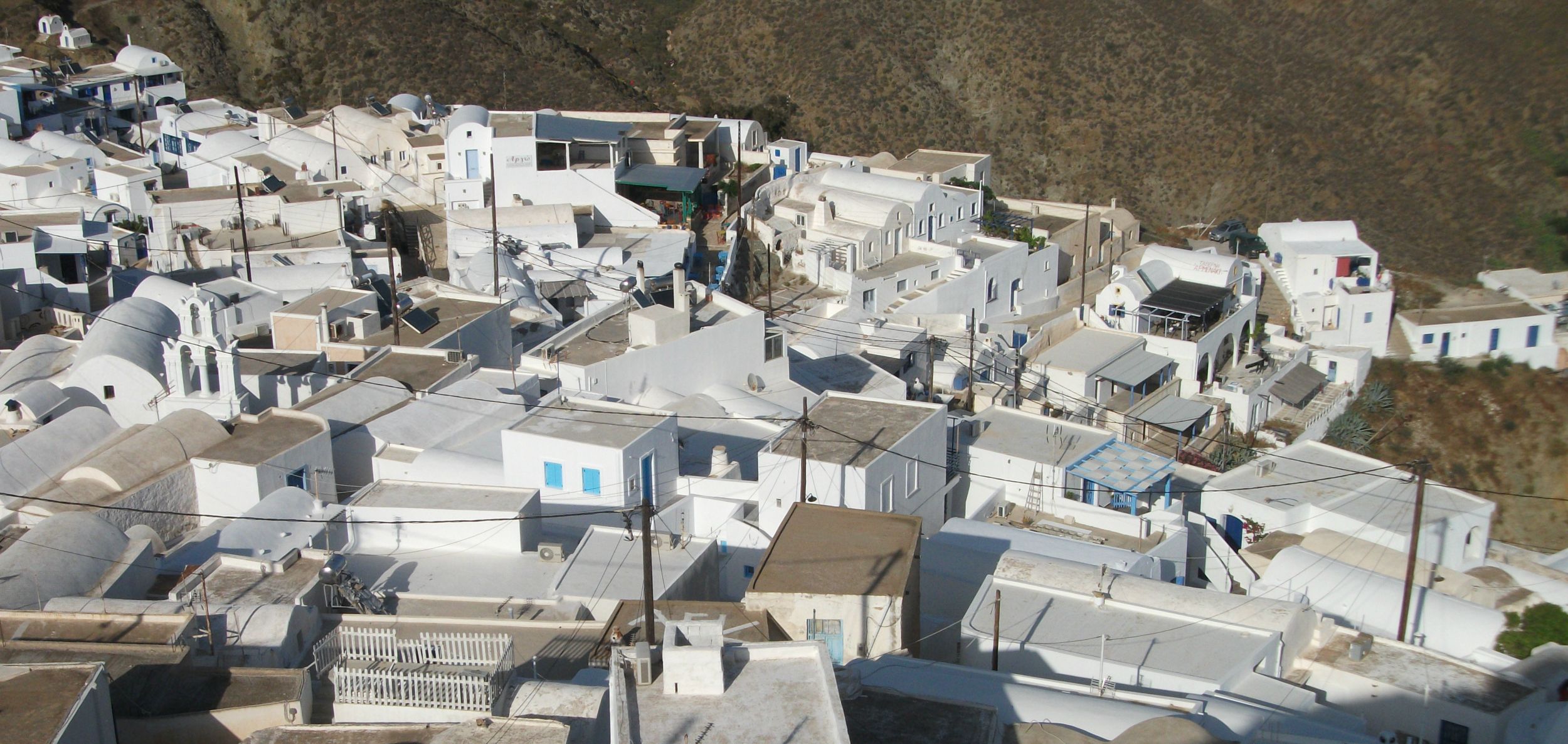
Hora
There is a reasonable choice of accommodation in rooms scattered around the village and, in May, Hora is the kind of place where you see the same faces every day and quickly get on talking terms with total strangers. Anafi is an island that has hard-core, committed devotees who return year after year. The Swedish physiotherapist in the room next to mine had been coming for over 30 years and I met an elderly German couple who could date their first visit back to the early 1970s.
There is a good network of walking routes across the island but, for the less active, the beaches are probably the main attraction. The nearest to Hora is Klissidi, a 400 metre stretch of soft golden sand that is a short walk from Ayios Nikolaos. There are a few rooms to rent and couple of tavernas at the beach which I had all to myself for a few hours until the afternoon arrival of three other people forced me to flee the crowds.

Roukounas Beach
From Klissidi, a paved road strikes east along the south coast of the island and through a landscape of cacti and prickly pears. It passes a series of completely undeveloped and deserted sandy beaches of which Roukounas is the longest and most popular, particularly with wild campers. After almost two hours of walking the road stops at the monastery of Zoodhohou Pigis, where a ruined ancient temple is incorporated into the main building. The island bus occasionally makes it out this far in peak season and, when I visited, I tagged on to a small group of French day trippers from Santorini to listen in on the history of the monastery.
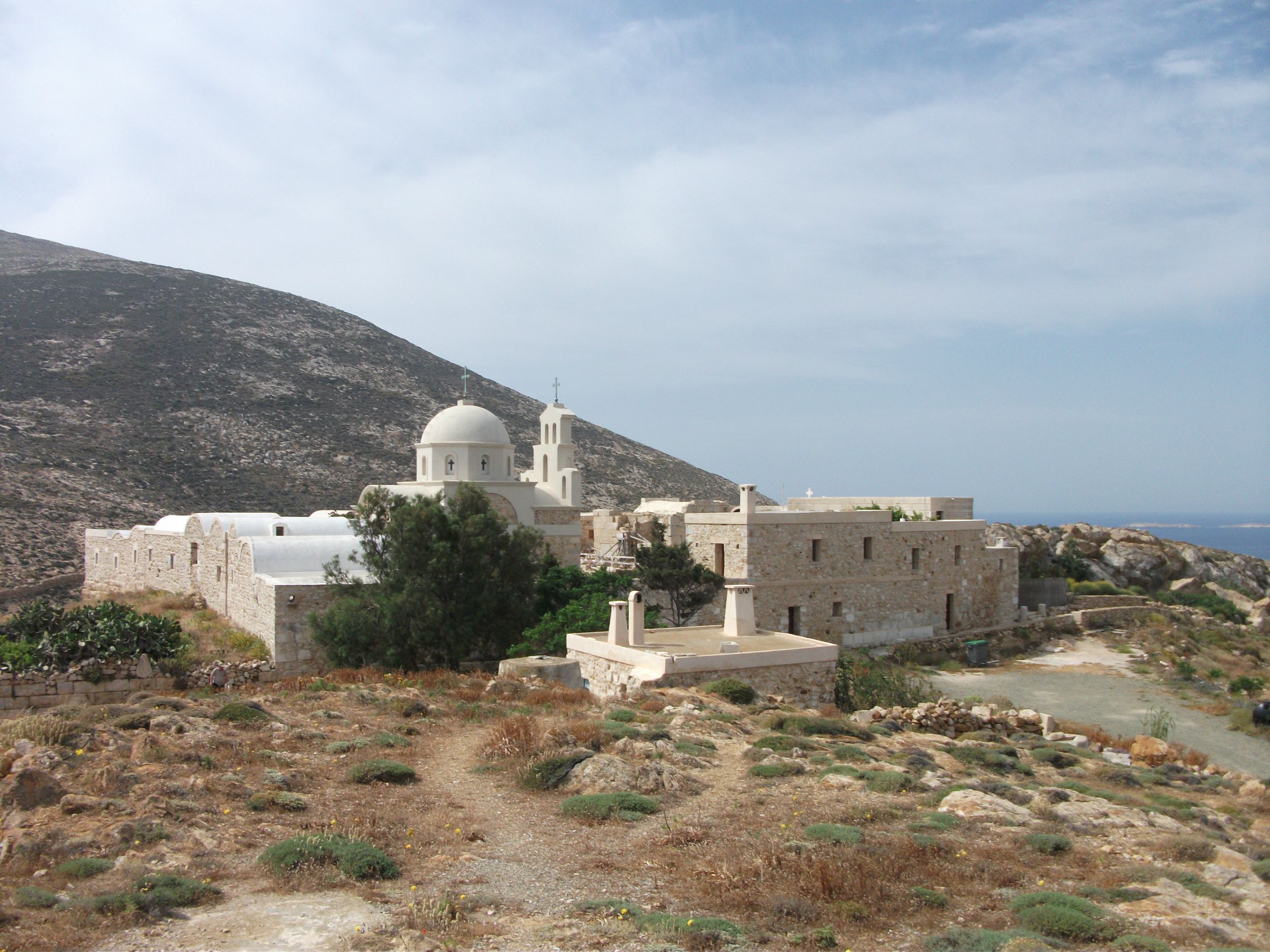
Zoodhohou Monastery
Beyond Zoodhohou Pigis a path leads to another little monastery about an hour’s walk away at the top of an awesome cliff face that my French tour guide questionably claimed is the second highest in Europe. With my vertigo I gave it a miss, although the views from the top across the well named Monastiri beach must be spectacular.

Anafi
It is possible to day visit Anafi from Santorini about once a week in peak season. However it deserves a longer stay. Ferries tend to arrive and leave at odd hours of darkness, but accommodation providers get out their beds and drive down to the port to pick up and drop off visitors. Night life is limited to conversations in tavernas which occasionally have some live Greek music. But you don’t come to Anafi for the night life. You come to unwind and relax and you can do that very well.
Andros
First Visited in 2010. Most recently visited in 2022.
The most northerly and second largest of the Cyclades. A short ferry ride from the mainland, with a particularly attractive main town.
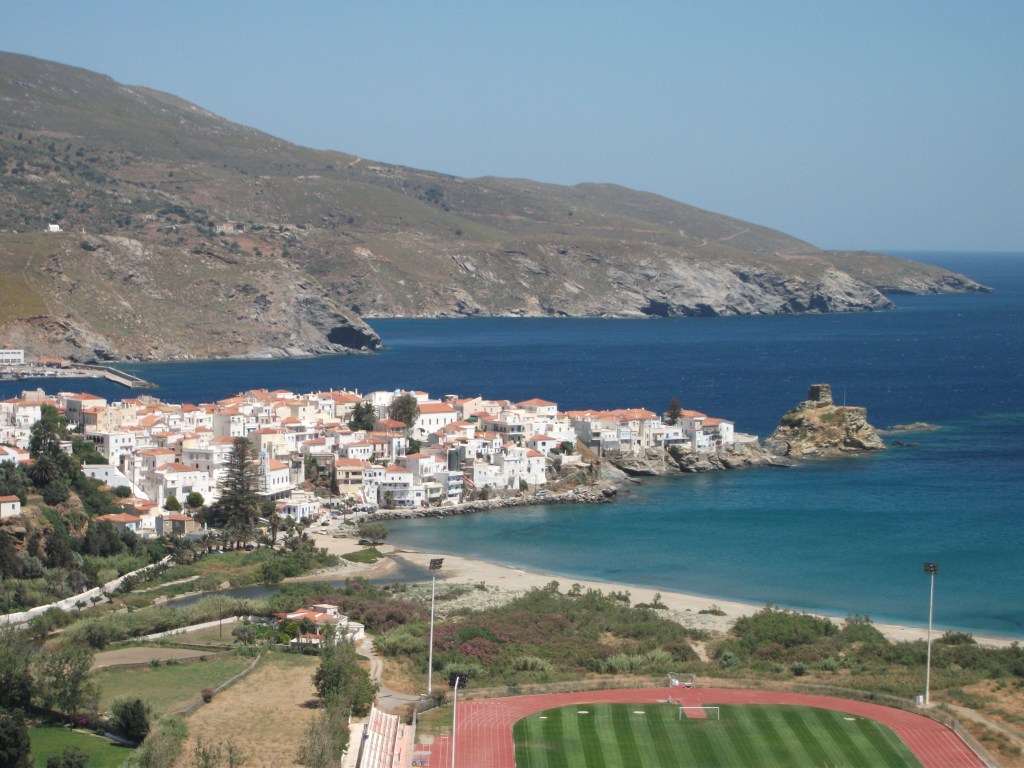
Andros is the second largest and the most northerly of the Cyclades islands. It is also one of the easiest to visit with four or five ferries a day making the 2 hour crossing from the pleasant mainland port of Rafina, a less frantic and more manageable alternative to Piraeus with regular direct bus links from Athens’ airport and city centre. Almost all the ferries continue on to Tinos and Mykonos and some voyage on to additional, more southerly islands.

Gavrion
The island ferry port of Gavrion lies in the north west of the island and is a busy little village with countless car hire outlets and numerous travel agencies selling ferry tickets. There are also plenty of places to stay, eat and shop for souvenirs, as well as attractive and relatively quiet sandy beaches within walking distance.
The north west corner of Andros beyond Gavrion is wild, remote and little visited. Most visitors head east along the main coast road to Batsi, which is probably the best known beach resort on the island.

Batsi
I’ve been to Batsi twice and didn’t really take to it either time. On my first visit in 2010 I felt it was trying for an upmarket, alternative, bohemian vibe that it didn’t deliver. On my second visit in 2022 the new studios and apartments clambering up the hillsides reminded me of the soulless purpose built resort developments you find in parts of the Canary Islands. I’m sure Batsi has its devotees, but it’s not for me.
From Batsi the main road continues onto Andros Town, the island’s Chora or capital, centrally located on the east coast. It’s 33 kilometres from Gavrion, to which it has four or five buses a day each way. Buses generally link into ferry arrival and departure times and the journey takes just over an hour, much of that time being spent squeezing slowly through the narrow streets of the attractive hill villages on the approach to the Chora.
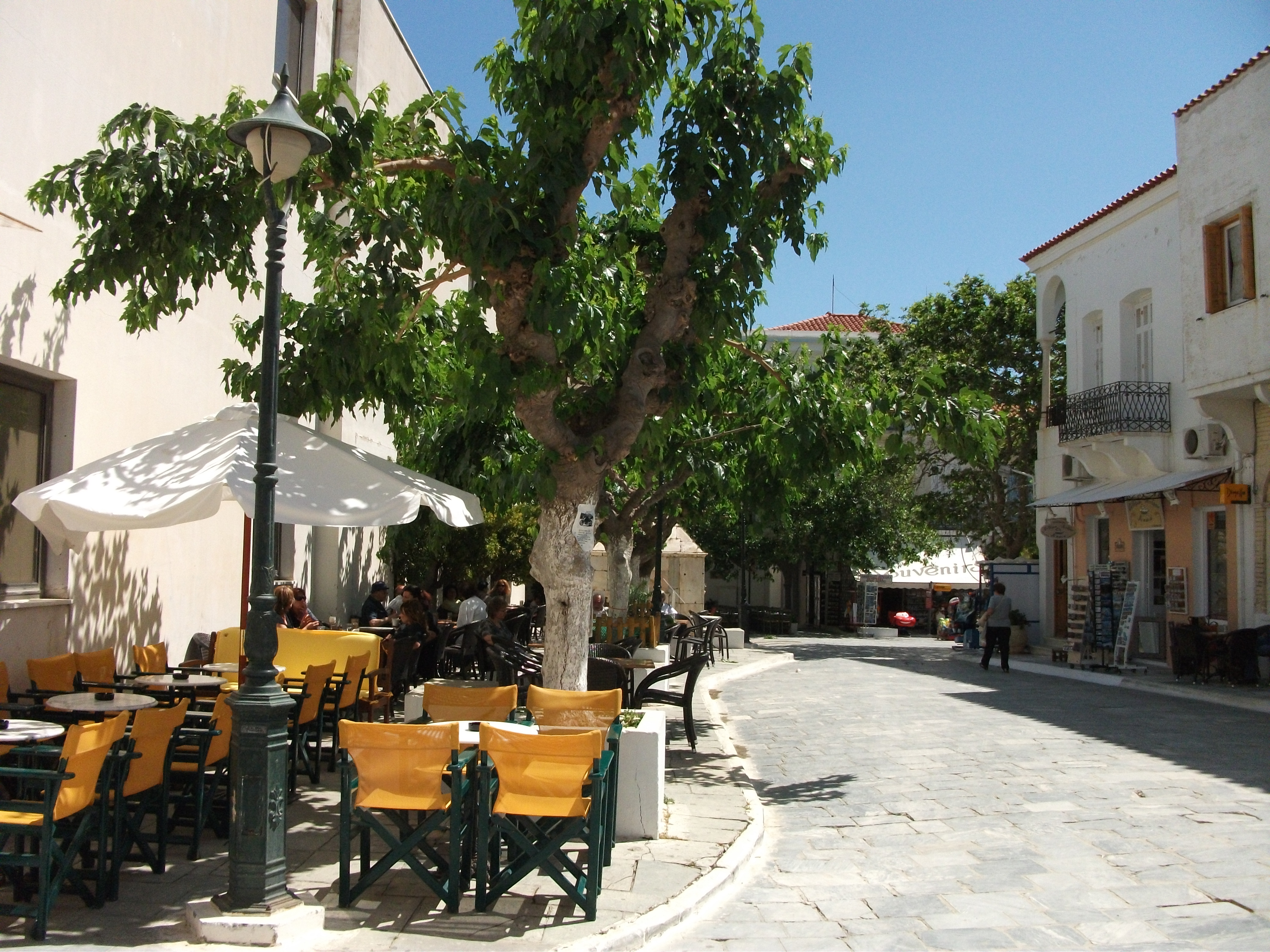
Andros Town
Andros Town itself is one of the prettiest towns on the Greek islands. It spreads out from a rocky promontory with a huge, expansive beach to one side. It’s full of fine neo-classical buildings, leafy squares and flagstoned streets and alleyways that host a plethora of boutique style accommodation, upmarket shops and pavement cafes.
The town’s archaeological museum is one of the best of its kind that I have visited in Greece with clear and detailed information on its many exhibits in both Greek and English. The only thing that lets the town down is its public toilets at the bus station, which are simply disgusting.
There is another small town called Korthio about 5 kilometres to the east of the Chora. It has a pleasant location on a wide bay, but little else to detain visitors for too long (although some of its tavernas have a good reputation).
Andros is an island I would recommend to people who are still fairly new to Greece. It lies somewhere between the biz and buzz of the large package holiday islands and the quiet solitude of small, more remote options. It is large by Greek standards with lots to see and do and plenty to entertain visitors on an extended stay. However, I would suggest staying in Andros Town or Gavrion in preference to Batsi.
Antiparos
Visited in 2017.
The smaller and quieter neighbour of Paros with an attractive main village and a large and interesting cave complex.

Antiparos is Paros’ smaller westerly neighbour in the central Cyclades. It has started to attract growing visitor numbers in recent years as people spread out to look for new islands to explore. However, it is probably still primarily a day visit destination from its parent island and that is how I came to it.
The main access is from the small port of Pounda on Paros from where regular ferries plough back and forth on the 15 minute crossing to the main village that shares the name of the island and is also home to the majority of the 1,000 or so local residents.
Antiparos village is a charming jumble of flagstoned streets and whitewashed buildings with a varied choice of places to stay, eat and shop. Taverna menus appeared a bit more upmarket and organic than on many islands and the village has a feel of well maintained, quiet prosperity. It reminded me of a slightly more touristy version of Fourni Korseon in the North East Aegean.

The Great Cave
The premier must-see attraction on Antiparos is the Great Cave, located inland about 10 kilometres south of the main village. This is a very impressive series of rocky chambers large enough to fit in several hundred people at a time. It is open daily in the summer and regular buses run to it in peak season. Arriving in the quieter spring period, I hired the island’s only taxi to get there and strolled back along the paved road past fields and road verges full of colourful wild flowers waving in the cooling breeze.
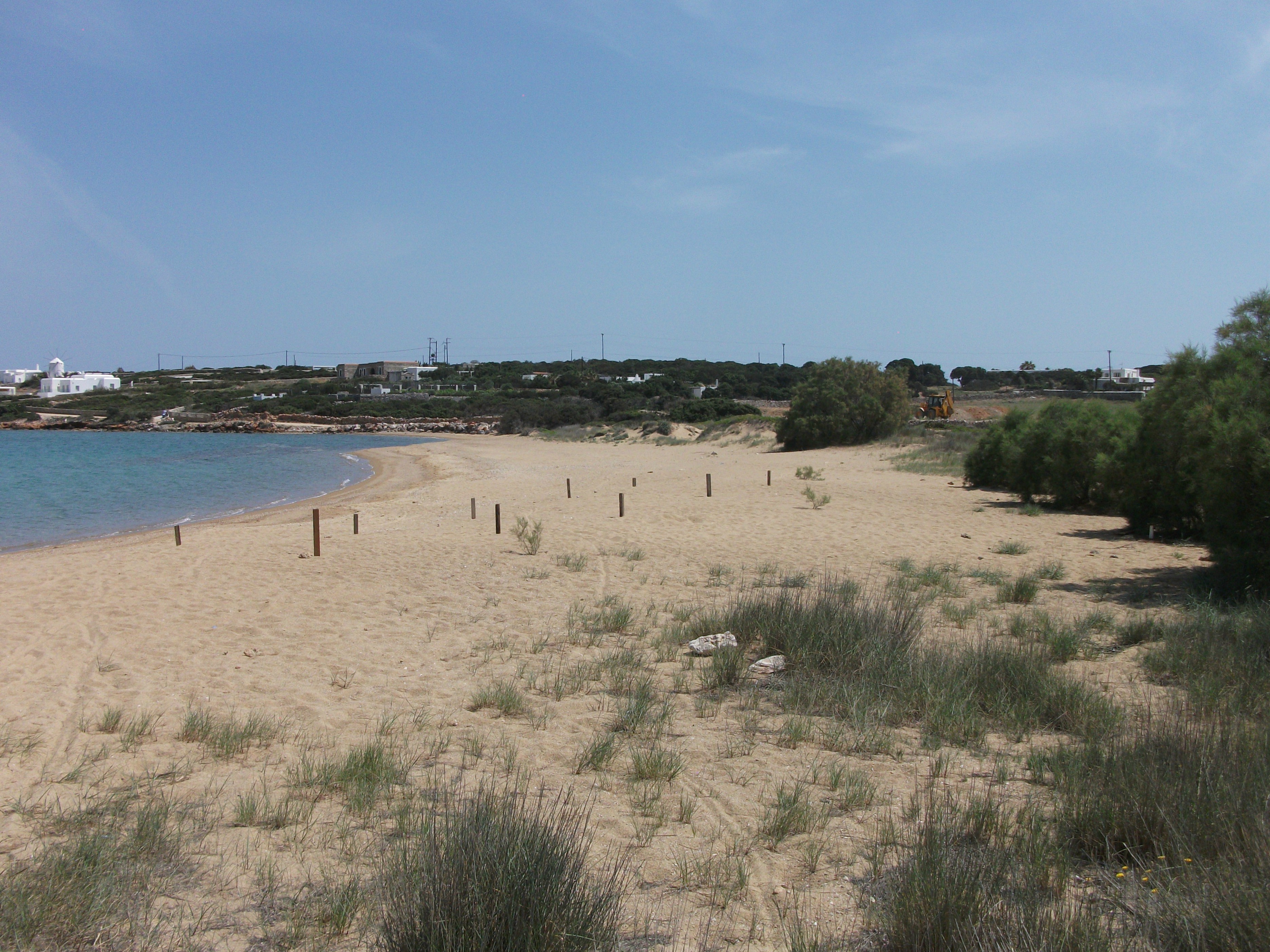
Psaraliki
Antiparos is also noted for its sandy beaches that start at Psaraliki, just to the south of the main village, and continue down to the small hamlets of Soros and Agios Georgios at the very south of the island, both of which have a few tavernas and rooms for rent. Excursion boats run there from both the main village and Parikia on Paros and often continue on to the uninhabited little island of Despotiko that lies just off Agios Georgios.
People to whom I have spoken talk of Antiparos as a quieter, less developed and more authentic alternative to the larger and busier Paros, which itself is hardly a throbbing metropolis. I can imagine that it may get somewhat overrun by day trip excursion boats in peak season, but, at other times of year, it remains sedate and peaceful. Next time I am in the central Cyclades, I may well give it a longer visit.
Donoussa
First Visited in 2016. Most recently visited in 2017.
One of the Lesser Cyclades islands. Small and quiet with limited tourism infrastructure but spectacular beaches. An island for escapists.

Sleepy little Donoussa is the most remote and least populated of the four Lesser Cyclades islands that lie to the south and east of Naxos. I first came upon it as the local Express Skopelitis ferry stopped there on its way to Amorgos. I liked the look of it enough to make a day trip from said Amorgos. That tempted me to revisit the following year and stay for a few days to explore it more fully.
Donoussa is a roughly circular island with just over 100 permanent residents who somehow manage to spread themselves over 3 small villages. The port of Stavros is the largest and arguably the prettiest. A beach of perfect soft sand and shallow turquoise water circles round from the little ferry quay to the nearest headland which offers a surprisingly varied choice of hotels and rooms for rent. There are a couple of small mini-markets, one or two tavernas (depending on if they are open) and a couple of bars that act as the main focal points of local activity. One sleepy bar on the quayside is the gathering place for the older generation, while a music bar round the corner attracts the youngsters looking for what passes for evening action on Donoussa.
I left Donoussa bound for Astypalea on a 2am ferry and ensconced myself in the music bar to await its arrival. By midnight I was the only customer left and the owner closed up and wandered off after checking if I wanted the music left on and inviting me to help myself to beers from the cool cabinet and to leave any payment on the bar.
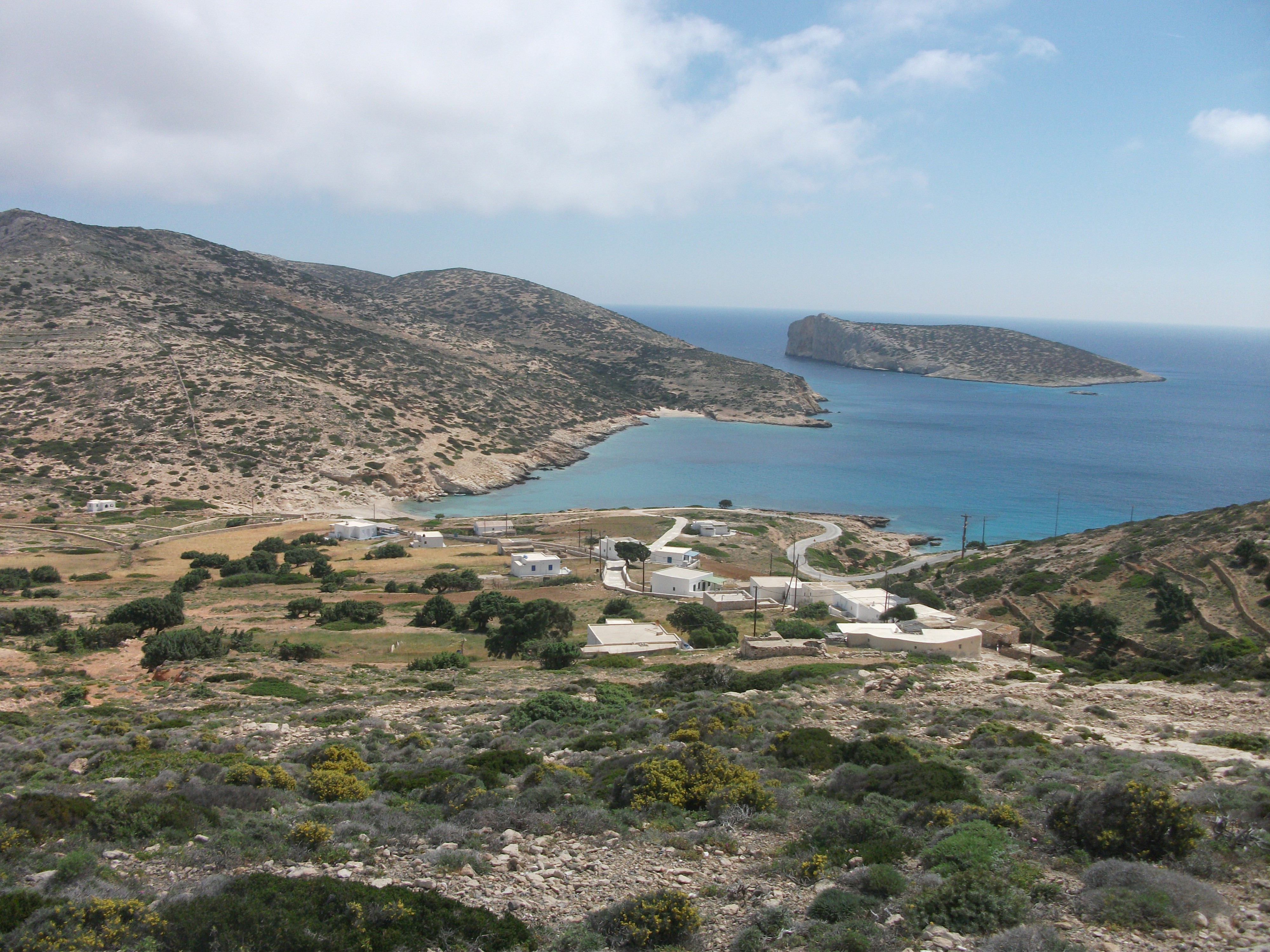
Kalotaritissa
From Stavros a number of somewhat confusingly waymarked footpaths spread out across the island. Once I finally found its start point, I tackled the longest round island trail that starts off by climbing along a ridge towards the island‘s highest point before dropping steeply down a series of rough terraces to Kalotaritissa, a tiny coastal hamlet that appeared to populated solely by chickens.

Kendros
From there it was a an easy couple of hours walk back to Stavros along a paved road that passes the rather dusty and run down village of Mersini and the glorious, wide sandy beach of Kendros, which is favoured by nudists and has a single taverna where friendly service just about mitigates for the mediocre food.

Donoussa Sunset
On Donoussa I stayed at the wonderful Ammos Studios in the centre of Stavros, two minutes walk from the ferry quay and ten meters from the beach – perfect for an early morning swim as the sun comes up. Donoussa is a real get-away-from-it-all island that you will probably want to go back to again and again. Don’t miss it.
Folegandros
Visited in 2016
A bit like a much quieter and more sedate Santorini. Increasingly popular with Greek visitors.
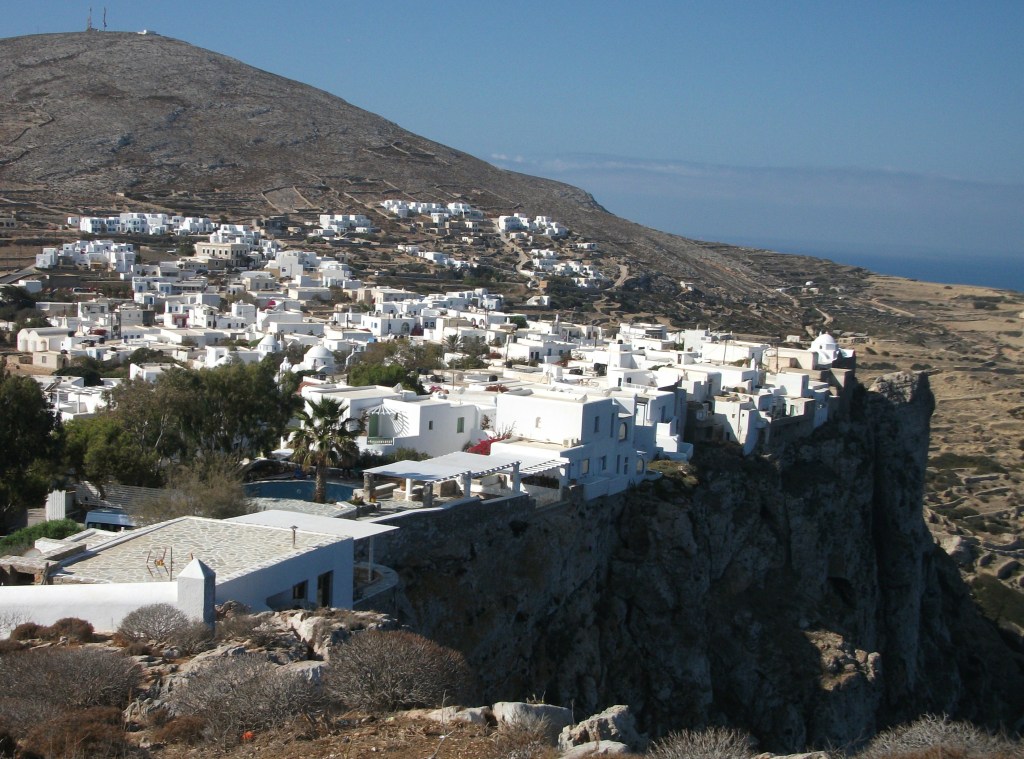
Located in the southern Cyclades roughly halfway between Ios and Milos, Folegandros is a small, attractive island with a deservedly growing tourism sector. That said, when I visited in October there were probably no more than two or three dozen visitors on the island.
The undoubted highlight of Folegandros is the Hora, located on the edge of high cliffs that give dizzying drops to the sea below – a bit like Santorini on a smaller scale without the crowds, but with the same spectacular sunsets.
The defensive Kastro in the centre of the village is particularly atmospheric but the rest of the Hora is equally appealing with a maze of paths and lanes leading to little squares filled with tables from surrounding tavernas and overlooked by surprisingly upmarket jewellery, clothing and gift shops. Evenings are quiet and relaxed and best rounded off in one of the local bars eavesdropping or joining in on local gossip as music softly plays in the background.
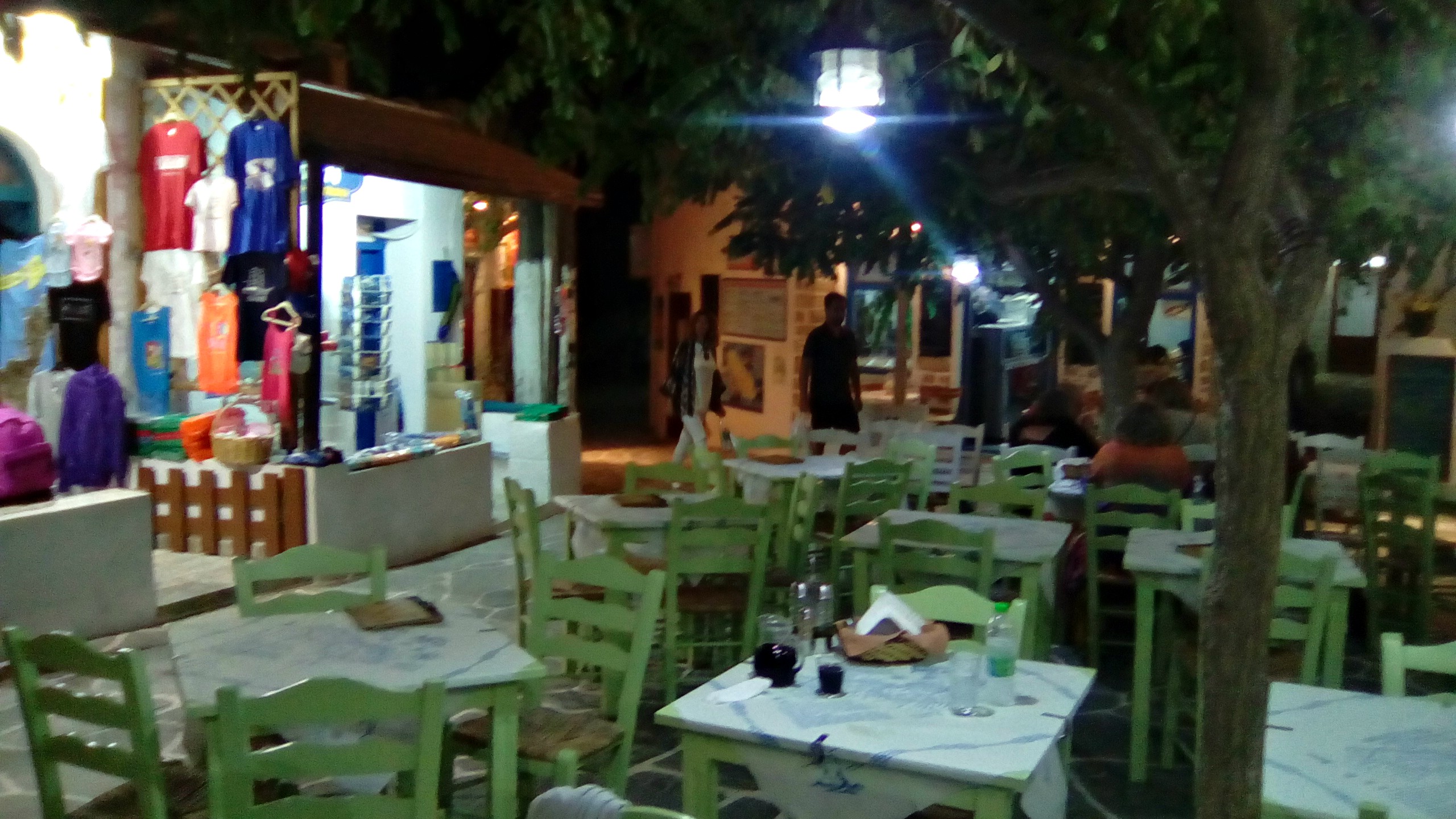
Chora at Night
There are regular buses between the Hora and the ferry port of Karavostasi, but don’t expect them to necessarily align with ferry arrivals and departures. I arrived to find I had missed the bus to Hora by 5 minutes and had a 2 hour wait until the next one. I started walking and thankfully was picked up by a local who also happened to let rooms in a rather splendid mansion on the edge of the Hora.
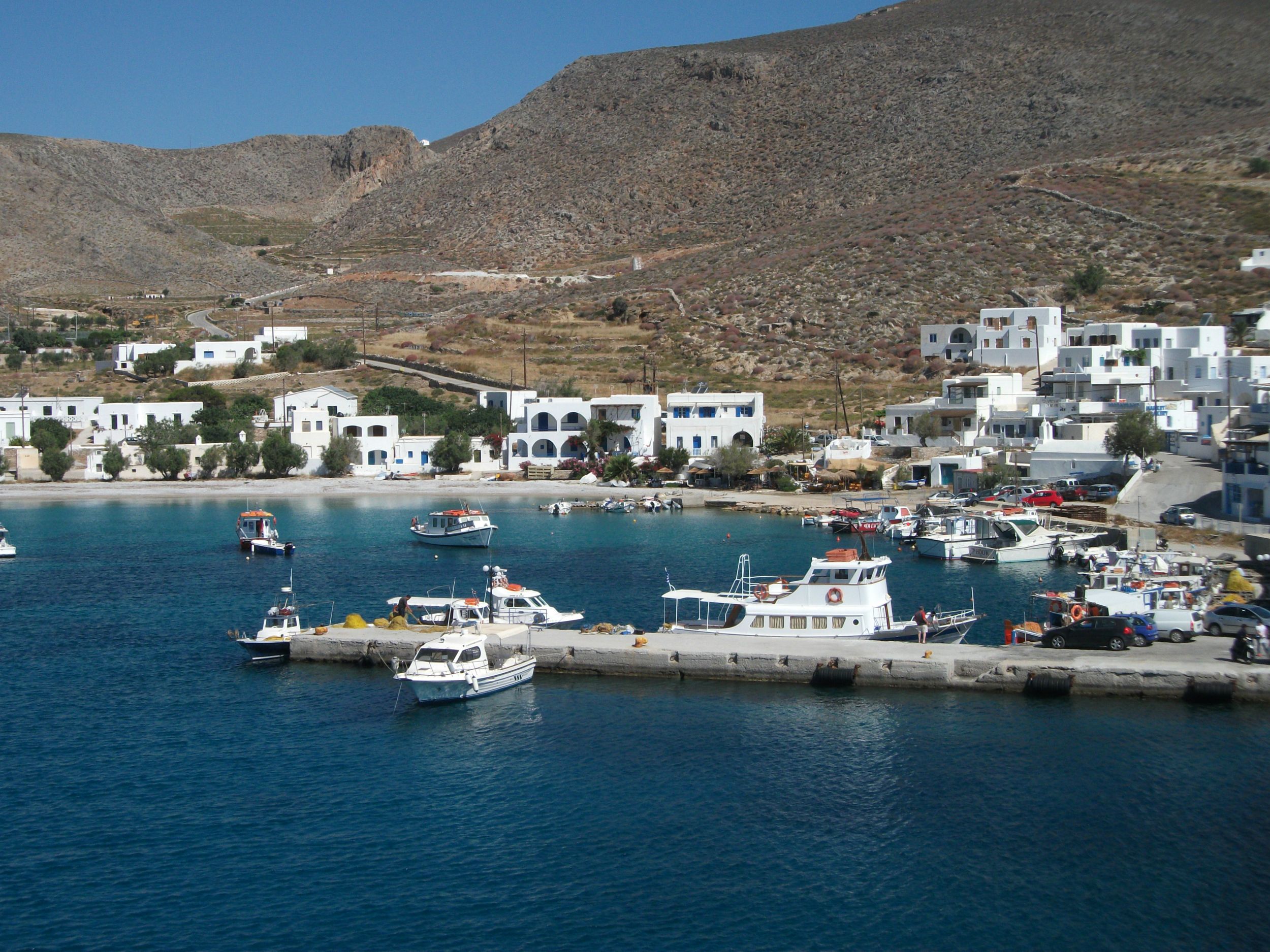
Karavostasi
At first glance Karavostasi appears to have little to offer other than a rough pebble beach and some undistinguished studio accommodation. However, a longer stay warms you to its understated charms and friendly tavernas. The beach at Livadi, about a ten minute walk away, is one of the largest on the island and has its only official campsite (closed in October) but not a lot else.
The other main village, Ano Meria, lies about 4 kilometres north of the Hora and is a pleasant and easy walk, although I feel I must have missed something as it seemed to have no real centre to speak of. On the way there a road turns off to the sands at Angali, probably the most popular beach on Folegandros with some rooms and a couple of tavernas. Buses run to it from Hora, but not very often out of the main season.
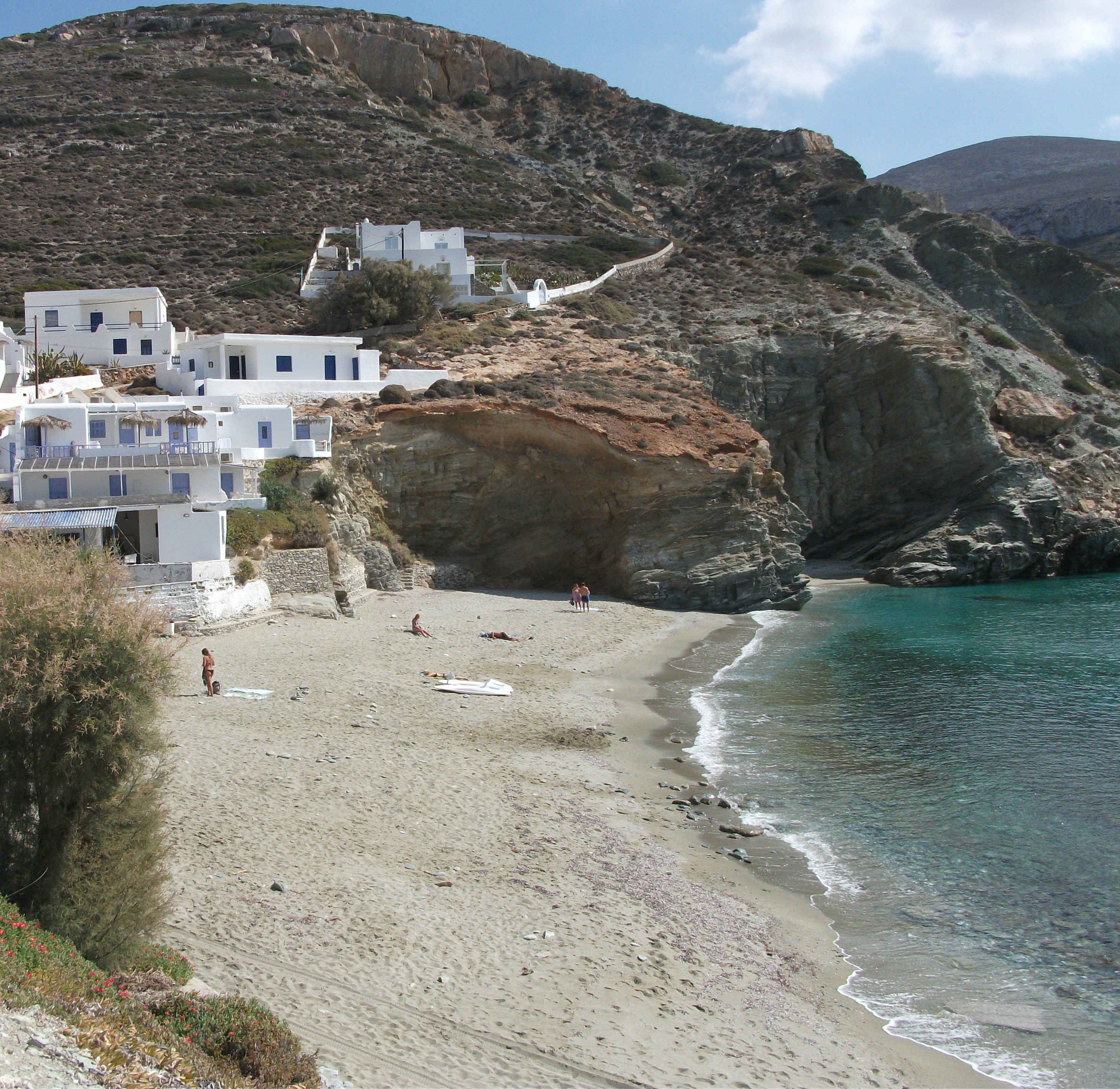
Angali
Folegandros is very pretty with a spectacular coastline and a hinterland where farming still takes precedence over tourism. The Hora is quite simply delightful and very much the place to stay. Prices are maybe a little higher than elsewhere, reflecting its upmarket aspirations. However, if you like your Greek island escape to have a touch of understated class, Folegandros is the place for go.
Ios
First Visited in 2014. Most recently visited in 2016.
Once the young, noisy party island of the Cyclades. Has calmed down a little over the years but still predominantly attracts younger visitors for its beaches and night life.
When I first came to Greece in 1979, Ios had a reputation as a loud, all night party island where happy hours and cheap alcohol fuelled short and drunken sexual liaisons. Being a shy and sensitive type, I naturally avoided it.
Today, Ios has shed much of its wild reputation but is still an island that attracts a largely young clientele. I arrived there from Anafi, where I was possibly the youngest visitor on the island, to find myself very much amongst the oldest of the old farts on Ios.
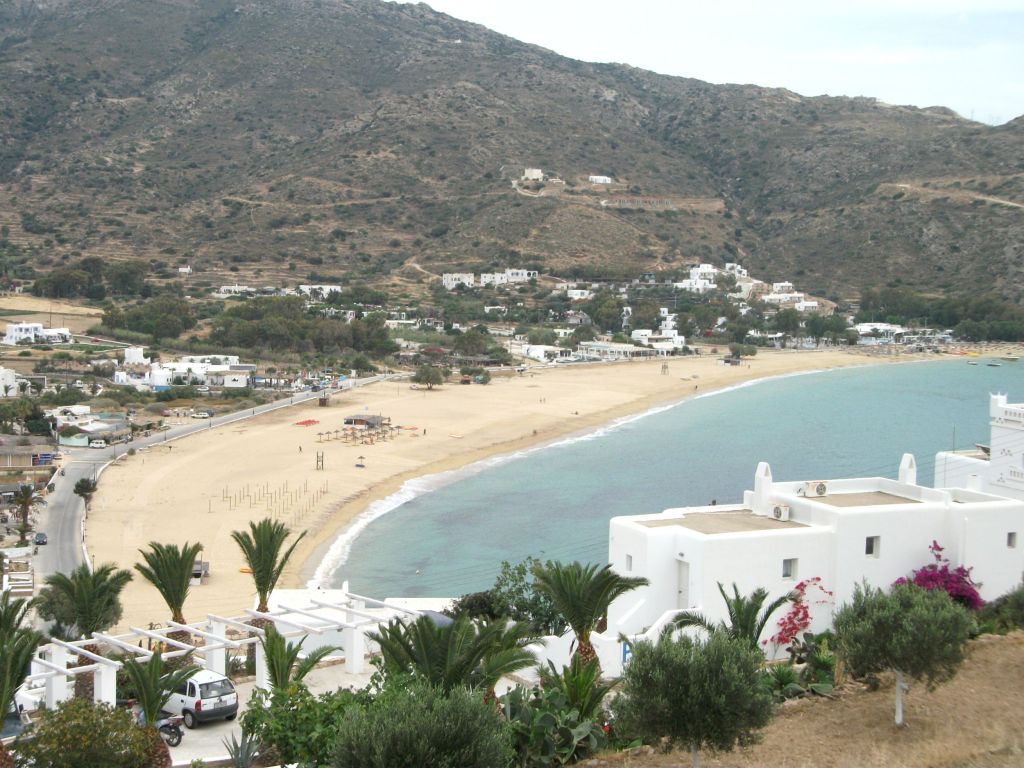
Ios is a large, well connected island with regular ferries and hydrofoils in all directions. Just about everyone lives or stays in one small corner on the west coast where the port of Gialos, the Hora and the beach resort of Mylopotamos are all within comfortable walking distance of each other.
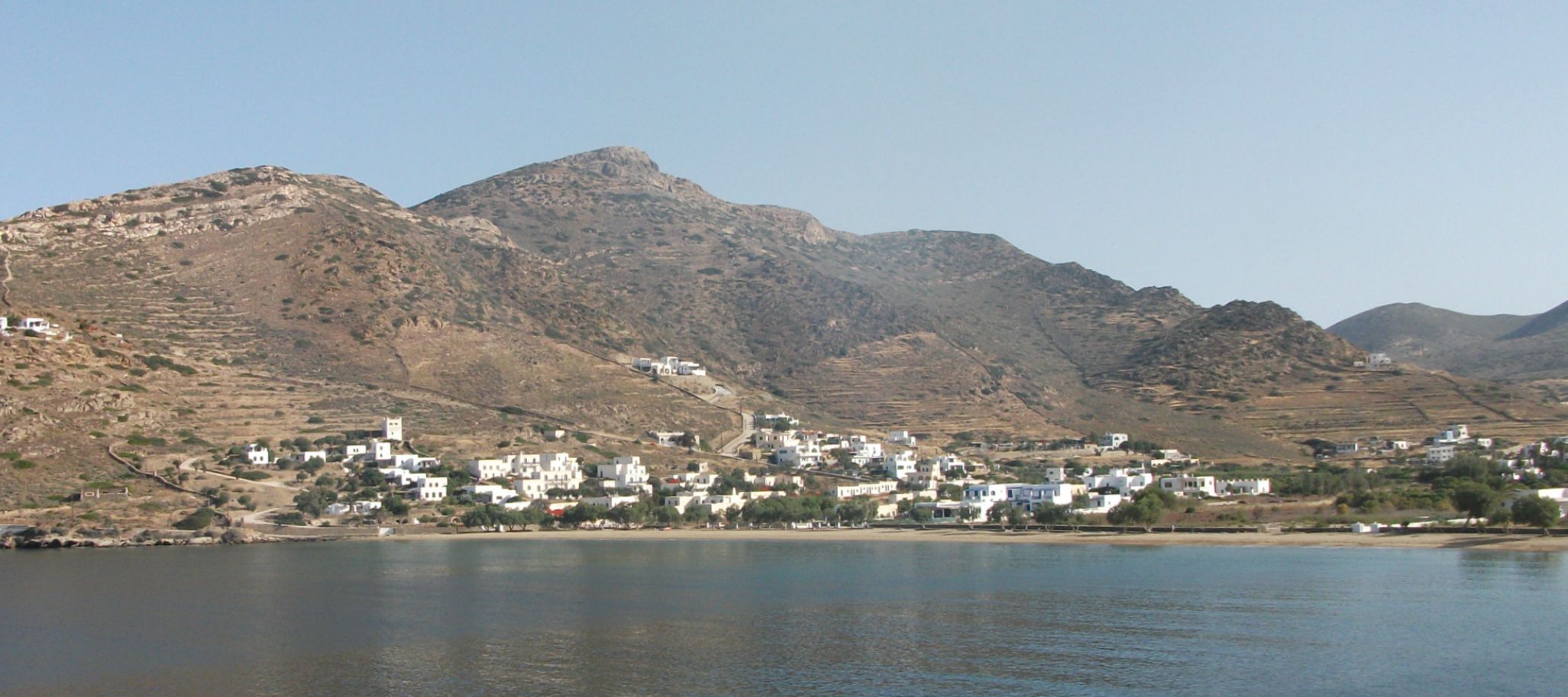
Gialos
Gialos is the quietest option for visitor accommodation. Its long, hard sand beach is backed by an array of hotels and studios and there is a good choice of tavernas, cafes and minimarkets. I generally stay here, partly for the short walk to early morning ferries and partly for the more relaxed late evening atmosphere which is welcome after a few night time hours in the Hora.
There are regular buses up to the Hora, or it is a 20 minute uphill walk along a footpath that bisects the main road. The Hora is a very picturesque village of meandering lanes that appears sleepy during the day and bursts into life at night when every type of cuisine is on offer and music blares out of more bars than any sensible person could visit in a fortnight.
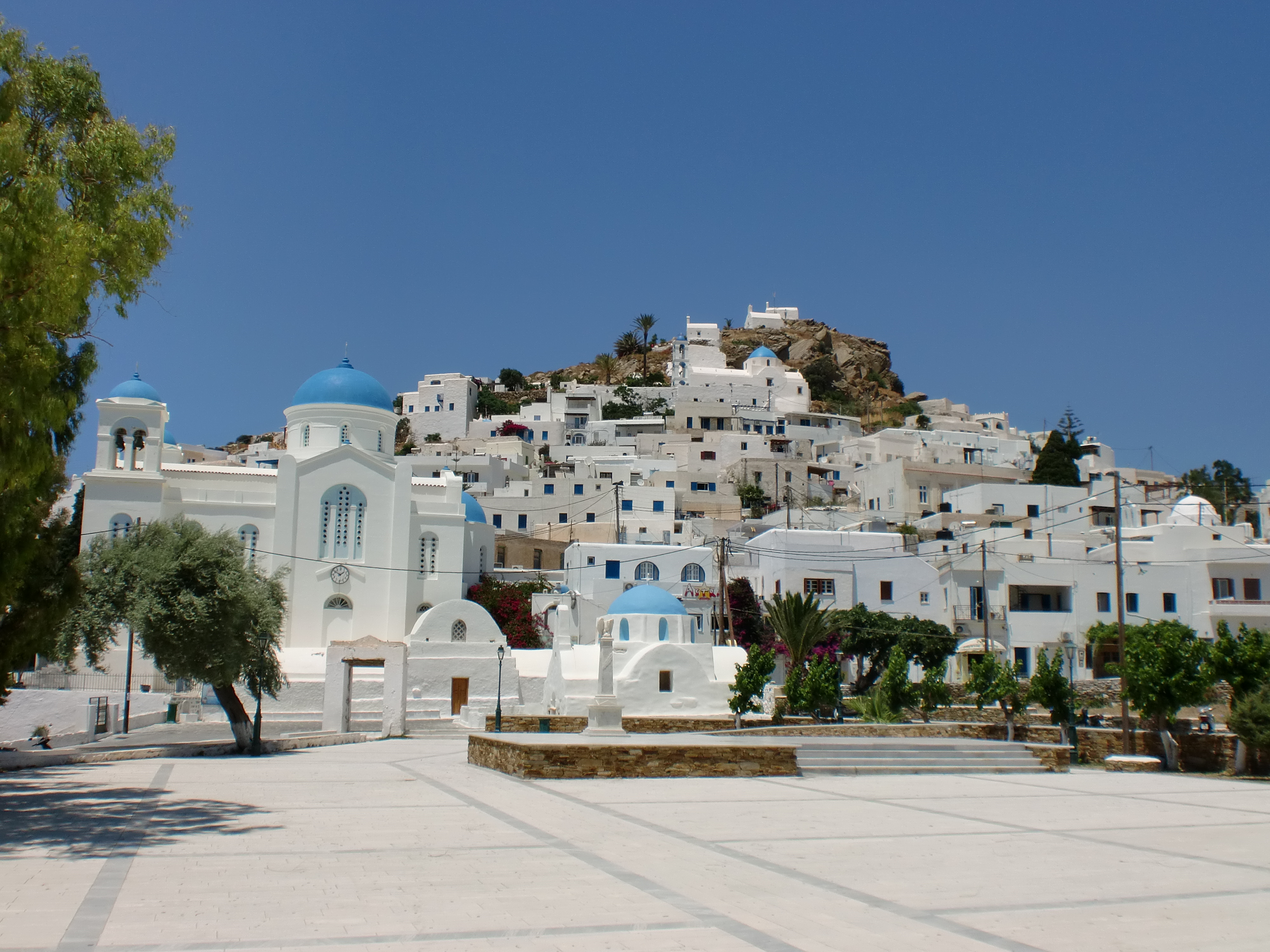
Chora
I had one entertaining evening in a Thai restaurant where a very drunk, loud and foul mouthed American “jock” on the pull was dragged screaming out into the street by another customer bent on beating the crap out of him for hitting on his girlfriend. However, try hard and you can find quieter, slightly more sedate corners hidden away on the back streets.

Mylopatamos
Mylopatamos is a magnificent sandy beach with a number of camp sites, lively tavernas and bars, and watersports centres that seemed to be staffed almost exclusively by Australians. I’ve only visited Ios off season, but I imagine the beach at Mylopotamos is spacious enough to accommodate all but the largest peak season crowds in relative comfort if not tranquillity.
The rest of Ios is still a mystery to me. There are few paved roads but excursion boats and buses run to other remoter beaches with tavernas and watersports. Homer’s tomb is allegedly located at the north of the island, but it’s unlikely that the ruins there date back to the times of the ancients.
I find Ios a good choice for a couple of nights at a time when I feel a need for a livelier atmosphere and something other than calamares and octopus on the menu. It’s great for a beach holiday and will particularly appeal to teenagers and the younger generation, but don’t expect too much quiet evening relaxation.
Iraklia
First Visited in 2007. Most recently visited in 2017.
One of the Lesser Cyclades. Small, quiet and pretty. Only a short ferry ride from it’s large neighbour, Naxos.
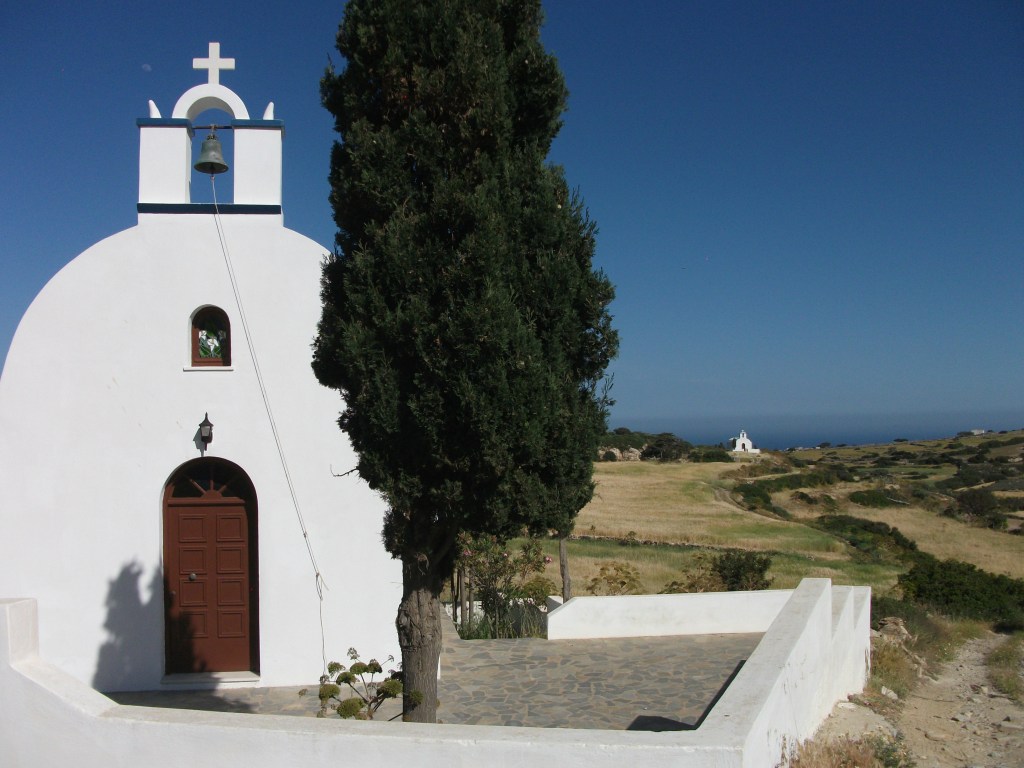
Iraklia is the nearest of the four Lesser Cyclades islands to Naxos and home to just over 100 permanent residents. The local Express Skopelitis ferry takes about an hour and half to travel from Naxos Town and runs on most days. There are also a few larger ferries to and from Pireaus most weeks.
In addition, it is possible to visit Iraklia on a day trip excursion boat from Naxos and Paros that runs two or three times a week in the main season. However, this only gives you an hour or so on the island before it continues on to nearby Koufonissi.
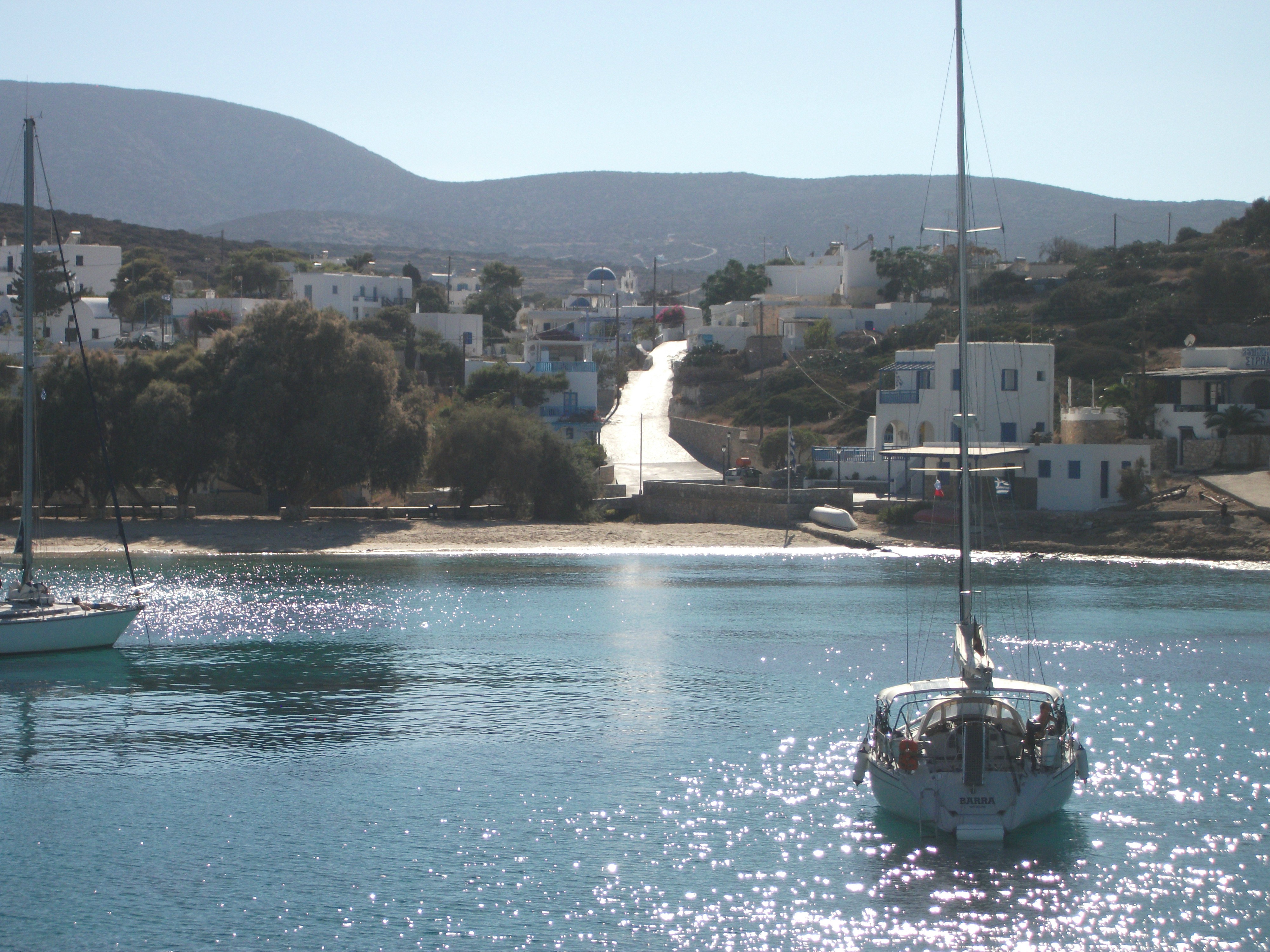
Agios Georgios
The port of Agios Georgios is the larger of the two villages on the island. It’s a spread out kind of place with a minimarket, a few tavernas and about half a dozen accommodation providers renting out studios and rooms. I stayed at Angelos Rooms, which I can wholeheartedly recommend for location and comfort, as well as proximity to the owners little café/snack bar across the road which serves up excellent breakfasts.
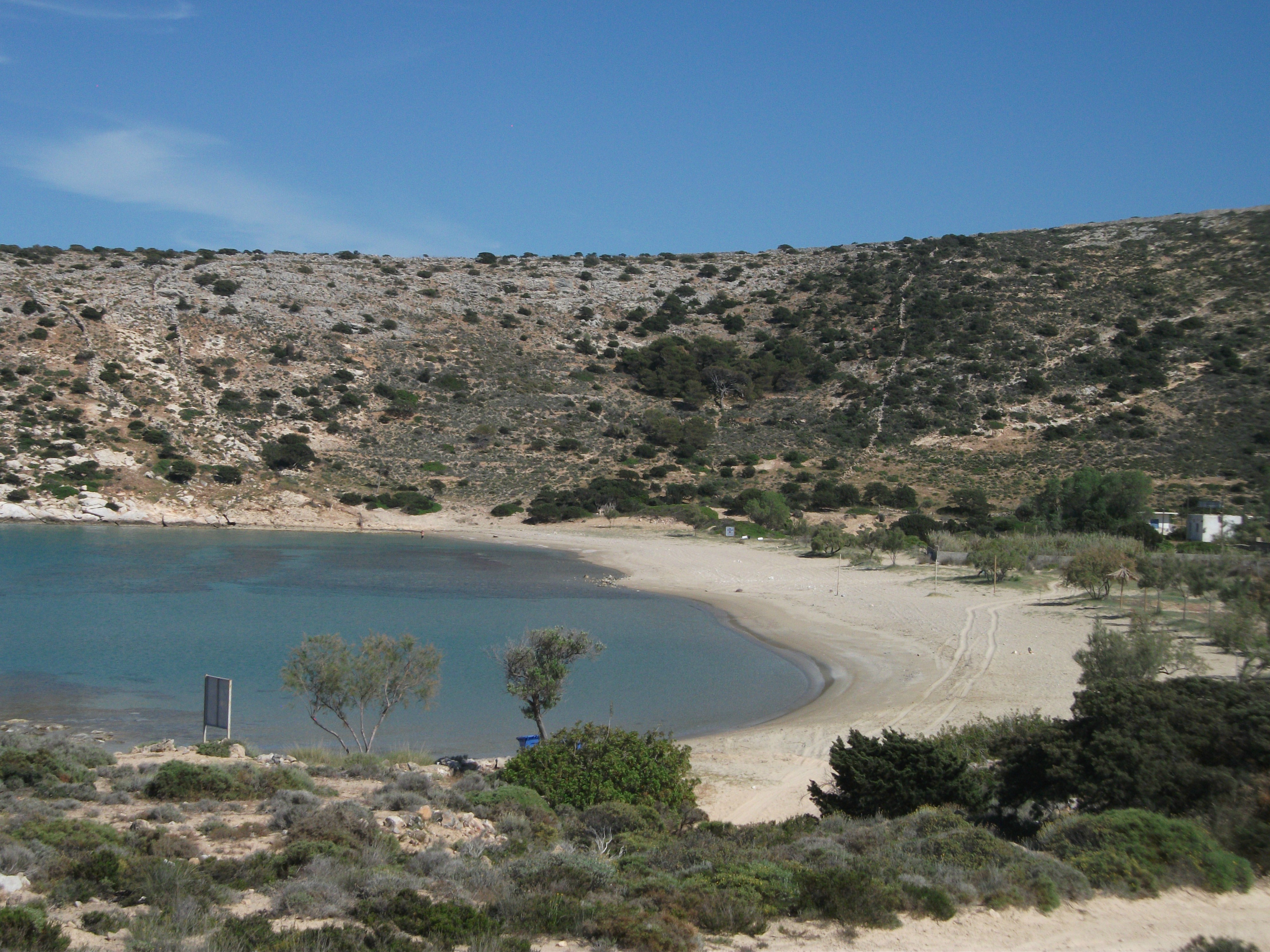
Livadi
The beach in the heart of the village has soft sand, clear water and shady trees. However, a 15 minute walk along the only paved road on the island brings you to the larger Livadi beach where there are a couple of very seasonal tavernas and some more rooms for rent. The beach is overlooked by an abandoned village of the same name that stands on the hillside above it.
The paved road continues on to Panagia (also known as Hora), the only other village on the island. This is something of a one street, one man and one donkey place with little to detain visitors. However, the walk there passes along attractive farming countryside dotted with little churches.
It’s also possible to walk between Agios Georgios and Panagia along a dirt track to the west of the main road that passes through another deserted hamlet and supposedly leads on to a track to the Cave of Agios Ioannis towards the south of the island. I looked long and hard for the start of the track to the cave but completely failed to find it. So my afternoon was spent as the only person on Livadi beach instead.

Iraklia is a friendly, laid back little place. It’s pretty rather than spectacularly beautiful, but has a couple of excellent beaches and some enjoyable walking that isn’t too strenuous. Its tourism infrastructure is limited, but probably adequate to cope with the visitor numbers it attracts. It’s ideal for a couple of nights away from it all and there’s no better way to end your evening than lying flat out on the beach slightly drunk counting the number of stars in the pitch black sky. I can confirm there are a helluva lot of them.
Kea
Visited in 2013
The Cyclades island closest to the mainland. Popular with weekending Athenians, but still quiet and largely unspoiled.
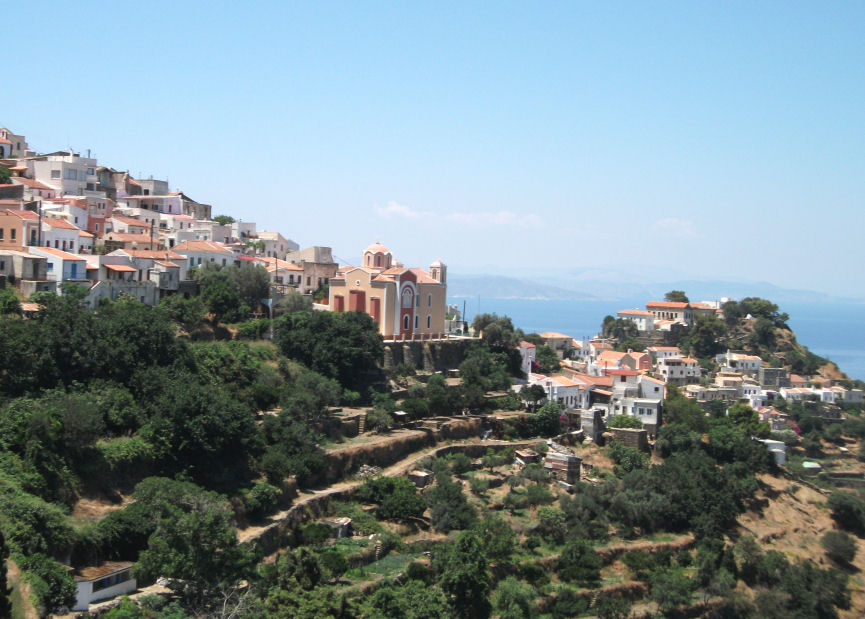
Kea is the nearest of the Cyclades to the Greek mainland. It is usually reached by ferry from Lavrio, a fairly unprepossessing port a 90 minute bus ride from Athens. However, there are also connections to other Cyclades islands. I sailed there on an early morning ferry from Syros via Kythnos.
Its location makes Kea a popular weekend destination for Athenians, some of whom have built modern villas on the island giving it a prosperous look. However, it is by no means overrun by visitors and its interior in particular is still perfect for quiet and relatively easy walking and hiking.

Korissa
The port of Korissia lies on the north west of the island and straggles along a wide bay in a fairly unmemorable manner. There are a number of places to stay and a cluster of okay but unspectacular tavernas and bars around the ferry quay. Car and bike hire is available and buses run to other parts of the island, albeit without any great regularity outside peak season.
Otzias
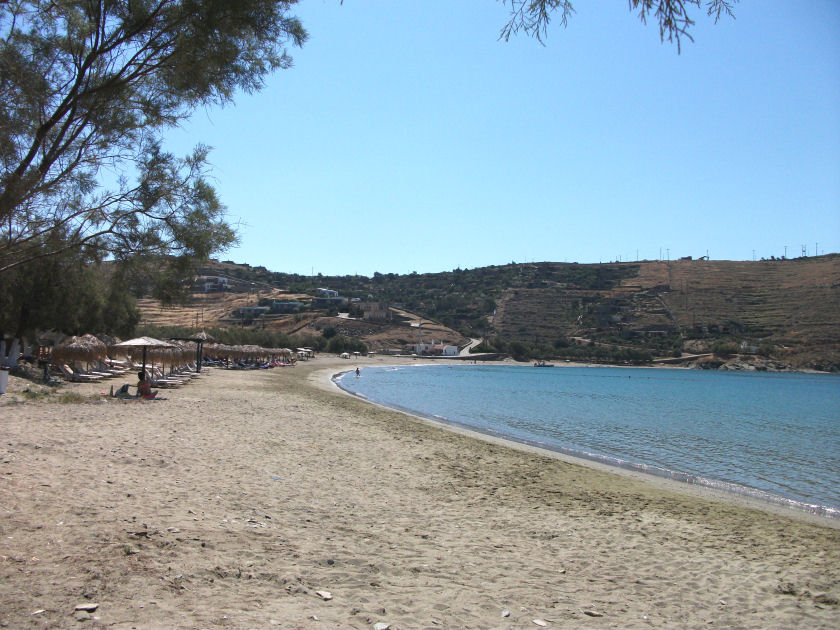
A 20 minute walk to the north, Vourkari is popular with yachties and is reckoned by some to have the best restaurants and nightlife on the island. Another four kilometres beyond, Otzias has one of the best beaches on Kea and something of a relaxed family vibe. I spent a very pleasant afternoon there alternating between lying under a shady tree and floating in the warm, shallow water.
Ioulina is the main village or Hora and is located about five kilometres inland from Korissia. Spreading out across two hillsides, it is a delightful place with neoclassical buildings, narrow lanes and an array of upmarket restaurants and bars. Most people park at the bottom of the village and walk to the centre as vehicular access is restricted for much of the day.
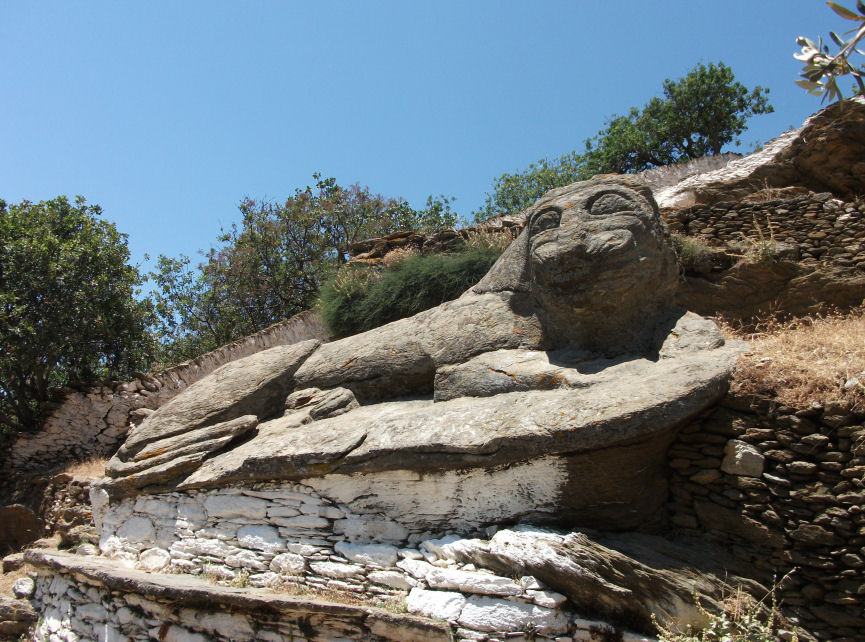
Lion of Kea
Just outside the village is the Lion of Kea, a carved stone sculpture of a rather stoned looking feline about 6 metres long that dates back to the 6th century BC. As is often the case in Greece, access to this probably priceless ancient work of art is a bit rough and you’re likely to share your viewing experience with a herd of munching goats crapping all over the ancient stone work.
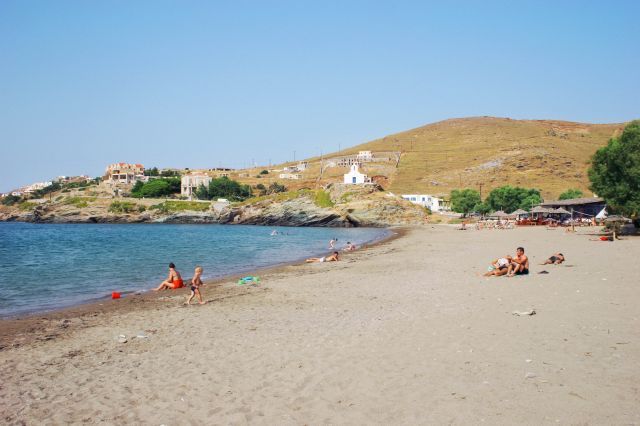
Pisses
A paved road runs from Ioulina southwards to the undeveloped but rather windswept beach at the wonderfully named Pisses. Naturally I had to go there just to see what a place of that name looked like. Rather rough and ready and dominated by a large campsite was the answer. I didn’t stay long.
Kea is the most northerly of the Western Cyclades, which are sometimes called the Dry Cyclades. This is reflected in its somewhat rocky and barren landscape. However, Ioulina is a charming and vibrant Hora and Otzias is a pleasant seaside village. They are probably the best options for a place to stay from which to explore.
Kimolos
Visited in 2014
Milos’ smaller neighbour with whom shares unusual landscapes. Quiet and pretty but a bit unexceptional. Maybe an acquired taste.
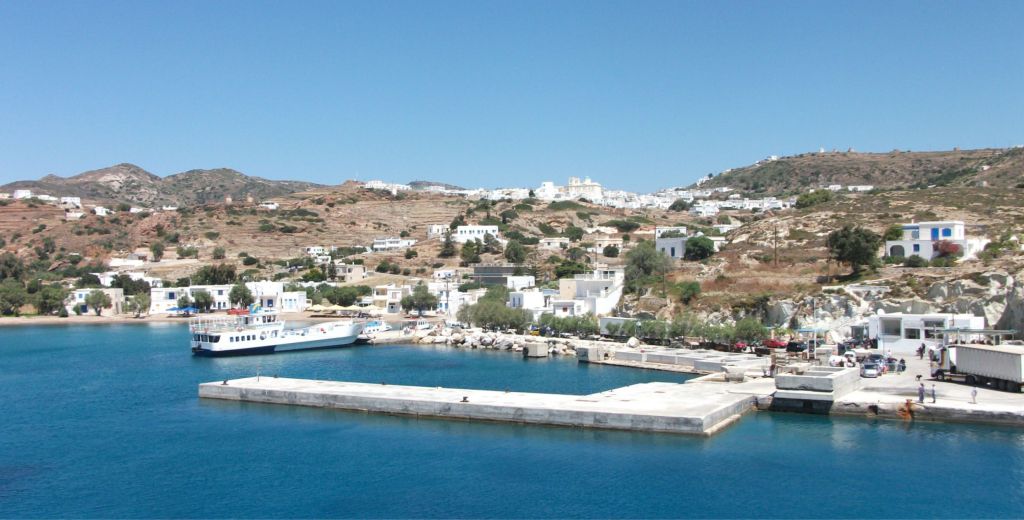
Recently I was somewhat surprised to find the travel section in a best-selling Sunday newspaper tip Kimolos as the next must-see, undiscovered Greek island. My experience of Kimolos is limited to a four hour stopover on the way from Sikinos to Milos, but I have to say that what I saw in that time has not got me champing at the bit to go back and see more.
Kimolos is Milos’ smaller, easterly neighbour. It does have direct ferry connections to Piraeus via a variety of different islands, but the most common means of access is the local ferry that goes back and forth between it and the port of Pollonia on the north east tip of Milos. Like Milos, Kimolos is a volcanic island where mineral mining is a major industry. Its name derives from the Greek word for chalk although, nowadays, Fuller’s Earth is its main mineral product and, no, I have no idea what Fuller’s Earth is used for.
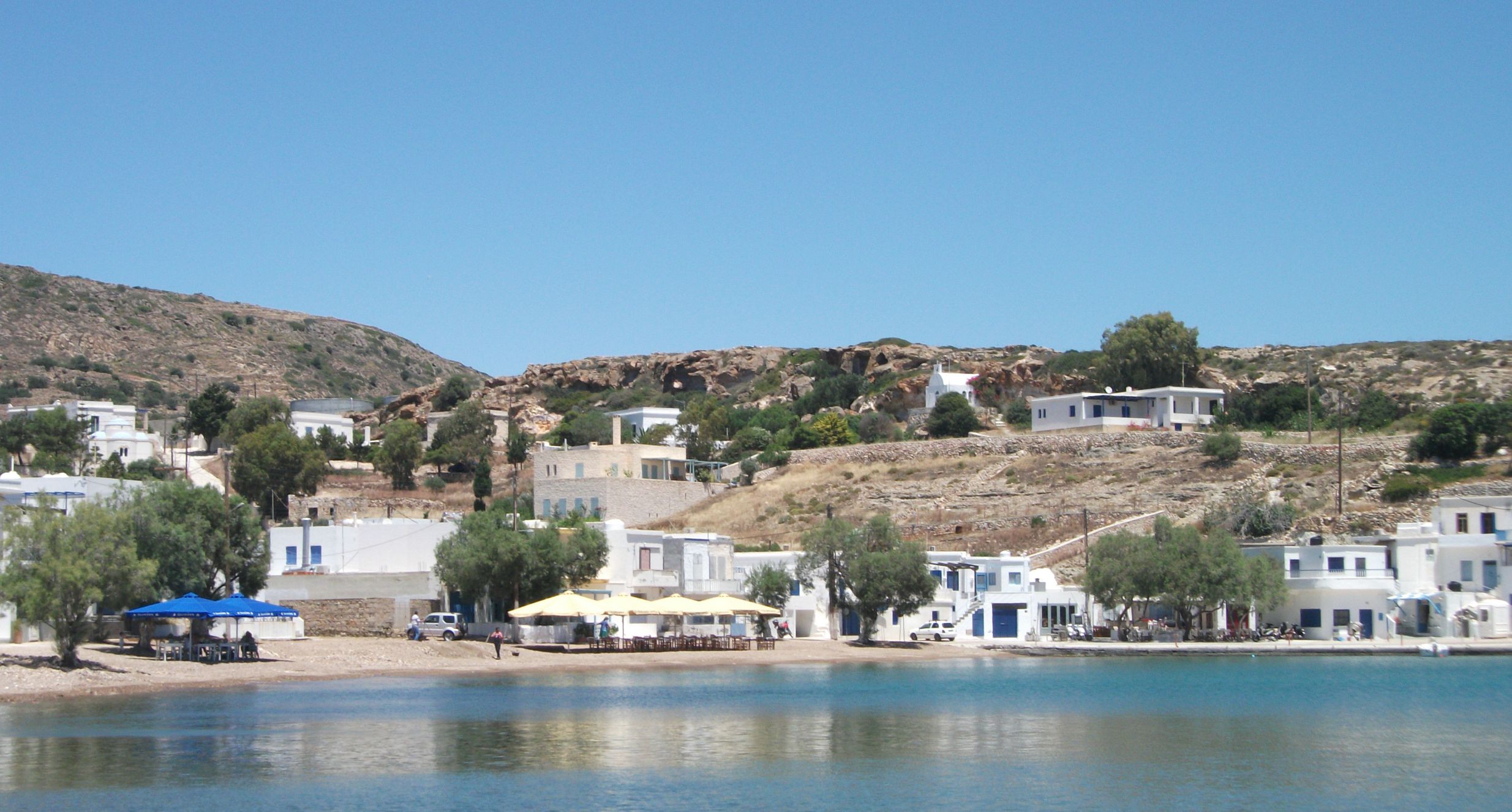
Psathi
The island port of Psathi is small and nondescript at best. There are a few tavernas and a beach of large, rather uncomfortable pebbles. The only activity when I visited was two men on the beach shovelling up pebbles from one spot, putting them into a wheelbarrow and moving them to another spot about 10 metres away. I have no idea why, but then I didn’t ask.
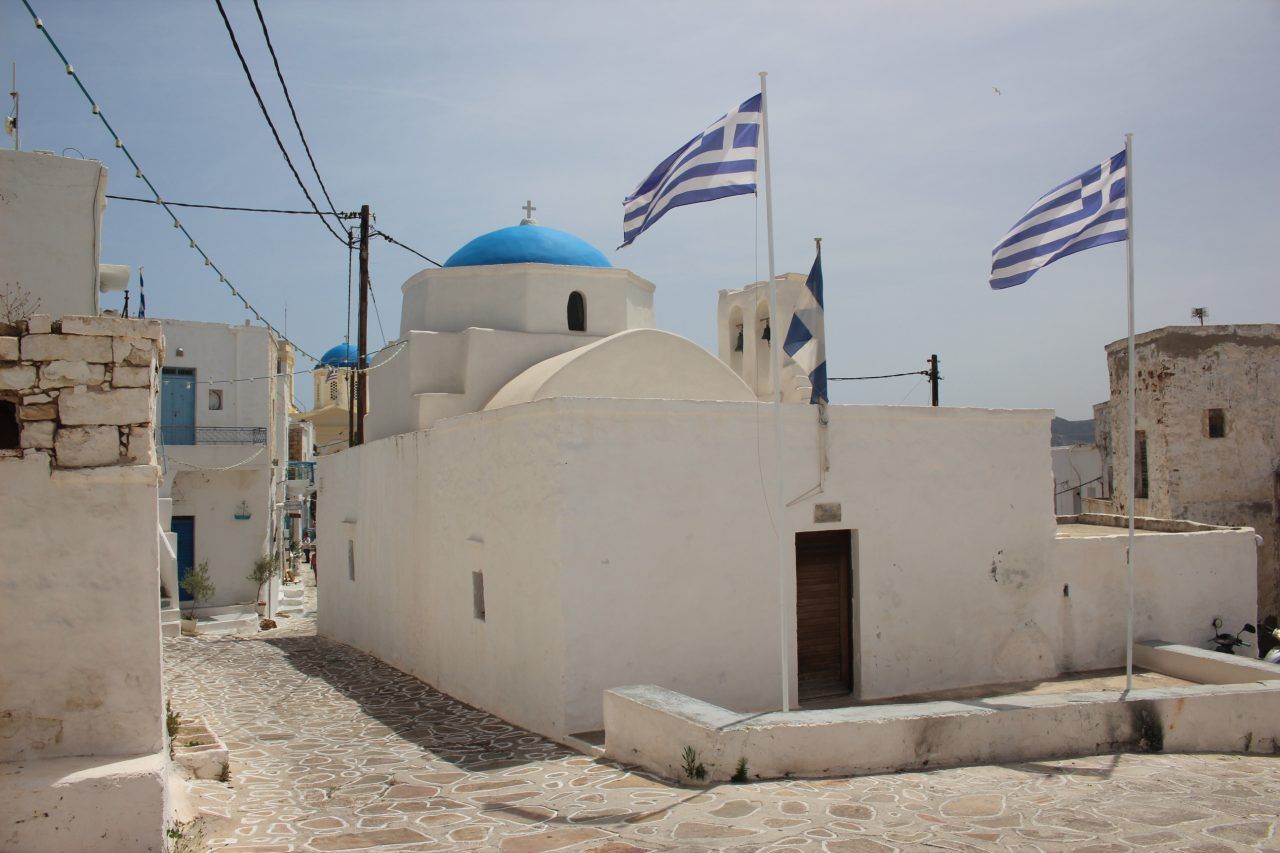
Hora
The Hora is about a 15 minute walk up a fairly gentle hill and has a bit more to it. It is built around a well preserved kastro and has a traditional Greek village ambiance. However, early in the season in May much of it looked unopened and rather rundown with paint flaking on shutters and doors hanging off hinges. Nonetheless, this seemed to be where most of the visitor accommodation and the majority of tavernas are located.
The lackadaisical approach of Kimolos to tourism is perhaps best encapsulated by my walk back down to Psathi during which I encountered about a dozen elderly and portly French visitors sweating heavily as they dragged suitcases up the hill. I was interrogated about the availability of rooms to rent in the Hora because they had been unable to find any in Psathi, which is one of those island ports where ferry arrivals don’t appear to be met by the usual crowds of local ladies offering accommodation. Perhaps they are all on the Air B&B website nowadays.

Kimolos
A half hour walk on a paved road west from Psathi brought me to the small coastal village of Alyki where there appeared to be a few tavernas and rooms for rent. Its beach offered a good stretch of sand but limited shade. The village was not unduly enhanced by its proximity to a large saltpan.
I may be unfair to Kimolos and may have missed its most attractive aspects, but it felt significantly less interesting and welcoming than its larger neighbour to the west. It’s true to say that I wasn’t particularly sorry to get on to the ferry to Milos.
Koufonissi
First Visited in 2007. Most recently visited in 2017.
The busiest of the Lesser Cyclades with a bit of a buzz about it. The main draws are its spectacular beaches and lively main village.
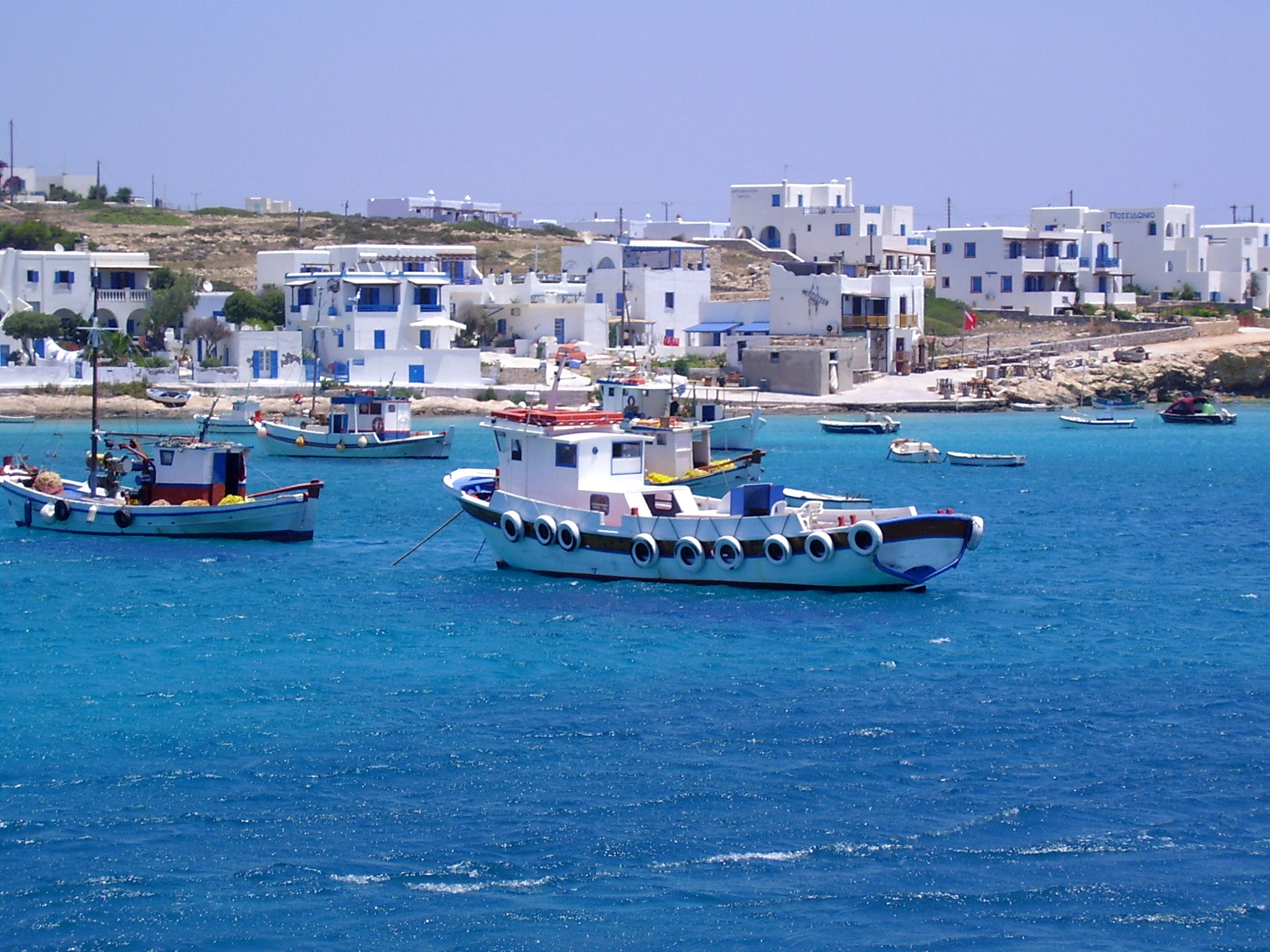
On the Greek islands sometimes the simplest elements make for the most memorable experiences.
I first visited Koufonissi on a day trip excursion from Naxos and will always treasure the memory of sitting with my wife in a waterside taverna eating grilled octopus, drinking cold beer, looking across to the uninhabited island of Keros and a little fishing boat chugging along on the bright turquoise water, while chatting to the local doctor about island life. I’ve eaten octopus and drunk beer on many an island but somehow, that day, they tasted spectacular on Koufonissi.
I’ve since been back to stay on what is the most populated and most developed of the Lesser Cyclades, although we are still talking about an island with less than 400 permanent residents and a relatively short visitor season.
There are actually two Koufonissi islands. The larger Kato Koufonissi has no more than one seasonal taverna and a couple of holiday villas for hard core escapists. On petite Anno Koufonissi life largely revolves around one whitewashed village and a series of spectacular beaches.

Hora
The pretty, waterfront Hora of Anno Koufonissi spreads over two distinct districts which are separated by a wide sandy beach that also acts as the unofficial road between them. The district to the east is largely modern with a good range of high quality accommodation. The more traditional western district also has a varied choice of accommodation, but more tavernas, little shops and authentic Greek island atmosphere, despite the recent opening of a new yachting marina.
I’ve always stayed in the western district, which is where you will find most of the night time action. The tavernas can be surprisingly lively, sometimes with live music, and I have a favourite bar whose tables spill out across one of the main streets. The best way to end an evening is to sit with a coffee and a Metaxa brandy watching people pass by and listening to locals arguing about backgammon and life in general. Sometimes you find yourself drawn into conversations and discussions that result in more brandies and a slightly unsteady walk back to wherever you’re staying.
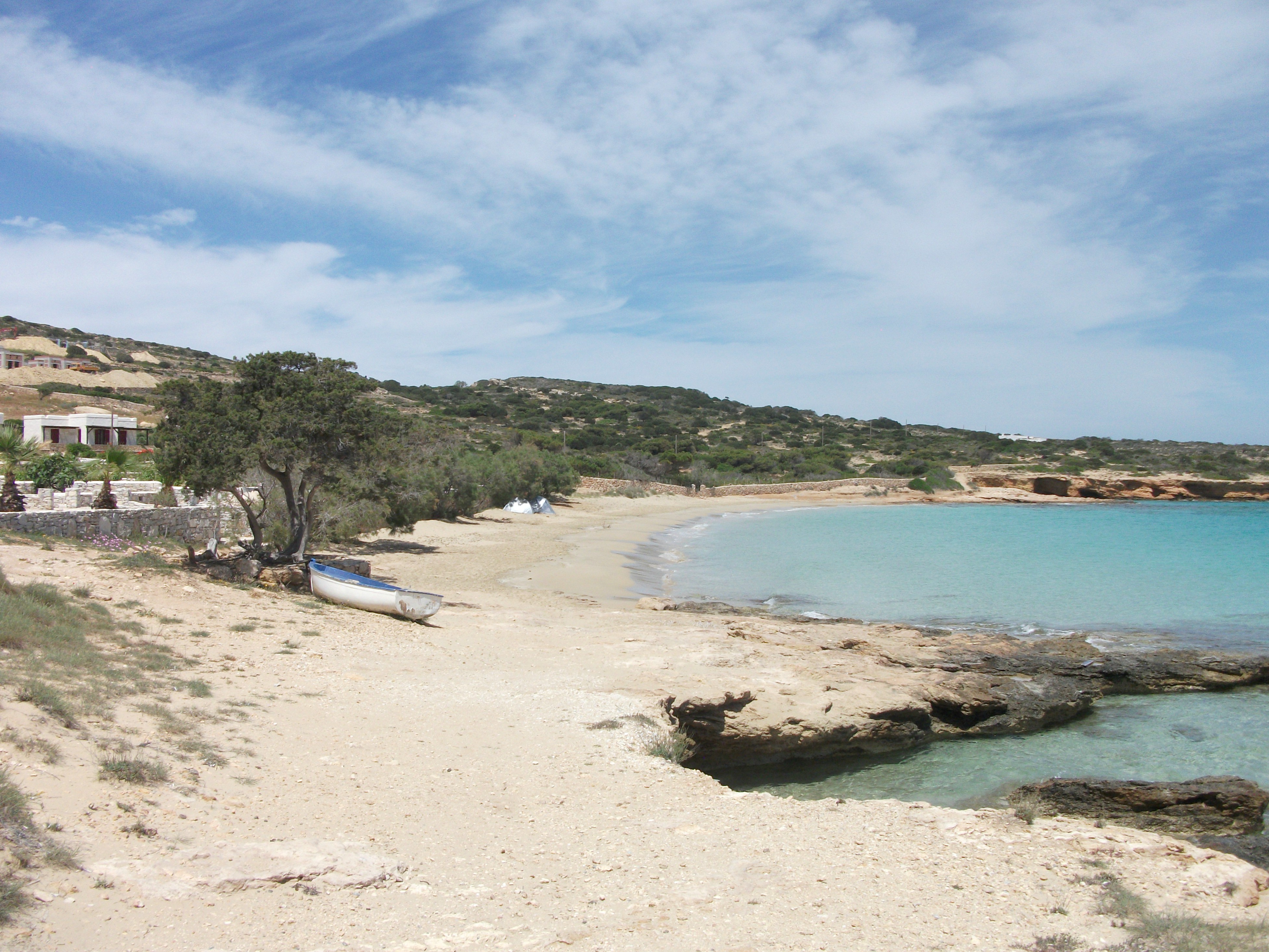
Finikas
Ano Koufonissi is a relatively flat little island where a string of about half a dozen wide, sandy beaches stretch eastwards from the Hora. Finikas, the nearest, is a 10 minute walk. Getting to Pori, the most remote and the largest, still requires less than an hour of easy coastal walking, or can also be reached along a shorter but rougher and less obvious inland track. As you go further east, the beaches become quieter and more favoured by nudists.

Koufonissi is simply charming. An escapist’s bolthole with good food, comfortable accommodation and a bit of interesting night life. It’s about 3 hours sail from Naxos on the local Express Skopelitis ferry but also has regular larger ferries. It’s a perfect introduction to the Lesser Cyclades.
Kythnos
Visited in 2013
Stark and barren. Good walking around the attractive inland villages, but the coastal villages are rather nondescript.
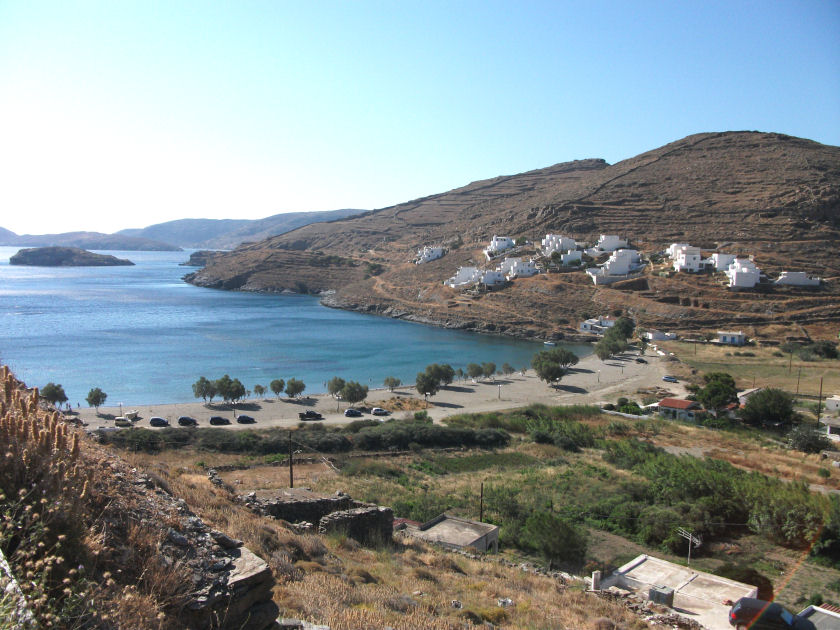
I’d seen poor little Kythnos in the Western or Dry Cyclades described in one well known guide book as “barren, dull and lacking decent beaches”. Perversely, this piqued my curiosity and I went there hoping to uncover some outstanding feature that everyone else had missed. I didn’t.
First impressions as we sailed into the port of Merihas were of the brown and bare appearance of the landscape, even in May before the sun had had much chance to parch it.

Merihas
Sadly, Merihas did deliver on the “dull” description. My experience there was maybe not helped by staying in poor quality accommodation, being served the worst gin and tonic I have ever encountered – three parts rough, throat stripping alcohol to one part very flat tonic – and facing a meal of fish with garlic sauce in which the latter was a mountain of almost raw crushed garlic that took up more than half the plate. In summary, Merihas is not a place of much sophistication.

Dryopidha
Thankfully, things get better as you move inland. I enjoyed a very pleasant, if windy, day walking on a circular route that took in the two main inland villages of Dryopidha and Hora. The former is a beautifully located, red roofed village spanning a ravine. From there you can follow a paved road or a cobbled footpath round to the Hora. It is larger and not as pretty, but has a wider selection of tavernas and bars that spill out on to its narrow lanes. The route between the two follows a high ridge with spectacular sea views and passes close by the chapel of Agios Spyridon as well as various ruined windmills. It takes about an hour and half to walk from one village to the other.

Hora Eatery
From Hora, there is a paved road north east to the coastal spa village of Loutra, which locals regard as the island’s main resort. However, an English mother and daughter who I kept bumping into advised that it wasn’t worth the effort of walking there. I respected their judgement and didn’t go, preferring instead to circle back to Merihas via a swim and rest on the hard sand beach at Episkopi.
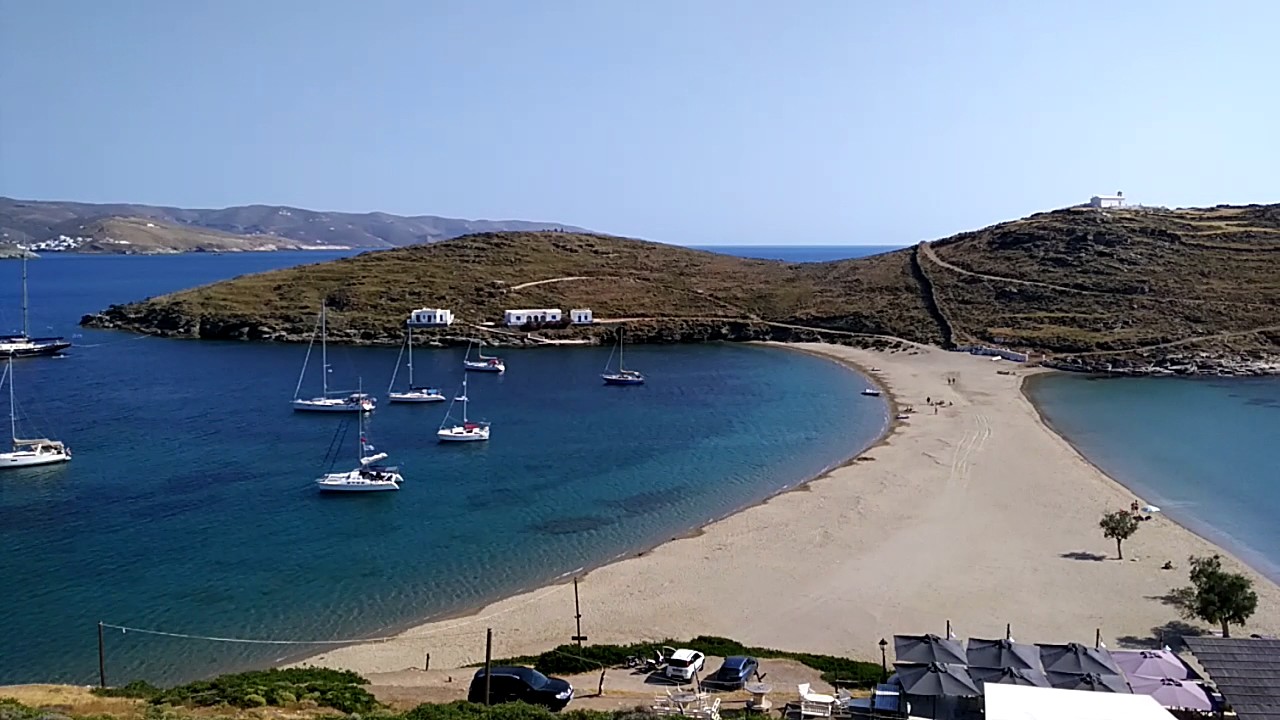
Kolona Beach
Episkopi was pleasant enough for me to spend the next day exploring it and the neighbouring beaches of Apokroussi and Kolona more fully. Kolona is the most attractive with a sand spit that reaches out to a small offshore island. Episkopi has the most shade but I found it a bit plagued by hyper active insects who seemed to find my burning skin irresistible.
I originally planned to spend three or four nights on Kythnos. After two nights I was keen to get away and jumped on an unexpected ferry to Serifos in search of something more interesting. If you do go to Kythnos, my advice would be to get out of Merihas as quickly as possible and head for Dryopidha or Hora to make them your base. They may be some distance from a beach but they have more life and more visual appeal than other parts of the island.
Milos
Visited in 2014
An interesting mix of tourism and everyday local life with a varied history and distinctive landscapes. Original home of the famous Venus de Milo.
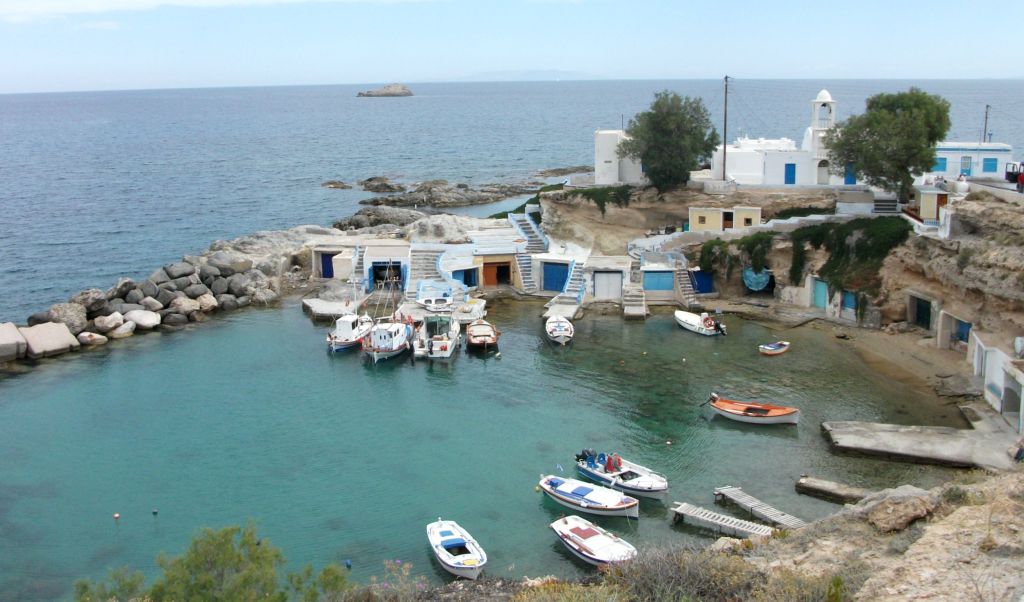
Milos, the most southerly of the Western Cyclades, is an unusual but immensely enjoyable island with good ferry and hydrofoil connections as well as an airport with daily flights to and from Athens.
It is almost split in two by a deep bay that acts as a huge natural harbour. The lively capital, Adamas, sits on the north shore of this bay looking south.

Adamas
Milos is a working island despite its numerous excellent beaches and its popularity with the yachting set. Quarrying of minerals has scarred the countryside in places but has also given the island prosperity and some unexpected landscapes. The story of local mining is told in an interesting museum in Adamas, which incorporates some very moving oral testimonies of old miners.
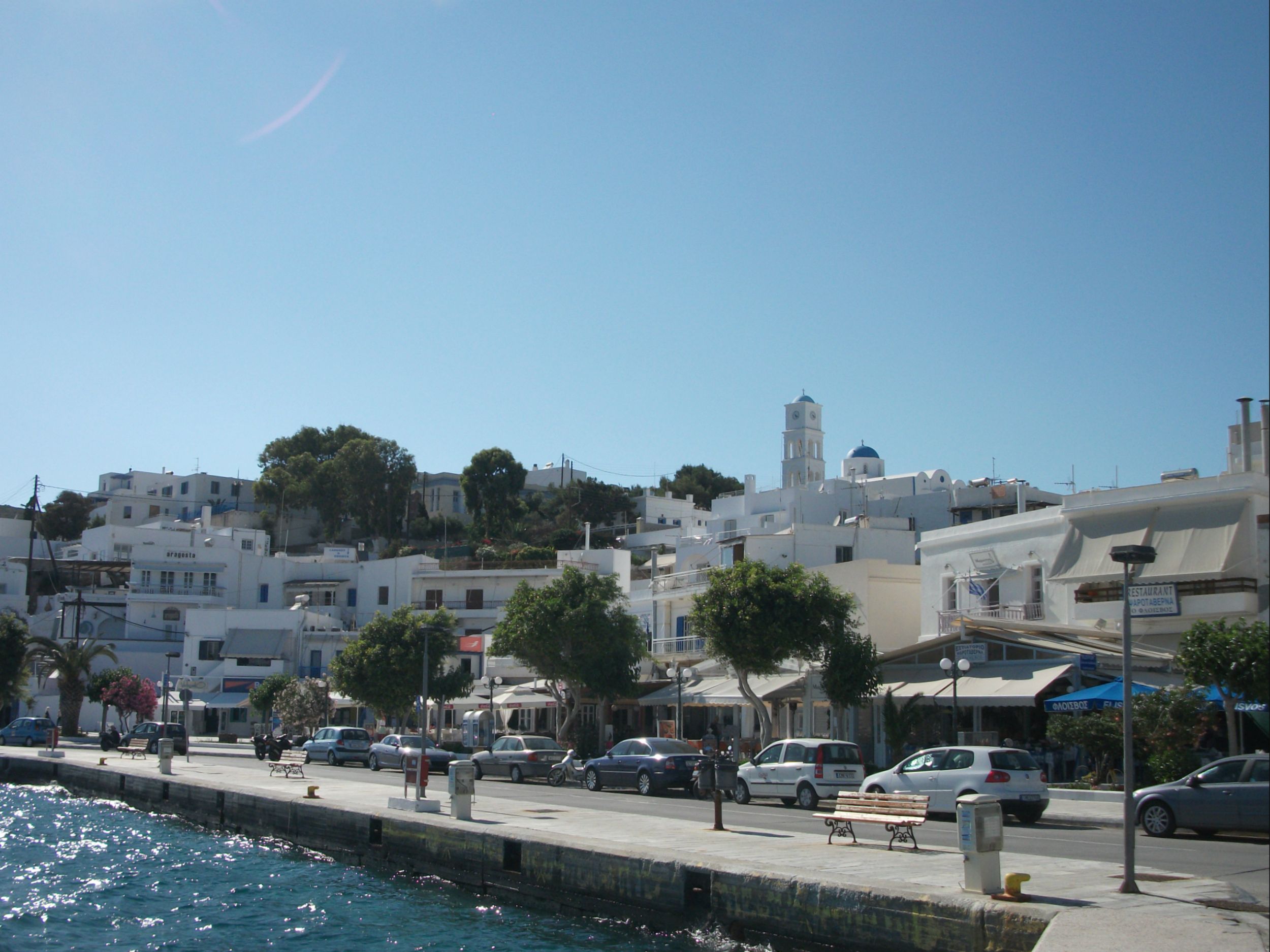
Adamas
Its huge natural harbour made Milos an island of strategic importance in World War 2 and the Germans carved an extensive underground command centre out of the soft local rock on which Adamas is built. When I visited, this had been opened up to act as an exhibition space for local artists. However, the underground walls still displayed examples of Nazi propaganda art – Bolshevik bears slaughtering innocent Aryan children and the like.

Adamas, Art Exhibition in World War II Tunnels
A few kilometres inland and north of Adamas, Plaka and Trypiti are surprisingly large and busy villages with places to stay (including renovated windmills), highly regarded tavernas, some early Christian catacombs and an ancient amphitheatre close to where the famous Venus de Milo was found. A steep walk down to the coast brings you to the fishing hamlet of Klima, the most photogenic place on the island with its single row of brightly painted boathouses. A road north from Plaka leads to the less well-known but equally attractive and distinctive fishing village of Mandraki, where boat houses are carved out of the local rock.
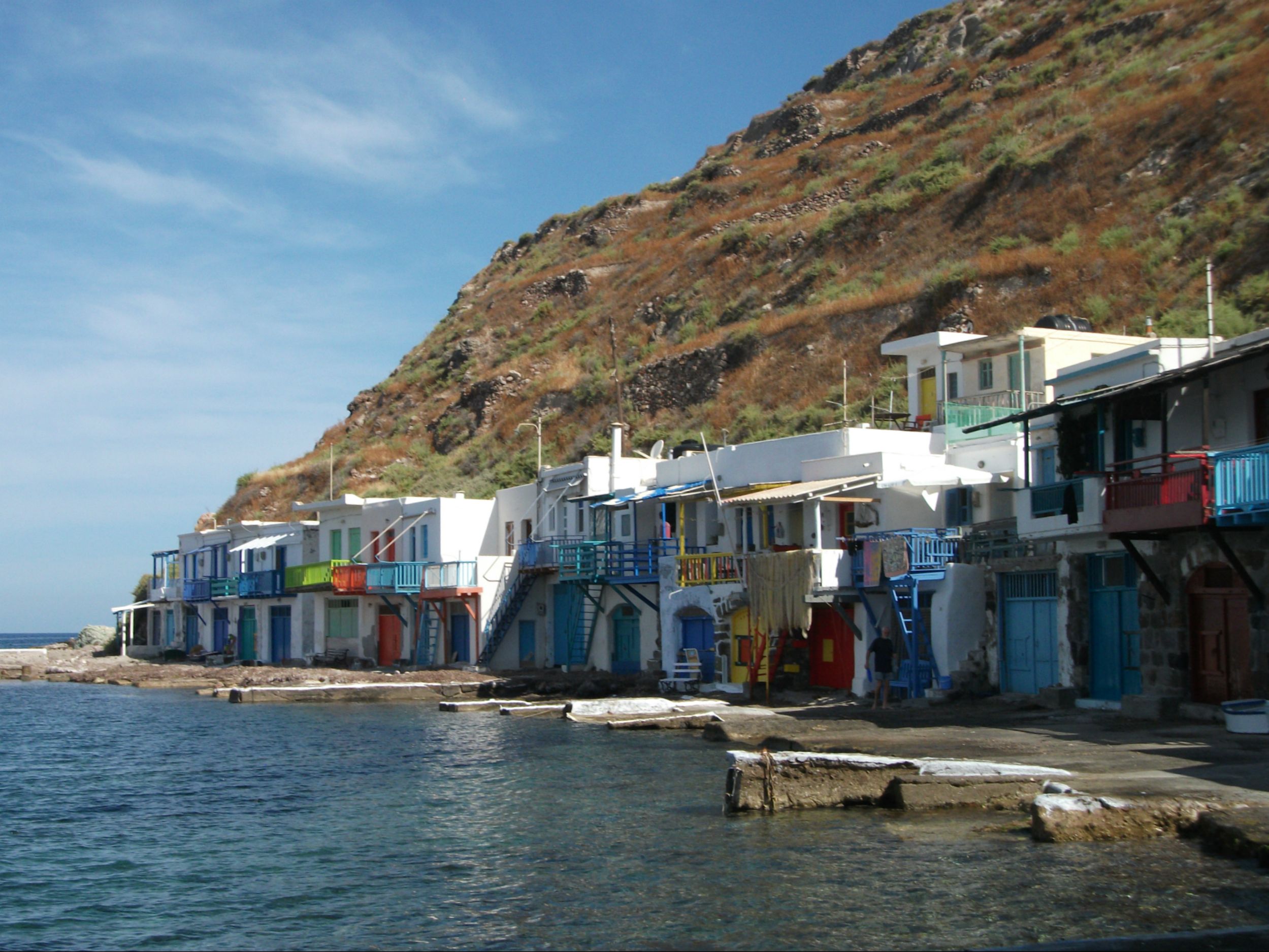
Klima
Heading east along the north coast of the island, the popular cove of Sarakiniko has a small sandy beach surrounded by parched white rocks. It’s strange, almost lunar landscape makes it one of the must-sees on Milos, but larger, less crowded beaches can be found nearby. The main road ends 12 kilometres from Adamas at Pollonia, the main ferry port to neighbouring Kimolos. The village has a long, curved sandy beach and is popular with windsurfers, but has maybe lost a bit of its original character as it has expanded.
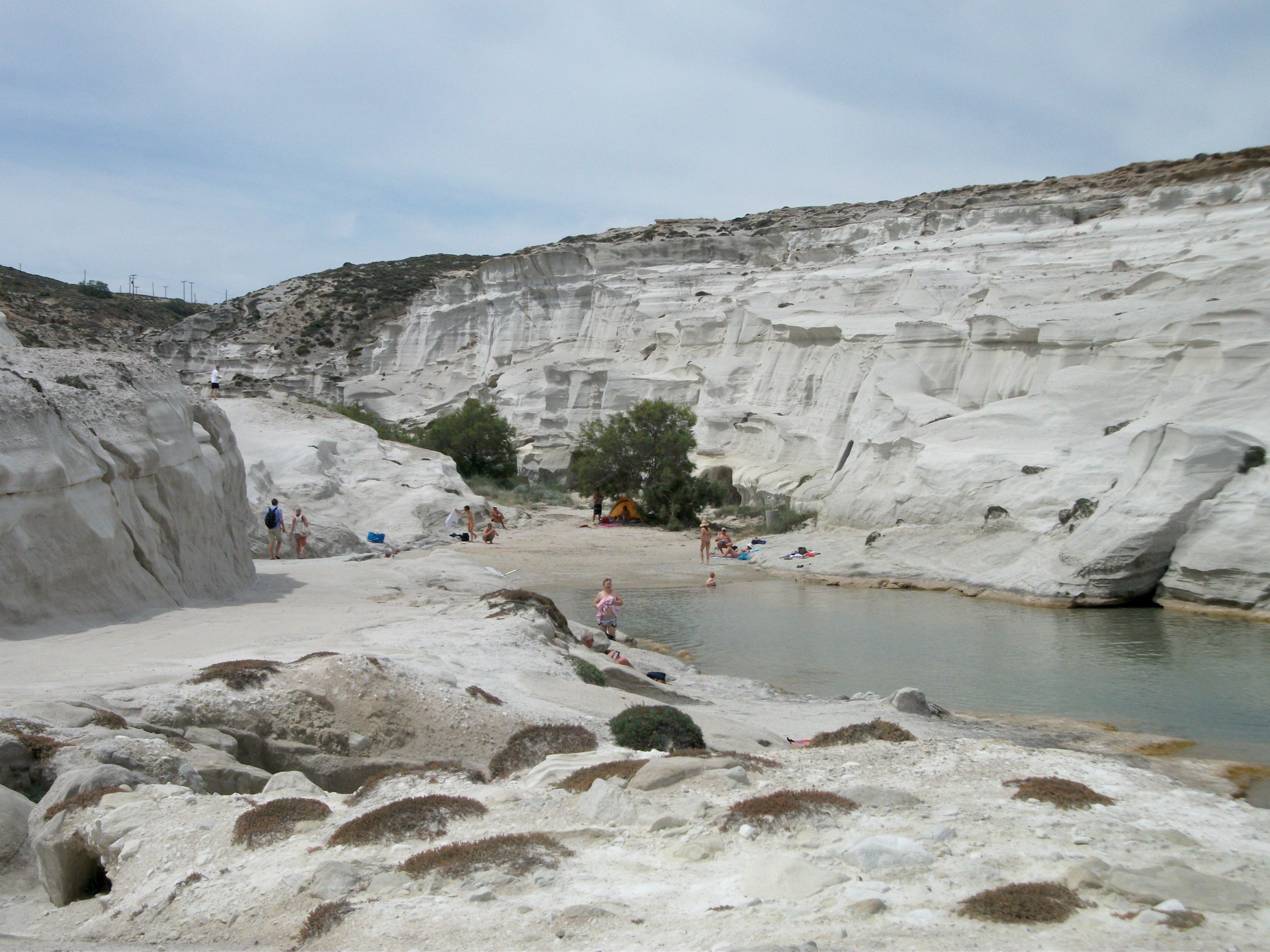
Sarakiniko
The south coast of Milos is by far the quietest. Paleohori has a huge but somewhat exposed, sandy beach and a few tavernas with rooms to rent, while Zefyria, once the island capital, is now largely deserted. The further west you go on the south coast, the quieter it becomes. There are a few good beaches but the countryside is pastoral rather than spectacular and there are limited visitor facilities.
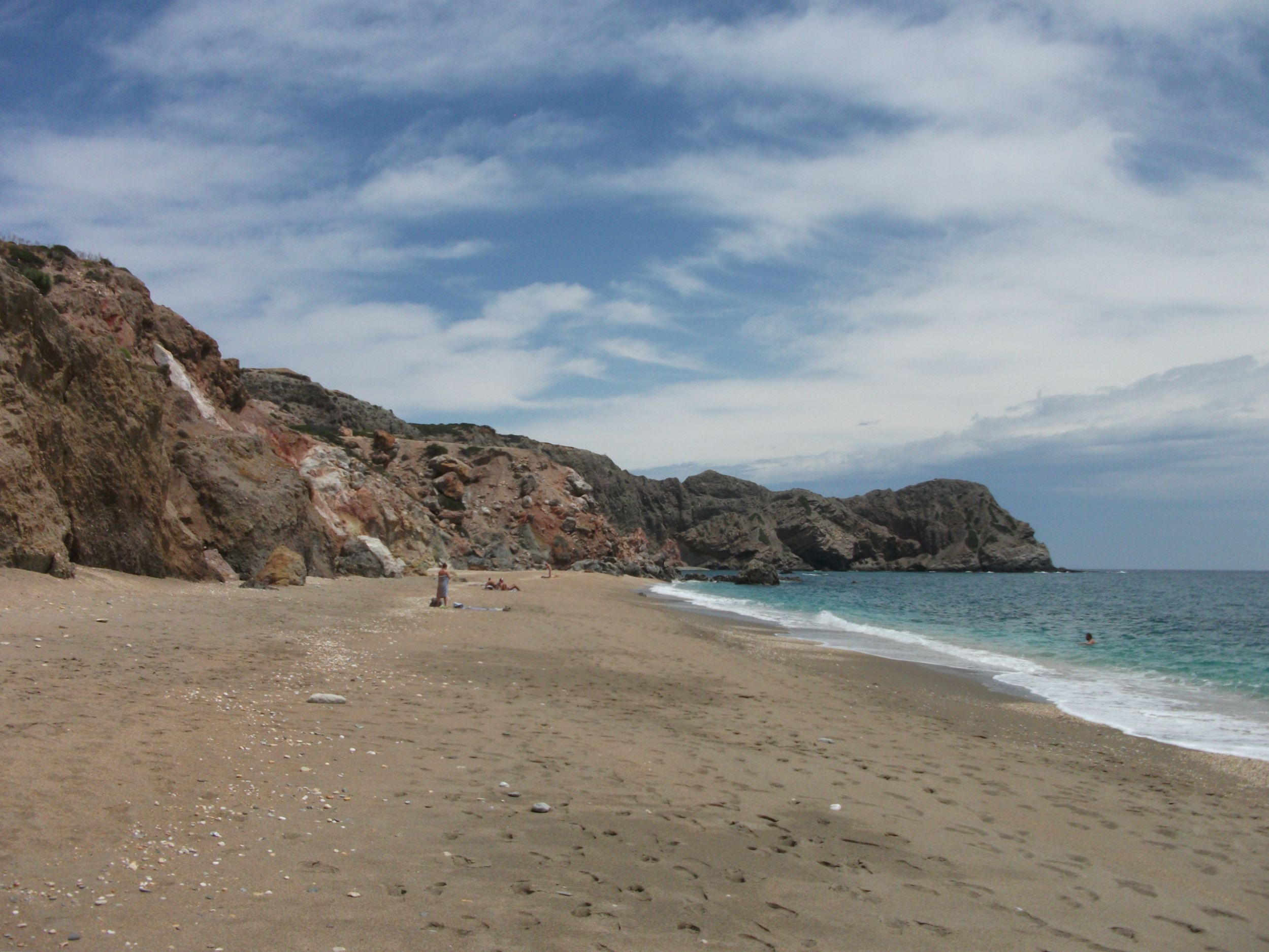
Paleohori
Its mining heritage makes Milos pretty unique in terms of landscape and history. It is a fascinating island, but one that will also appeal to visitors simply wanting to chill out on a beach during the day and enjoy traditional Greek night life in the evening.
Mykonos
Visited in 2010
One of the busiest and most crowded Greek islands. Struggling to cope with visitor numbers. Scenically undistinguished but with large, popular beaches and endless nightlife.

Let’s not beat about the bush. Mykonos is as far from quiet and unspoiled as you can get. In fact, it is crowded to the point of being unpleasant at peak times of year.
Having originally established its tourism credentials in the 1960s as a chic destination for the bohemian gay market, it now caters for all types of visitors many of whom are attracted by regular direct international flights to the island’s airport and a seemingly endless succession of ferry and hydrofoil services from both Pireaus and Rafina.

Mykonos Town
The end result is that Mykonos now attracts over a million overnight visitors a year, to whom can be added a further half million or so cruise ship passengers who dock in for the day. So many people to fit on to a comparatively small island that, in truth, has no outstanding natural scenery or historical remains.
On a more positive note, the beaches of Mykonos are outstanding, if generally over developed, and the main town, which shares its name with the island, is among the prettiest in Greece. Just don’t expect to have the beaches or the twisting lanes and alleyways of the town to yourself, especially if two or three cruise ships are in port at the same time.
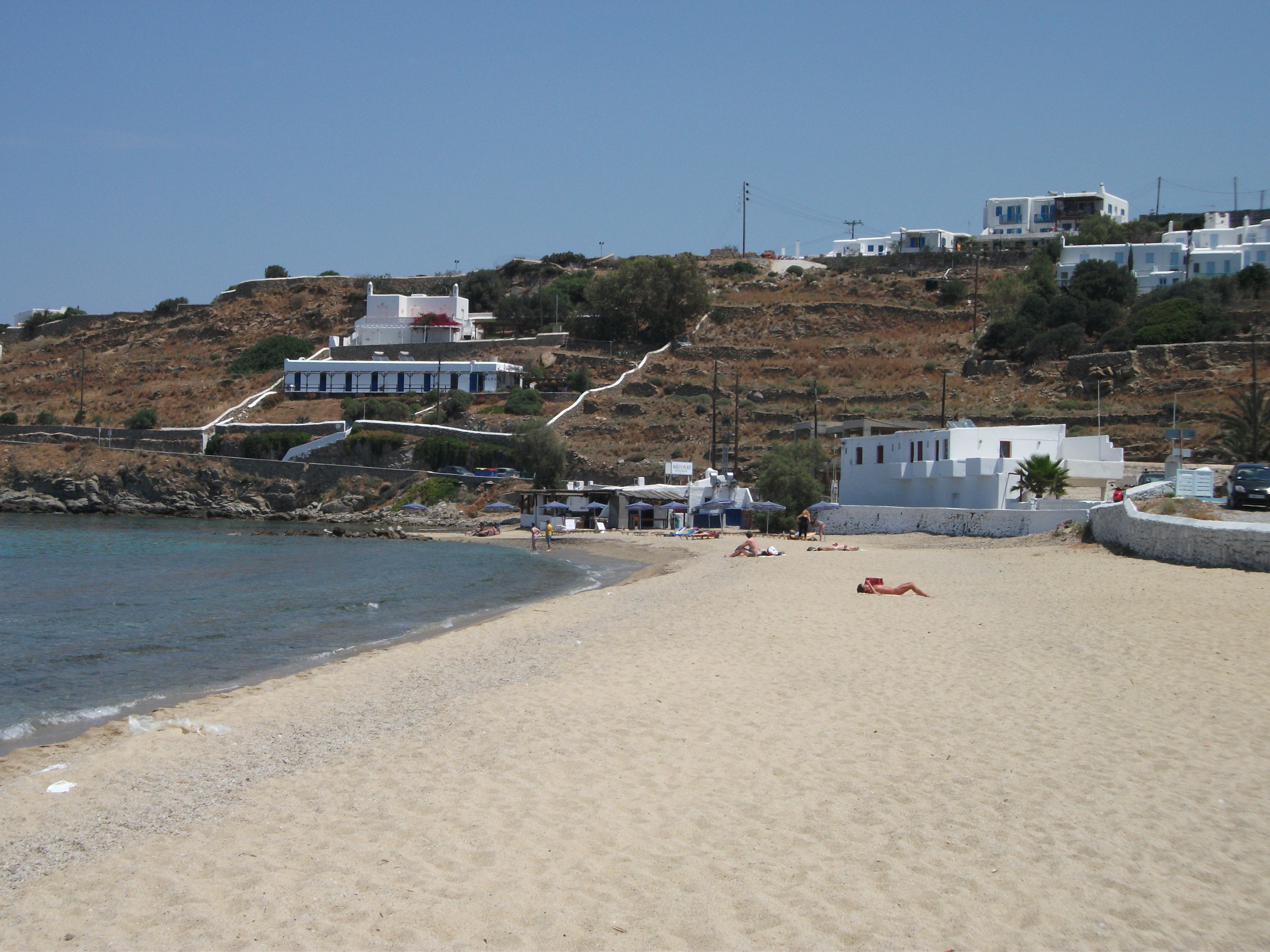
Mykonos Beach Life
Mykonos is pricey compared to most other Greek islands, but the quality of accommodation, eating places and nightlife is generally of the highest standard. Mykonos Town is the place to stay, unless you’re particularly keen on purpose built beachside resort hotels. Most visitors head to the beaches by bus or excursion boat during the day and flood back into the town for evenings that can go on until the wee hours of the morning and beyond.
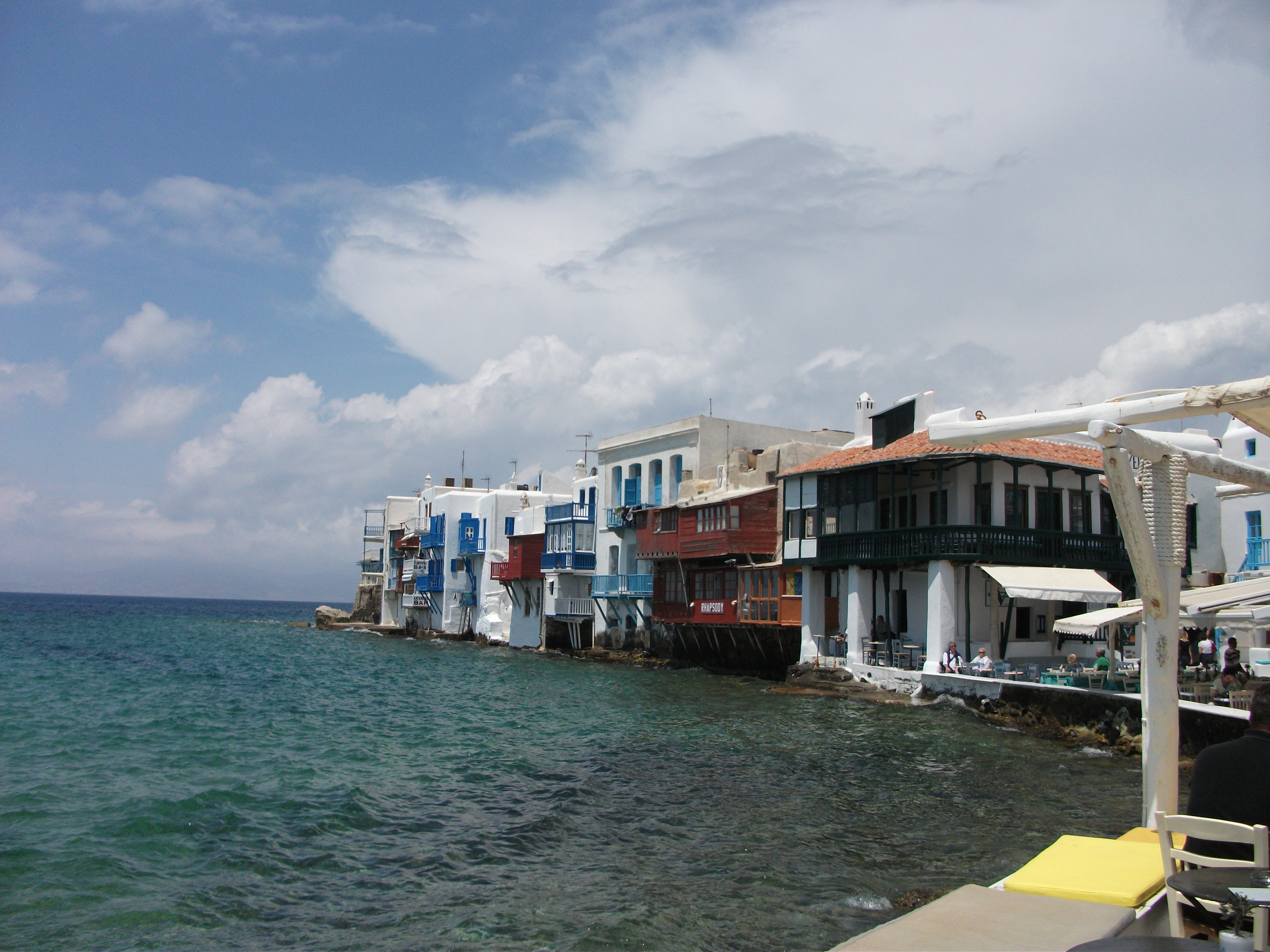
Mykonos Town, Little Venice
Mykonos Town has more shops, bars, restaurants and nightclubs than even the most dedicated party animal could visit over an extended summer period. The Little Venice area is particularly popular and photogenic with its whitewashed houses right on the water’s edge. A famous line of windmills offers more photo opportunities if you can tear yourself away from the nightclubs full of the beautiful people.
If arriving on Mykonos by ferry, it is worth noting that the modern main port is some four or five kilometres north of the town. Finding a taxi or getting on a bus can be a bit of a scrum, but it will maybe give you some much needed practice of using your elbows to get to where you want to go. Sharp elbows and a steely determination are real assets in the crowded streets and beaches.
Naxos
First Visited in 1989. Most recently visited in 2017.
The largest of the Cyclades islands. Lots of tourism development on its coastal areas but has largely unspoilt and attractive inland villages worth exploring.

Mountainous but fertile, Naxos is the largest of the Cyclades islands. Tourism vies with agriculture as the main industry and, although there are some scars of overdevelopment, in general the island is more than large enough to accommodate the visitor numbers it attracts. It still maintains something of a traditional Greek ambiance, especially in its attractive inland villages.
Naxos Town, the largest settlement and main ferry port, tumbles down from an atmospheric Kastro area to a bustling waterfront crammed with bars, tavernas and one of the best soulaki takeaway outlets on the Greek islands. The town now extends out to the long sandy bay of Agios Georgios where much of the visitor accommodation is located in modern, undistinguished hotels and studios. Windsurfing and other watersports are available on the beach along with more tavernas and bars.

To the south of the main town, excellent beaches have resulted in the development of a string of largely characterless, purpose built resorts comprising mostly of holiday villas and apartments bought by Germans and Scandinavians. These are fine as sunbathing factories but little else.
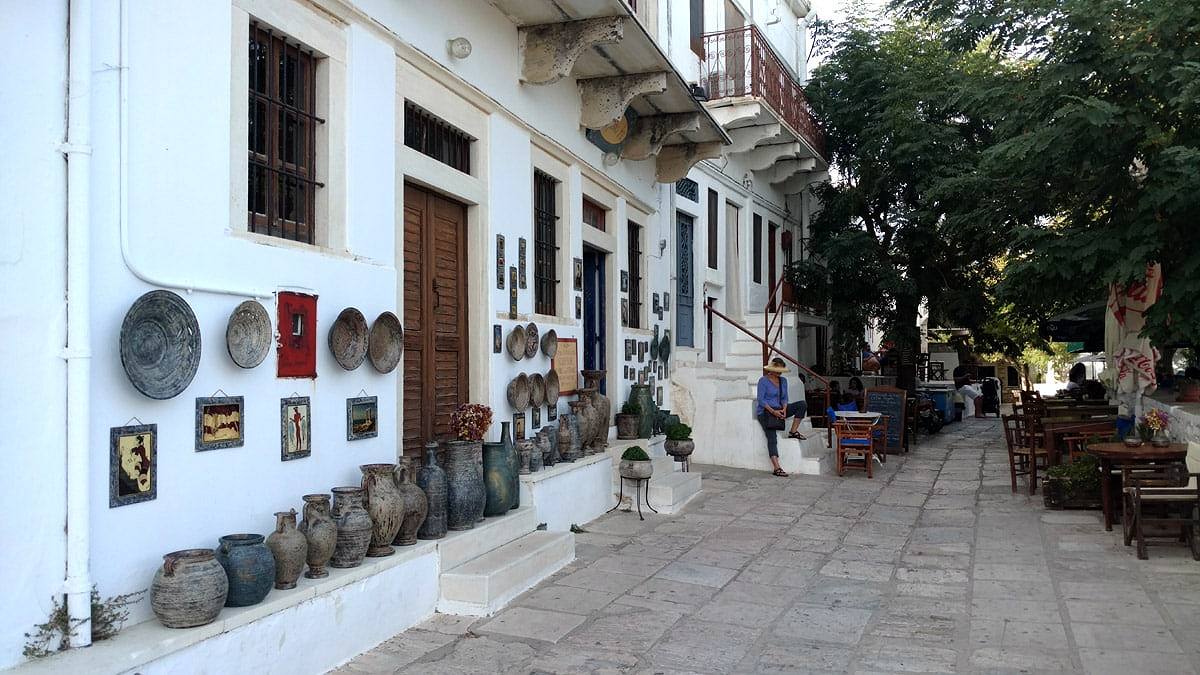
Apiranthos
Heading east out of Naxos Town brings you to a particularly attractive farming area called the Tragea, which is dotted with pretty villages, whitewashed churches and monasteries, and medieval Venetian towers. Apiranthos is the most visited and arguably the prettiest of the villages with marble flagstoned lanes, a charming main square, some well-preserved mansions and good walking.
The coastal village of Moutsouna, some 12 kilometres to the east, was once the main port for local emery mines, an industry that collapsed in the 1980s. When I first visited Naxos, Moutsouna had something of a semi-derelict, post-industrial feel. Now it has smartened itself up with new villas and tavernas and a newly paved road runs south from it to large, undeveloped sandy beaches that you might be lucky enough to have to yourself.

From Apiranthos the main road heads up to the northern tip of the island and the pretty little resort of Apollon, a popular stopping point for coach trips. It is noted for its fish tavernas and large kouros, or recumbent stone statue, dating back to 600 BC. A spectacular coastal road heads south back to Naxos Town, passing the charming pebble beach and village of Abrami as well as a number of notable historic buildings.

I’ve been to Naxos on numerous occasions and have always enjoyed it. It is well served by ferry services and has daily internal flights to and from Athens. It’s large enough to find your own quiet corner and has some of the most attractive inland scenery of any of the Cyclades. It’s a good taster of Greek island life for first time or fairly new travellers to Greece, especially if combined with its near neighbour, Paros, of which more now follows.
Paros
First Visited in 1985. Most recently visited in 2017.
Probably the best connected of the Cyclades islands, making it ideal as a base for island hopping. Busy in parts, but still possible to find quiet corners.
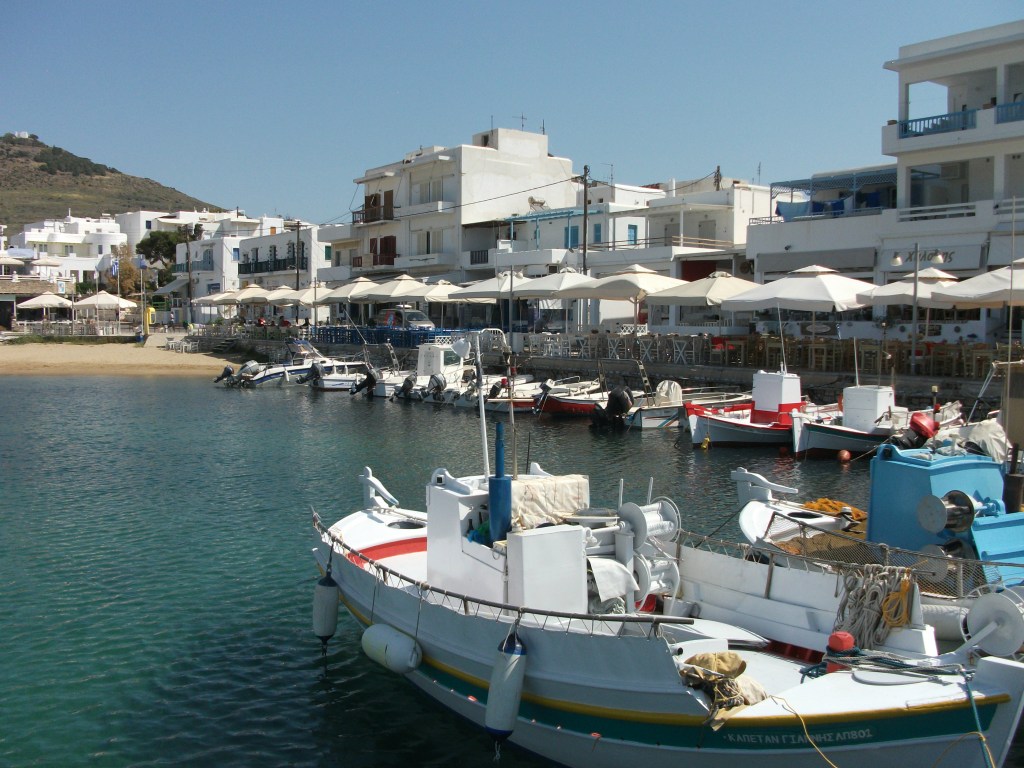
Paros is Naxos’ slightly smaller and flatter neighbour, lying about an hour’s ferry ride to the west. It is also an important ferry junction with services heading out on all directions, making it an ideal first stop on any island hopping adventure in the Cyclades.
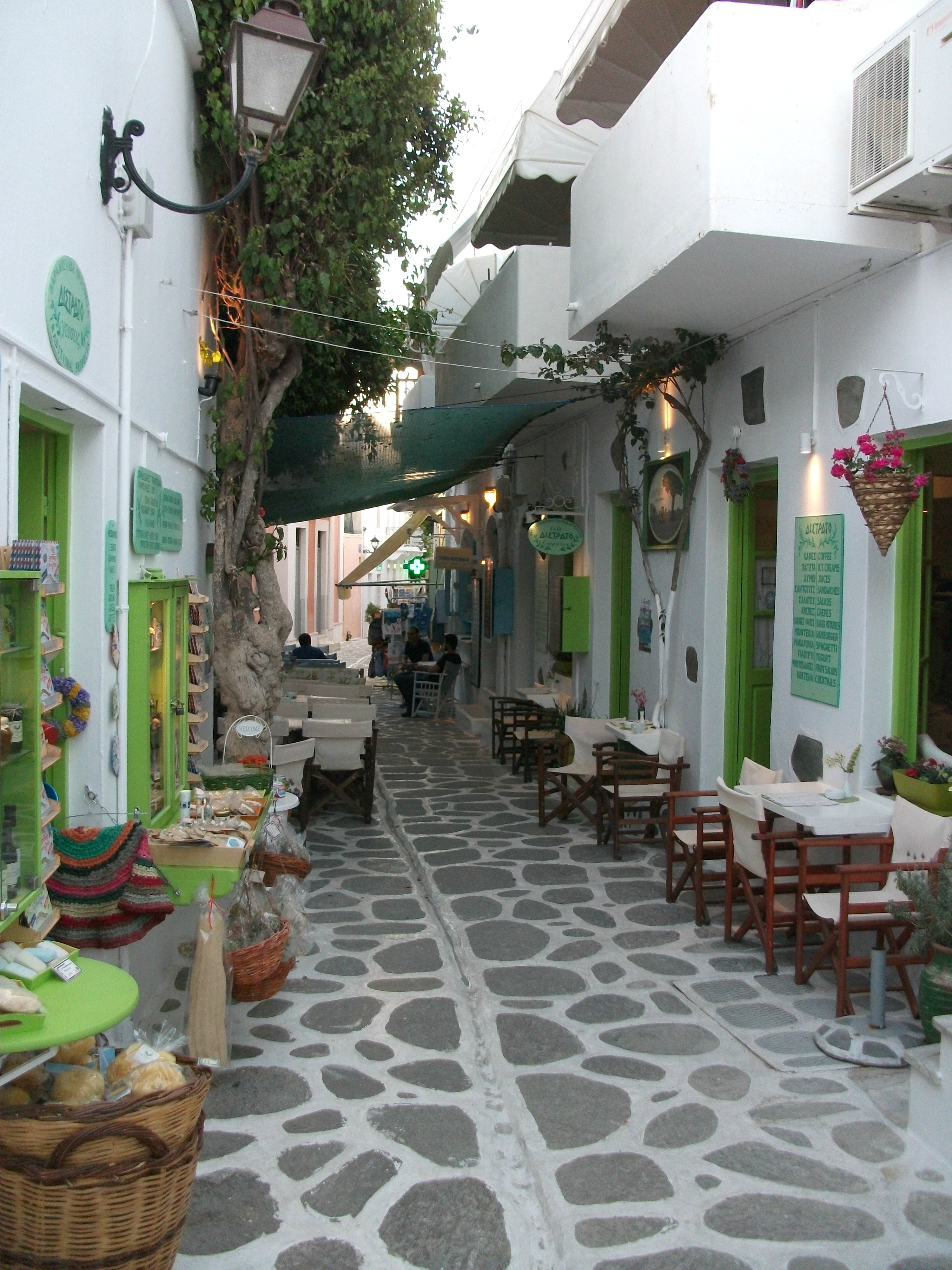
Parikia
Parikia, the largest town and main port, lies on a broad bay on the west coast. It is a friendly, bustling town of whitewashed houses and narrow lanes and alleyways filled with craft shops, minimarkets and tavernas. The area around the traditional kastro is a popular spot for contemplating the sunsets armed with a cocktail or two. There are beaches in the town centre but they are nothing special, although one does boast a popular campsite.
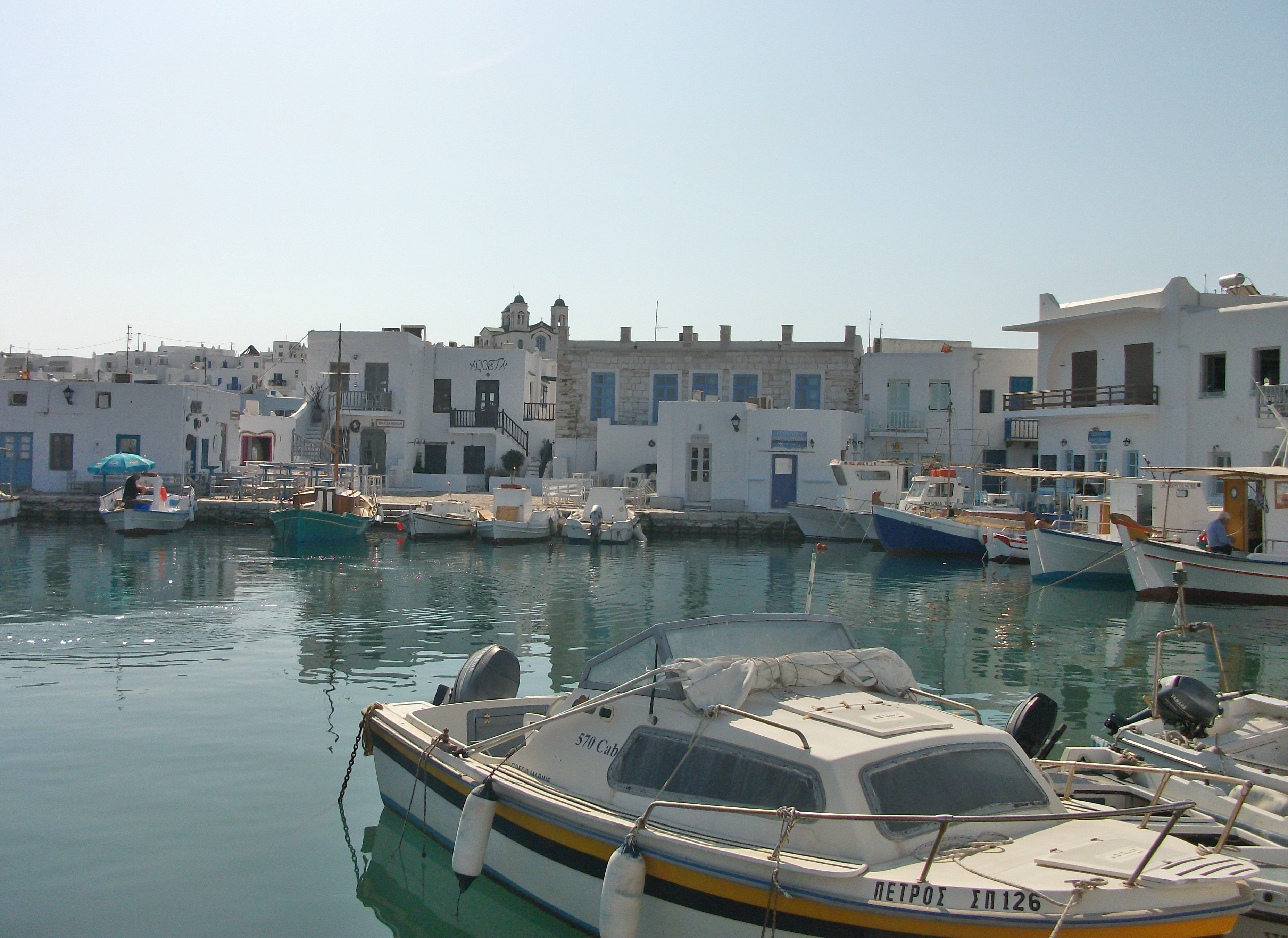
Naoussa
A paved road runs right round the island and is served by regular buses that pass through most places of interest. Naoussa on the north coast is Paros’ second main resort and is favoured by those looking for something more upmarket and picturesque than Parikia. It’s a bit more expensive than its larger and louder neighbour and the best beaches are away from the town centre, but the pretty harbour is a jumble of waterfront tavernas selling fresh seafood caught that day by local fishermen.
From Naoussa the main road heads south down the east coast of the island to the charming little village of Piso Livadi which is blessed with a beautiful sandy beach, a laid back harbour and a good choice of tavernas and places to stay. The coastline further south is a series of large, generally quiet, sandy beaches. Dryos and Khryssi Akti (also called Golden Beach) are probably the best known, with a low level of development but a choice of accommodation and eating places.
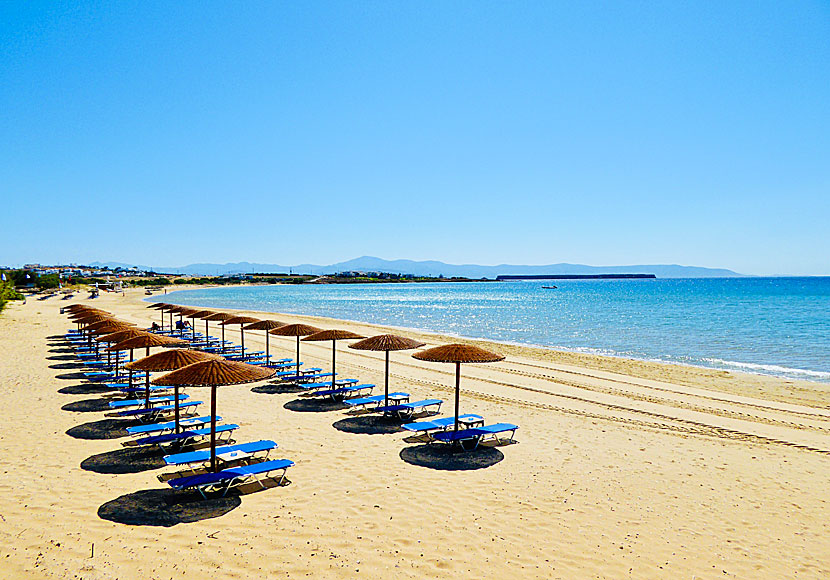
Khryssi Akti (Golden Beach)
Heading round the southern tip of the island brings you to Alyki, a sedate little beachside village that appears to have expanded a lot in recent years but still retains a pleasant, laidback ambiance. The island airport is close by but it’s once a day flights to and from Athens don’t cause much disturbance. From here it is about a dozen kilometres back to Parikia via the small village of Pounda that acts as the local ferry port to the neighbouring island of Antiparos.
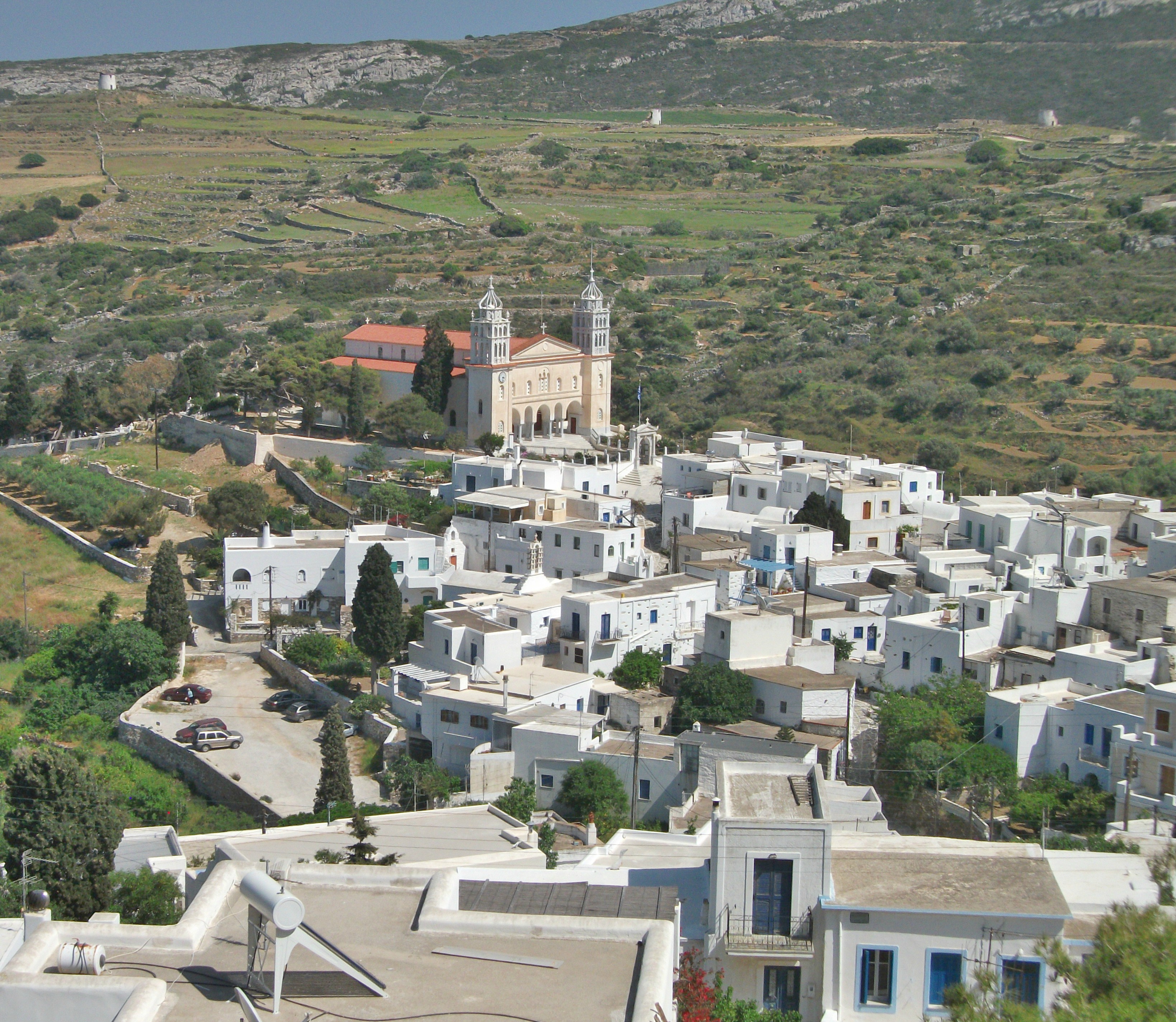
Lefkes
Another paved road cuts inland across the island from Parikia to Piso Livadi passing through Lefkes, a largely undiscovered gem that is maybe the most attractive village on Paros. The locals actively embrace sustainable tourism and organic eating in the many tavernas that are scattered around its broad, timeless streets and squares that open out to spectacular views across the island.
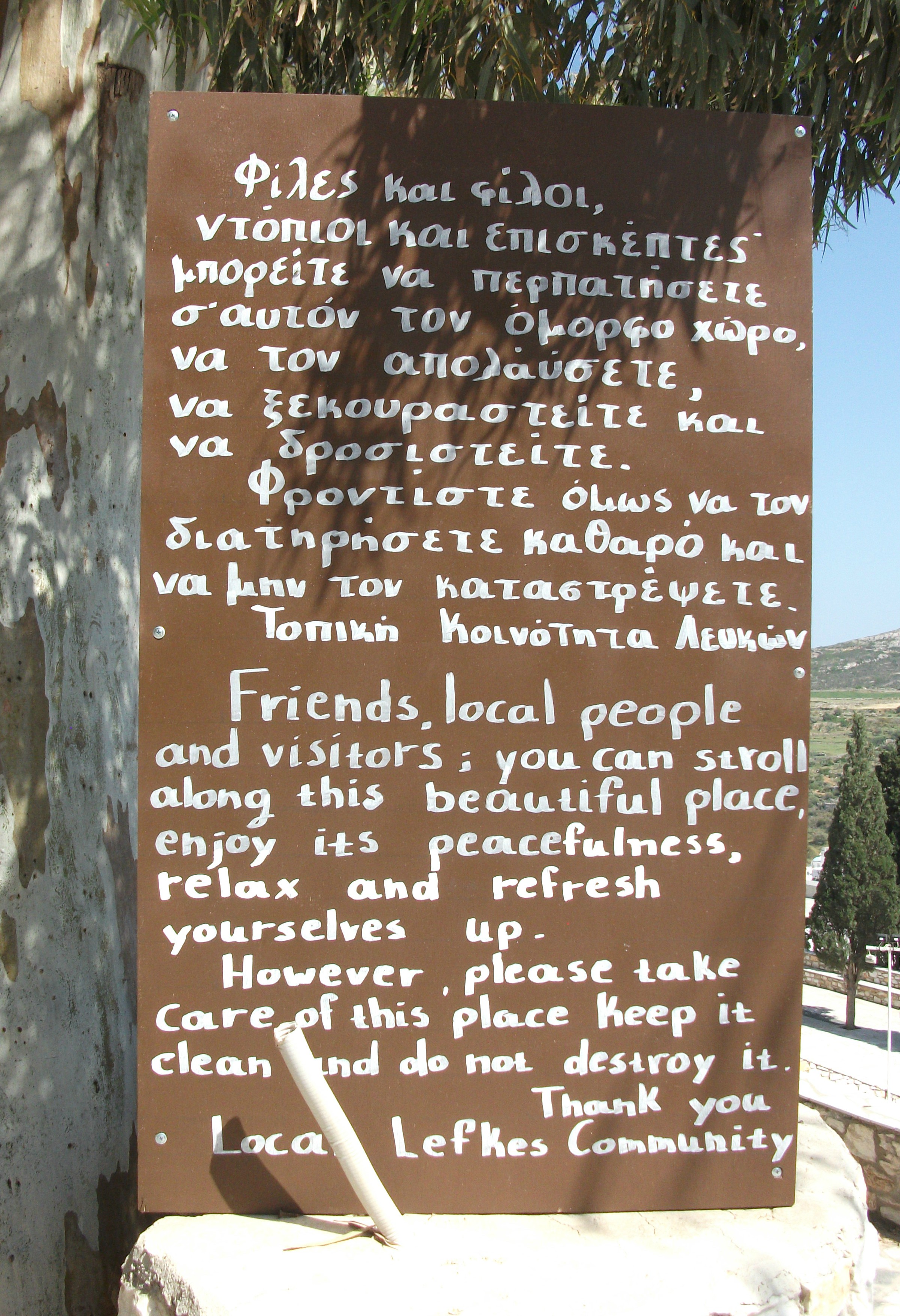
Lefkes
Like Naxos, Paros is a perfect introduction to smaller Greek islands away from the main package tour destinations like Corfu, Kos or Rhodes. Ferries from Piraeus take about four hours, usually leaving early morning and arriving just before noon. The island has a mix of different experiences from the biz of Parikia to the sleepiness of Alyki and Piso Livadi. It’s one of the easiest islands to get around and it is still possible to share a long, sandy beach with only two or three other people.
Santorini
First Visited in 1989. Most recently visited in 2016.
Arguably the most spectacular and most recognisable of all Greek islands. Can be unpleasantly crowded but still somewhere you have to visit at some stage.
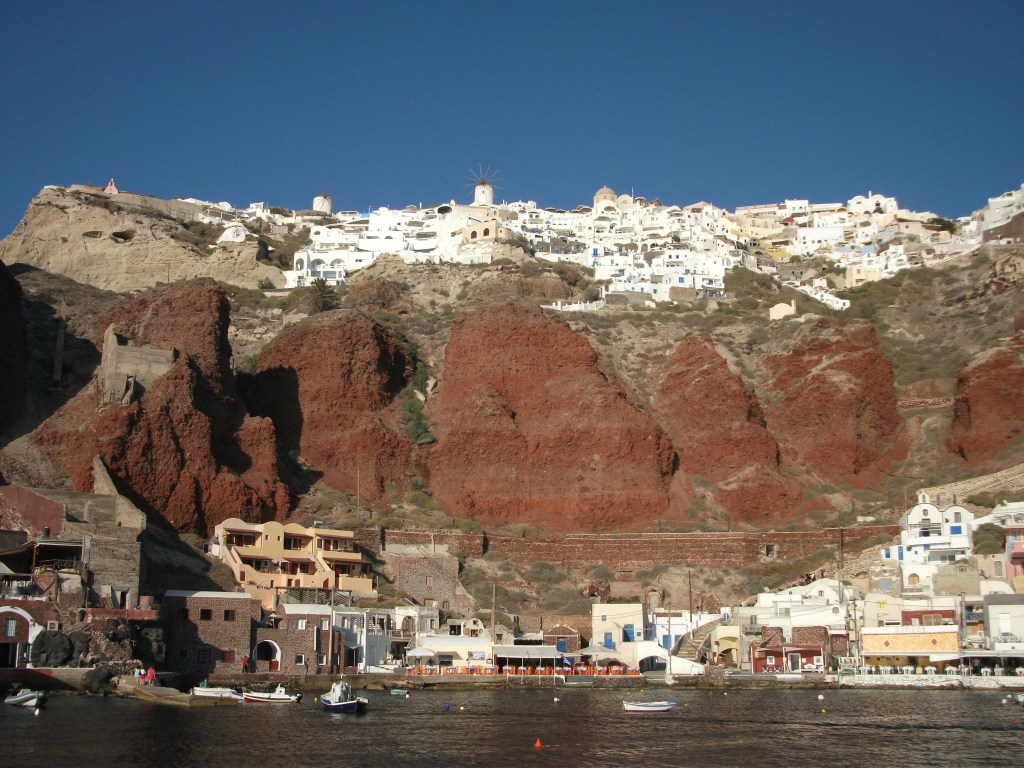
Santorini is arguably the most scenically spectacular island in Greece but, like Mykonos, in recent years it has been somewhat overrun by visitors. Thought by some to be the origin of the legend of the lost city of Atlantis, it was originally a much larger island, parts of which sank into the sea in a volcanic eruption 3,000 years ago. This eruption left a huge water filled caldera and a west coast with sheer cliffs reaching up to 1,000 feet and topped by breath-taking whitewashed villages.
I first visited Santorini in the mid-80s and stayed in a clifftop cave house in the northern village of Ia, which was an attractive but rather sleepy place with a limited range of tavernas and shops. My arrival involved jumping mid-ocean from the car deck of a large ferry on to a local fishing boat and then clambering on to a donkey for a long slow ride up the cliff face to the village.
My most recent visit in 2016 involved me travelling on one of the numerous daily high speed hydrofoils from Crete carrying hundreds of day trippers who were met by two dozen (I counted them) coaches at the main port of Ormos Athinios. On the same day, three mega cruise liners disgorged thousands of day visitors via tenders to the old port immediately below the main village of Thira, from where cable cars took them up the cliff face from sea level to the village. I was told some had to queue for almost two hours to get on a cable car.

Fira
The owner of the hotel where I stayed informed me that the island now hosts over 250 weddings a year, mostly of couples from the Far East. Santorini can’t accommodate any more weddings but, undeterred, couples now come from the likes of China and Korea to have their wedding photos taken on the island before they return home for the actual ceremony itself.
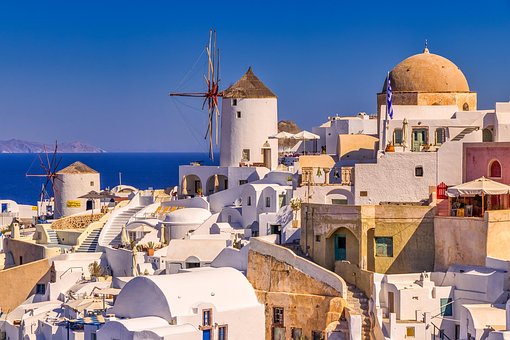
Ia
Far from being a sleepy hollow, Ia is now full and overflowing with visitors who cram its narrow lanes that are packed with souvenir shops and boutiques. The public service bus on which I rode from Thira to Ia is probably the most overcrowded vehicle on which I have ever travelled and was a genuine safety risk. I took a taxi back to avoid any further threat to life and limb.

Santorini Sunset
Once the day trippers disappear, Santorini calms down a little but is still very busy. Crowds gather on the cliff tops in Thira, Ia and villages in between to watch the awe inspiring sunsets, while bars and tavernas do a roaring trade and night clubs pound out music well into the morning.
Away from the caldera, the east coast villages of Kamari and Perissa are forgettable package holiday resorts with British bars showing re-runs of Only Fools and Horses and beaches of gritty, black volcanic sand that can burn the soles of your feet during a rush into the cooling sea.
However, despite all its drawbacks, Santorini is still somewhere you must see at least once, for the scenery and the sunsets if nothing else. It’s far from unspoiled but it is still extremely beautiful.
Schinoussa
Visited in 2017.
Possibly the least interesting of the four Lesser Cyclades islands. Quiet with limited visitor facilities but a good choice of beaches. Don’t expect too much excitement.

Schinoussa is the last of the four Lesser Cyclades that I visited and it is probably the least interesting. However, it is not without its charms and I’m sure has its devotees.
Like the other Lesser Cyclades, it is primarily served by the Express Skopelitis ferry boat as it wends its way between Naxos and Amorgos. It’s only 10 – 15 minutes sail east of its nearest neighbour, Iraklia, and just under an hour west from Koufonissi. It is also served by occasional large ferries heading to and from Piraeus, although they tend to come and go at odd times of day and night.

Mersini
The island’s port, Mersini, is tiny with no more than a couple of tavernas with rooms and maybe half a dozen other buildings at most. The majority of visitors head uphill along the road or paved footpath to the Hora, Panagia, which is about 15 minutes walk from the port. Here there is a wider selection of rooms to rent and a couple of hotels, as well as four or five tavernas and a few shops.

Panagia
The scenery on Schinoussa is gentle and agricultural rather than wild and bare. The countryside is dotted with small churches, windmills and dovecots. The paved road extends to the tiny, almost comatose, hamlet of Messaria, which is surrounded by olive groves and boasts panoramic views across the water towards Iraklia.
Despite its small size, Schinoussa claims to have over a dozen beaches, most of which are accessible along well signed tracks and dirt roads. Tsigouri is the closest to Panagia and has an upmarket villa complex with a popular taverna. I visited most, but not all, of the beaches and my favourite was Lioliou, a long crescent of rough sand and a few pebbles overlooked by only a scattering of private villas. I had it all to myself for a long afternoon in May. Indeed, almost every beach I visited on the island was deserted, but things may be different in peak season.
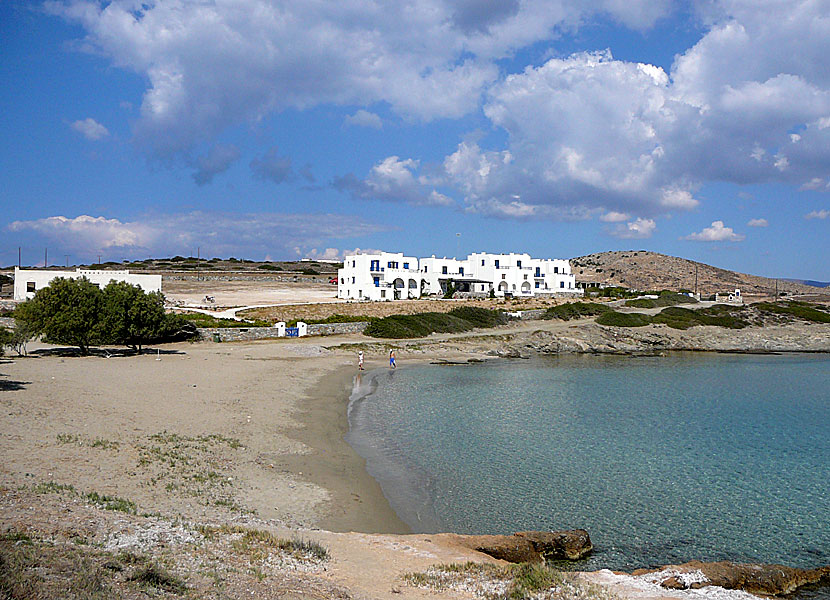
Lioliou Beach
What nightlife there is on offer is centred on the island’s tavernas. In May, their main entertainment was televised football matches – Greek league rather than international showdowns. Menus were largely standard Greek fayre with little that was either outstanding or disgusting.
I’m maybe being unfair to Schinoussa in comparing it very directly to its three Lesser Cyclades neighbours, but it seemed to lack their more open and welcoming ambiance and sense of place. Cloudy weather maybe had something to do with that but, of all the Lesser Cyclades, it’s certainly the last I will rush back to.
Serifos
Visited in 2013
A picture postcard main village, a pleasant port village and some good beaches. In some ways a typical Greek island, but one that retains much traditional character.
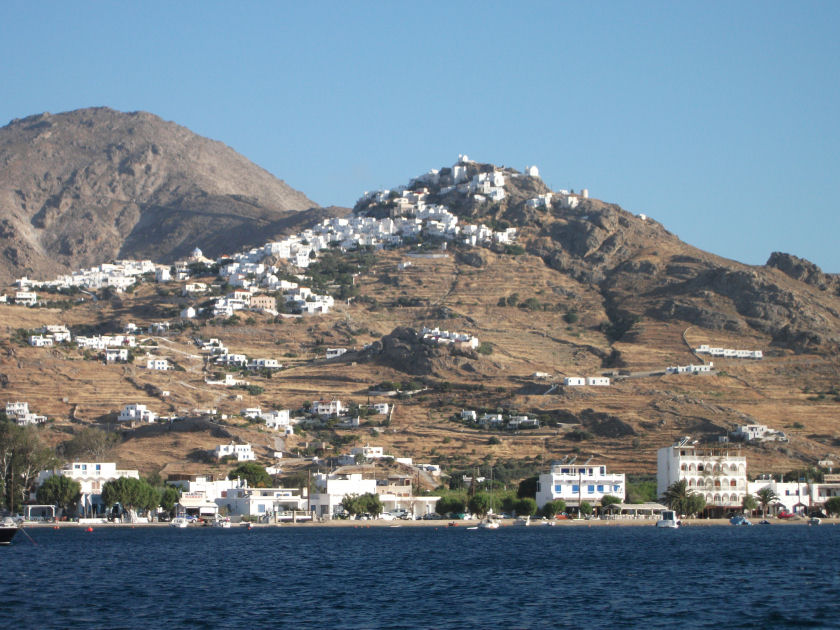
Unbeknownst to me at the time, Serifos was the very first Greek island I ever saw properly.
On my first visit to Greece in 1979 I took a very slow boat from Piraeus to Crete that stopped at numerous islands along the way. I knew nothing about any of them including their names. I was not alone. All of the other student, hippy types on the ferry were in the same boat, as it were. As we approached the first island out from Piraeus, word went round that it was called Syphillos. Cue much hilarity. Some 35 years later I sailed into Serifos and immediately recognised it as my very first Greek island port of call.
My first proper visit to the island was a short two day stay, crammed in at the last minute when I got bored of Kythnos. I stayed in the port of Livadhi and, having limited time to explore, saw only one small corner of Serifos, partly because I was feeling lazy and the lure of the beaches was too strong.
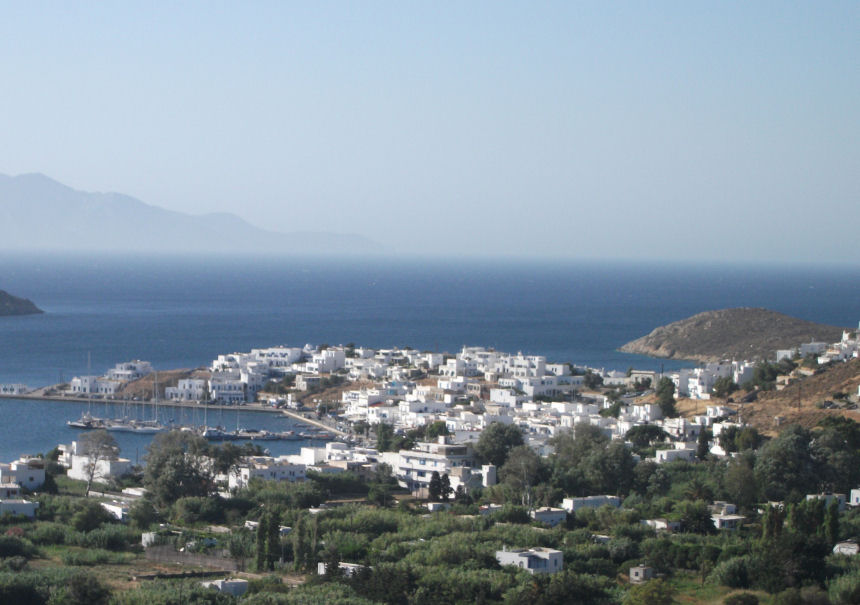
Livadhi
Livadhi is a friendly little place on a wide bay that is popular with yachties. The beach is nothing spectacular, but there is a good choice of accommodation and plenty of tavernas and bars in which to pass the evenings. I got into an interesting conversation about God knows what with a group of friendly Finns (the seven deadly Finns perhaps?) in the very trendy Yacht Club bar, before heading for dinner in a seafront restaurant run by some celebrity chef who appears regularly in Greek TV. I don’t remember either his name or that of his restaurant but his stuffed squid and the friendly service were exceptional.

Hora
The Hora is a steep walk uphill from Livadhi and clambers up a mountain ridge like tiers of an iced wedding cake. Early in the morning when the smell of freshly baked bread fills the air it is quiet and atmospheric with classic Greek village lanes and alleyways opening out into tree-lined squares. There are spectacular views down to Livadhi and across nearby valleys, as well as plenty of interesting old buildings. The quickest way up is via a cobbled footpath from Livadhi that cuts across all the hairpin bends on the paved road. Take water with you – it’s quite a strenuous climb.

Livadhakia
While Livadhi’s own beach is not up to much, there is a choice of good alternatives within easy walking distance. Livadhakia, a ten minute walk to the south, is a long strand of soft sand backed by tamarisk trees that provide welcome shade. Its friendly taverna sells cooling drinks. Smaller Karavi is a further five minutes walk south and offers more sand but no shade or taverna. It appeared to be popular with nudists. Psili Ammos in the opposite northerly direction is a longer walk along a rough track, but is worth the effort for its fine white sand. It has a couple of tavernas. A further ten minute walk brings you to the larger but less appealing Agios Ioannis, another nudist favourite.
There is a lot more to Serifos that I didn’t see in my short stay, but what I did see was pleasing and attractive. I certainly plan to go back for a longer visit to explore more of it.
Sifnos
Visited in 2014
Upmarket with a busy main town, an interesting and unique medieval village, and excellent beaches. Increasingly popular with Greek visitors attracted by its “foodie” reputation.
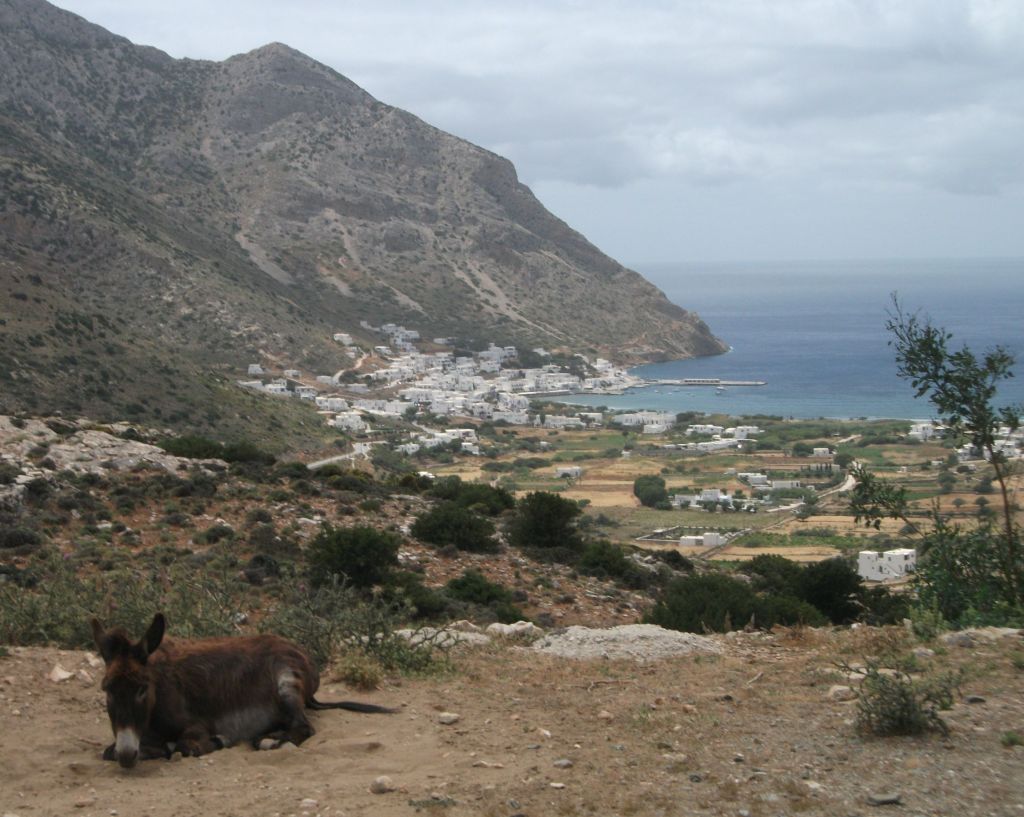
Sifnos is arguably the most popular visitor destination in the Western or Dry Cyclades. In recent years, its excellent ferry and hydrofoil links have made it a popular weekend destination with wealthy Athenians who support an impressive choice of good quality restaurants, bars and shops.
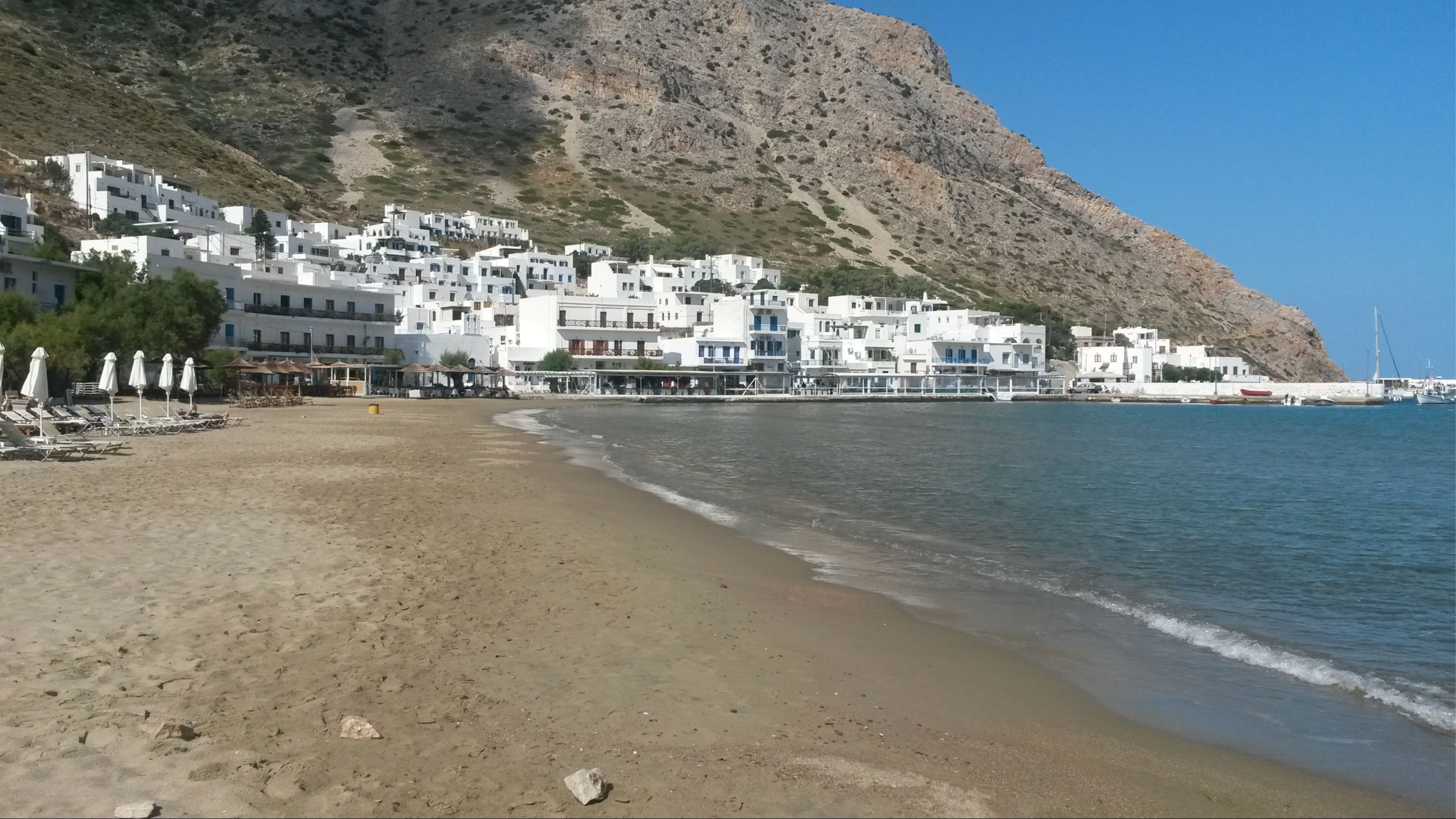
Kamares
Kamares, the island port, lies on the north west coast and boasts a spectacular sandy beach that curves round a wide bay. Many of the buildings are fairly recent additions to the tourist accommodation stock, but it still retains something of the traditional Greek island village ambiance. Absinthe, on the main road, must be one of the best restaurants in all of the Greek islands with an imaginative menu, friendly service and a drinks selection that includes about 20 different types of absinthe. It’s worth ordering a glass for the theatrical serving ceremony alone. More than two glasses and you may temporarily lose the power of speech and sight. However, that’s a small price to pay.
Apollonia
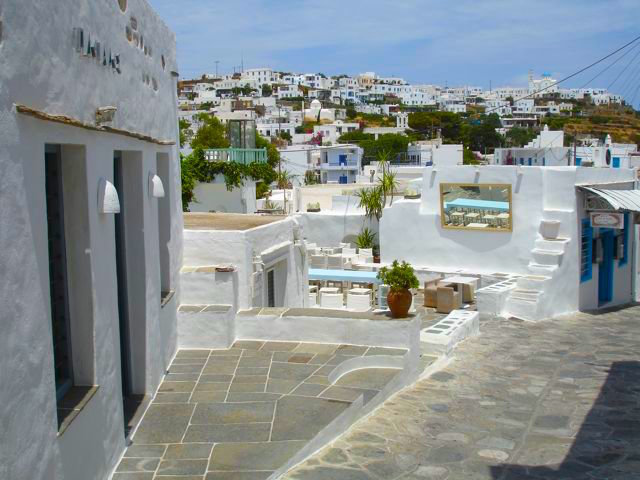
The main village, Apollonia, is a 20 minute ride uphill on one of the regular local buses and is where most of the visitor action is. It’s like a smaller, less frenetic and more charming version of the Hora in Ios with upmarket boutiques, high end restaurants and bars, and late night music clubs.
Kastro
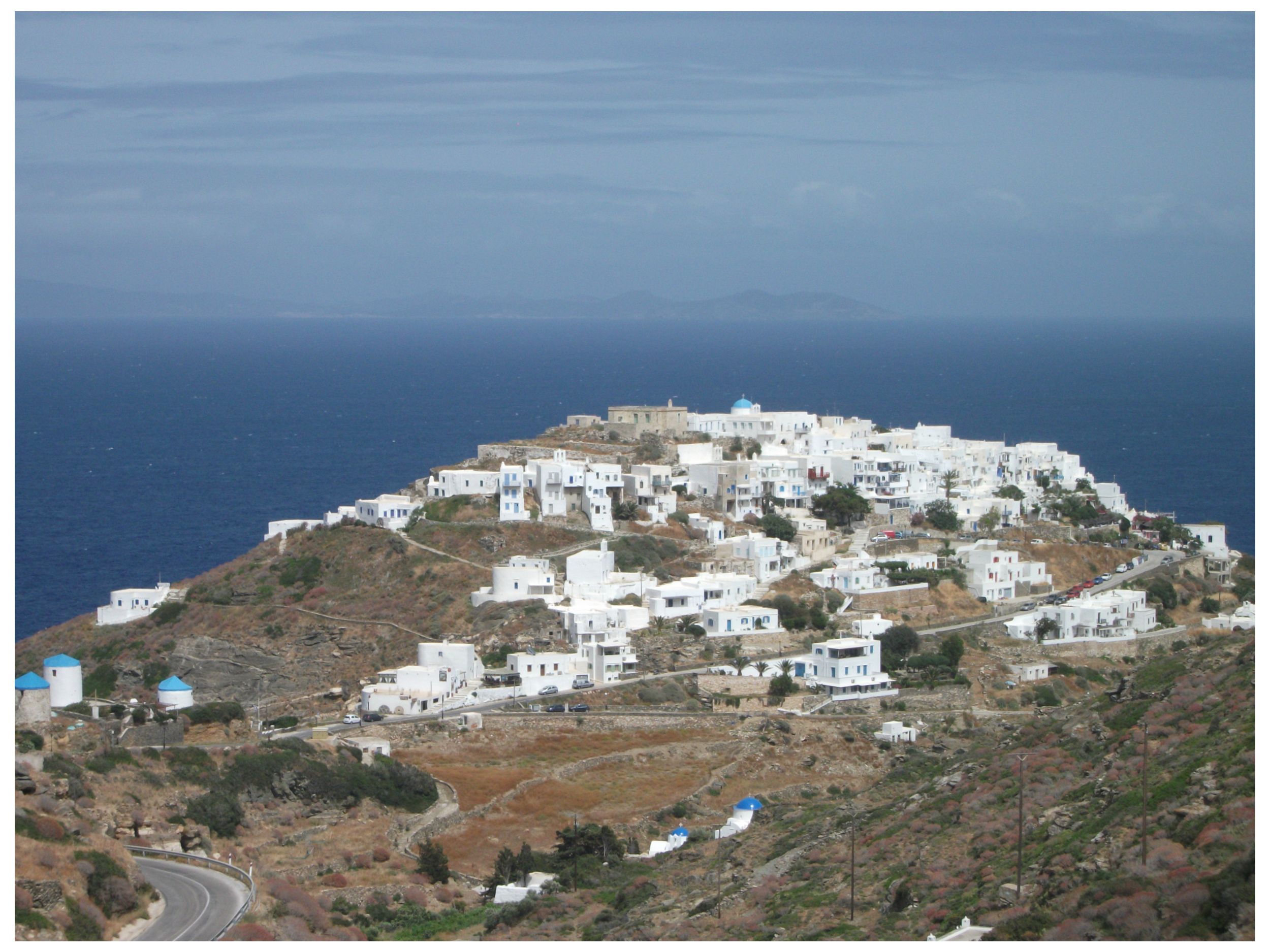
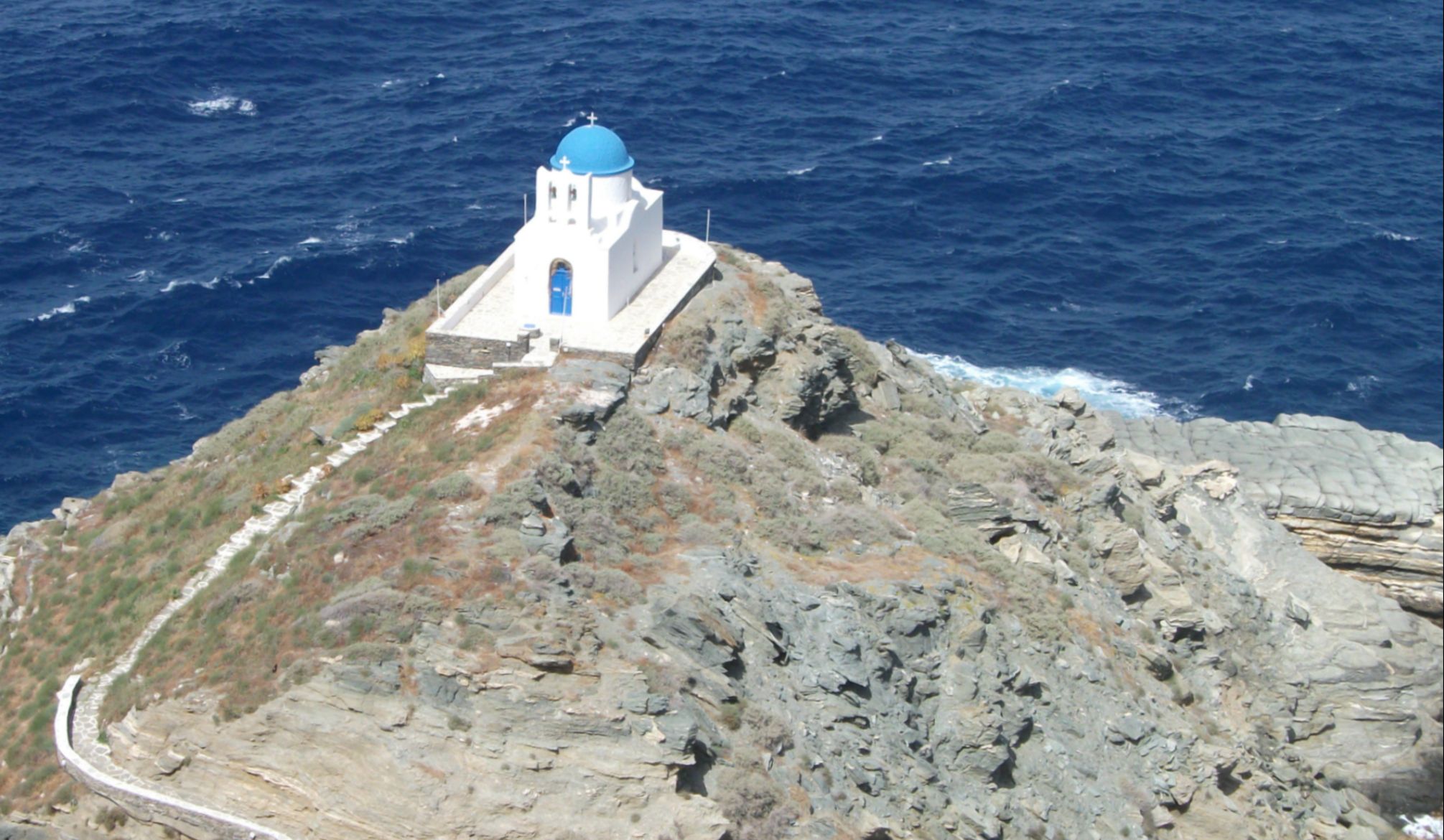
Kastro, on the east coast below Apollonia, is a beautifully preserved medieval village that was once the island capital. Perched on top of rocky cliffs, parts of its boundary walls and many of its original houses and churches are still intact. It’s well worth an hour or two of proper exploration.
Kastro, Epta Martyres Church
On the south of the island are three beach resorts that are linked by paved roads to Apollonia but not to each other. Platys Yialos is the largest, best known and probably the least appealing. It’s much vaunted beach, which claims to be the longest in the Cyclades, is pretty narrow and backed by characterless rooms and tavernas. It has limited charm and something of a package holiday resort feel.
Faros
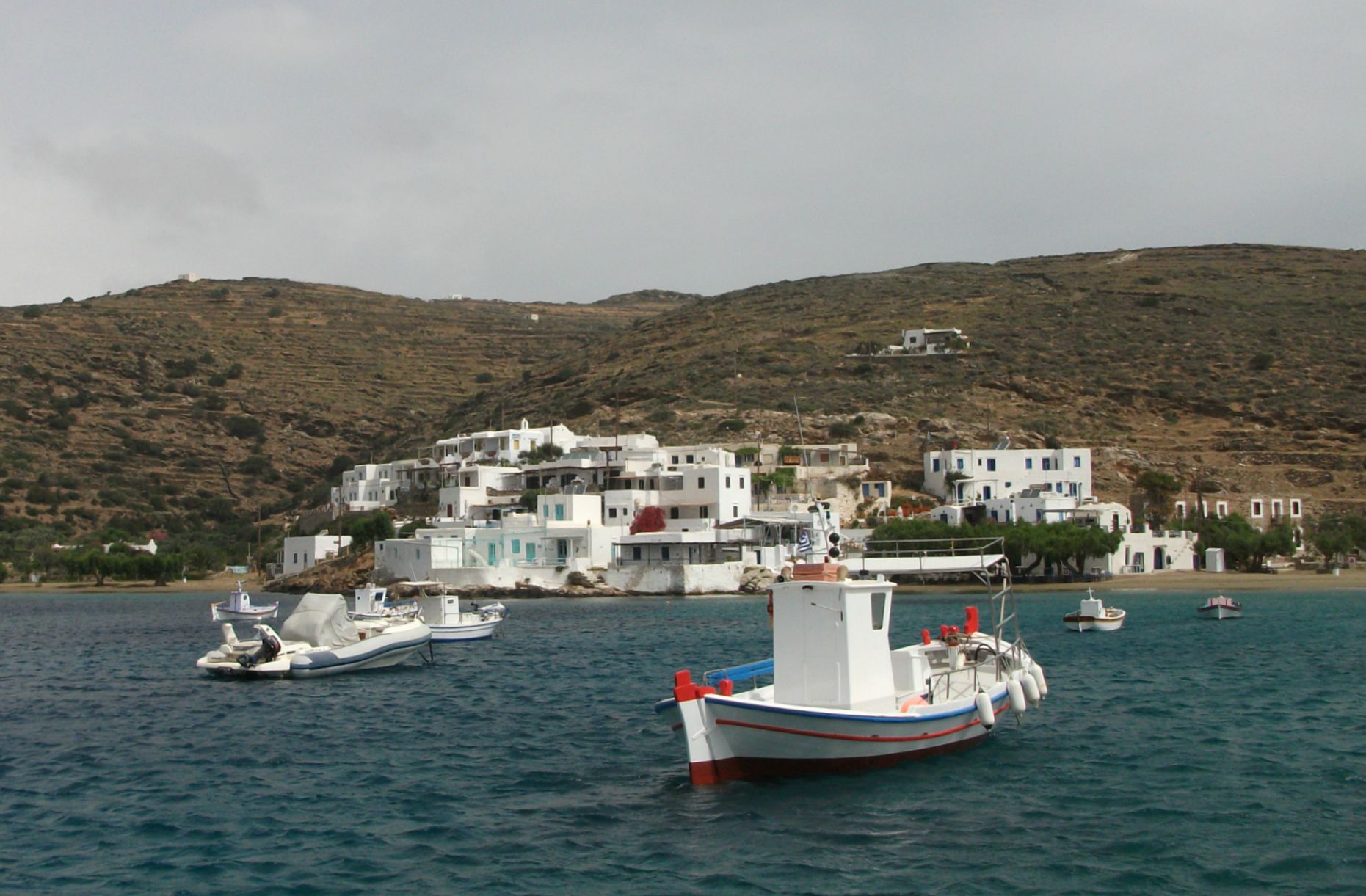
Faros to the east is smaller and quieter and offers a choice of decent beaches within a half hour’s walk, but Vathy to the west is best of all with soft sand on a wide bay and a good range of tavernas and accommodation. The centre of the village is traffic free and vehicles have to stop at the car parks on the edge of the main beach. Vathy has a fairly new luxury hotel that allegedly attracts various celebrities, but the beach is large enough to cope with increases in visitor numbers.
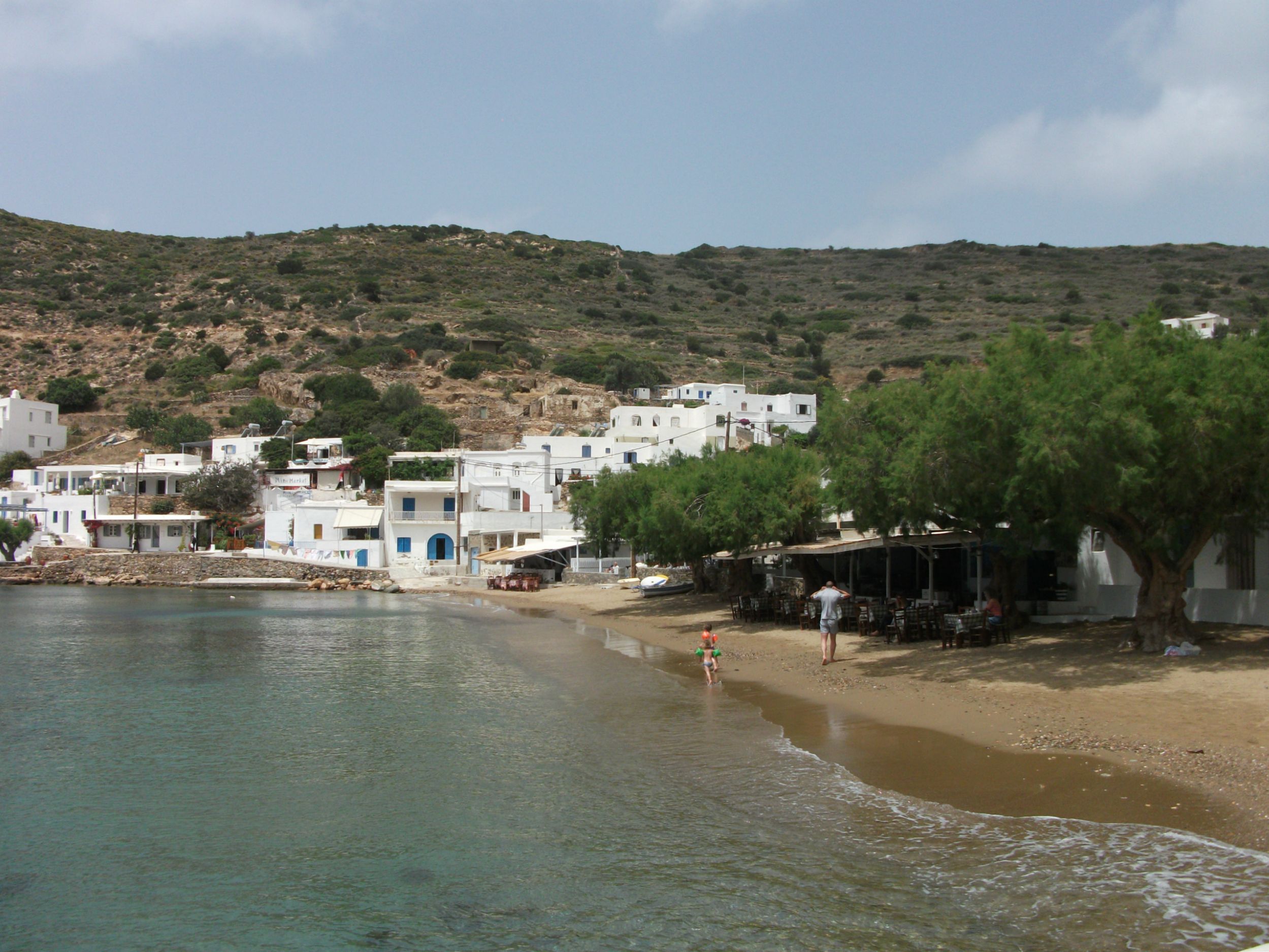
Vathy
For a real get away from it all experience, the isolated hamlet of Heronissos at the very north of the island has sand, a small harbour and a couple of tavernas. Nothing much appears to happen here and it is all the better for it.

Hersonissos
Sifnos has an attractive landscape, pretty villages, excellent beaches and good quality food and accommodation. What more can you ask for?
Sikinos
Visited in 2014
A largely forgotten and bypassed little gem of an island with a peaceful atmosphere, good beaches and a spectacular main village. Limited tourism facilities, but loads of character.
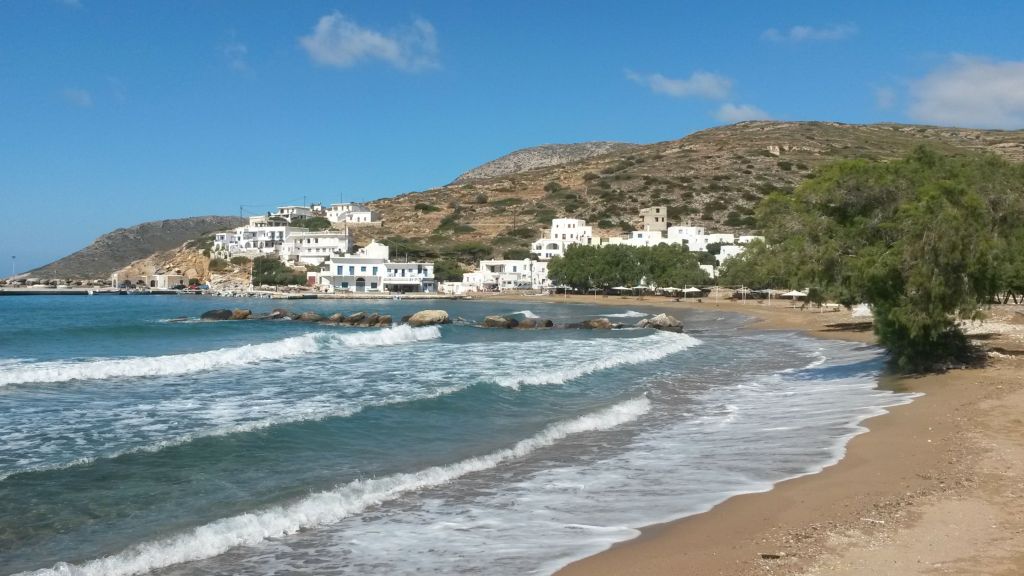
One guidebook describes Sikinos in the southern Cyclades as “a quiet and forgotten backwater”. This is more than a little unfair, although it does have a population of less than 300 residents; was the last island in the Cyclades where visitors were tendered ashore from ferries; and the last to have a regular bus service to move them around on the island. Situated between Ios and Folegandros, its quiet charm and relaxed atmosphere make it one of my favourite Greek islands.

Kastro & Hora
There are three tiny villages on Sikinos – Alopronia, the port; Kastro, the main village a few kilometres inland; and its near neighbour Hora, which is little more than its suburb.
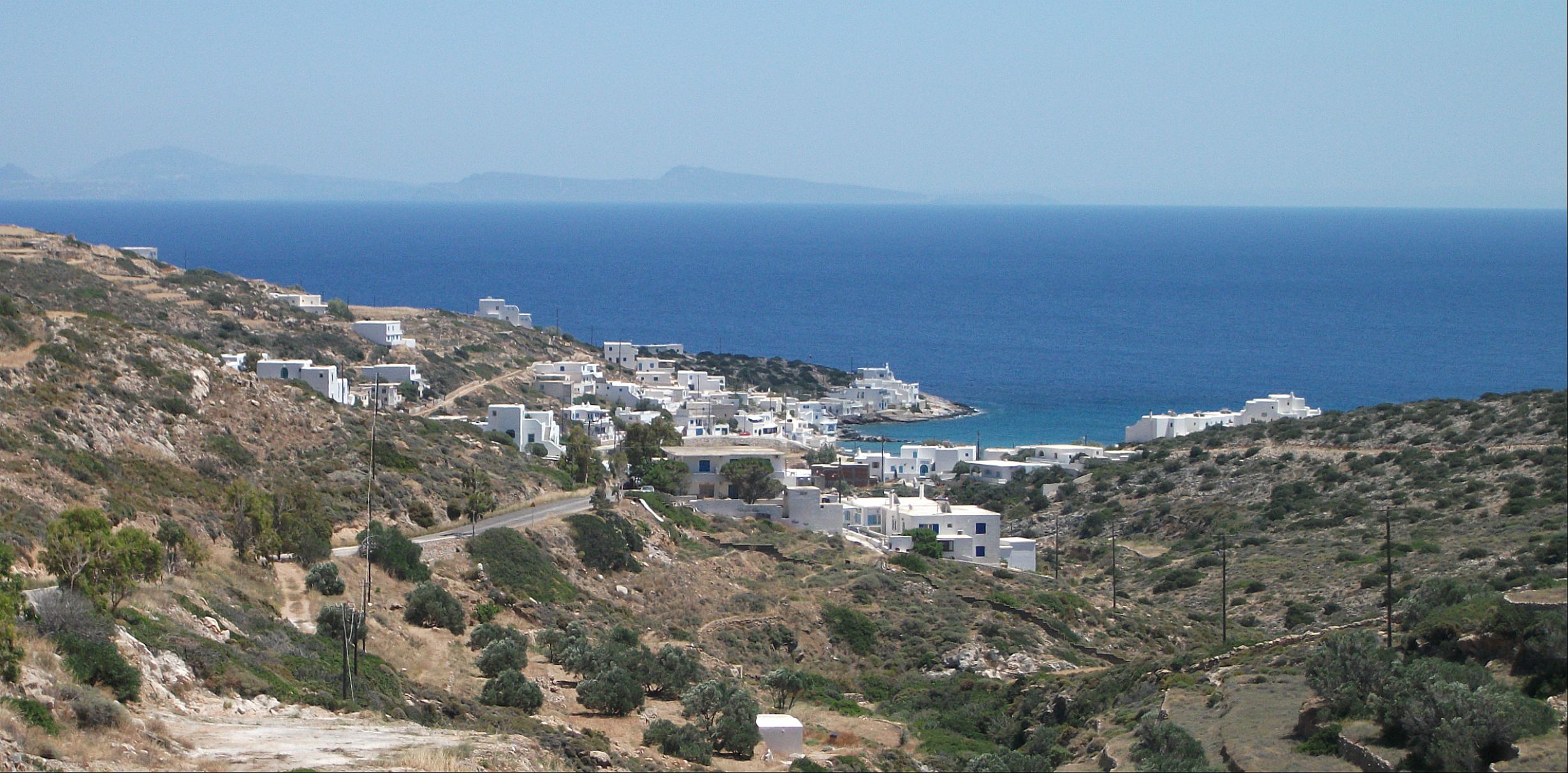
Alopronia
Alopronia has a long beach of soft sand with shady trees and most of the limited visitor accommodation on the island, including the upmarket Porto Sikinos hotel. The restricted range of tavernas and bars is generally adequate to cope with visitor numbers and the main activity takes place when the village shop receives fresh supplies off a ferry and locals flock to it to grab whatever they can before their neighbours take it all.
An erratic and somewhat eccentric bus service runs up to Kastro, a jaw droppingly pretty village located on a ridge high above the sea with a footpath climbing up to a little monastery. Its narrow lanes have a number of characterful shops and cafes with old men sitting outside putting the world to rights. One café had shelves of large glass jars with a variety of exotic looking roots, herbs and plants. I’m not sure if they were for drinking, eating or smoking, or all three. Certainly the owner was happy to give me a smell of each and I wandered off feeling slightly stoned.
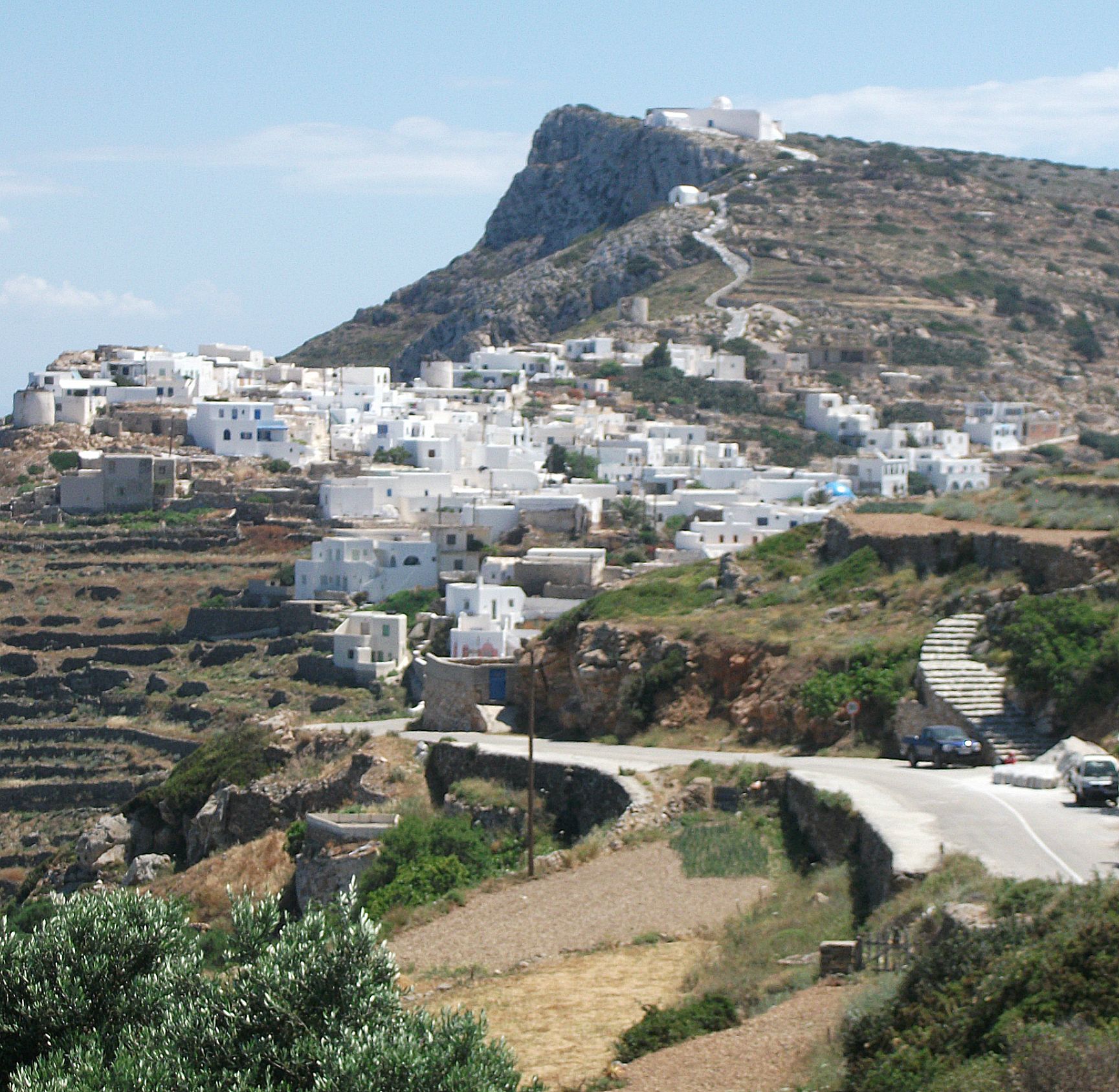
Kastro
From Kastro, a paved road runs for about five kilometres past abandoned cliff side terraces and a new local winery to the ruined 7th century church at Episkopi, which incorporates parts of an earlier temple. It appeared to be in the midst of an extensive but probably slow renovation when I visited, but the walk is worthwhile for the spectacular views across to neighbouring islands. A well signed footpath to Alopronia provides an alternative route back.

Episkopi
Also from Kastro another paved road runs through emptiness for six kilometres to the remote beach of Agios Yeorgios where there was a closed and derelict looking taverna and nothing else. A local map indicated a footpath from there back to Alopronia but I struggled to find its start although I could see it in the distance. Consequently I found myself scrambling over old cliff side terraces in a vain attempt to get back to the paved road before an impending downpour that left me soaked. The beach at Agios Nikolaos is closer to Alopronia, easier to find and better quality.
I loved Sikinos, despite my soaking. The ferry I intended to take out of the island was badly delayed, which gave me a perfect excuse to stay longer than planned. I’m glad I did.
Syros
First Visited in 2010. Most recently visited in 2013.
The administrative capital of the Cyclades. It’s main town, the largest in the island group, is a UNESCO World Heritage Site. Good ferry links to the rest of the Cyclades.

Syros can look a little off putting when you first arrive. Ferries come into the capital Ermoupolis, which is the largest town and the main administrative centre in the Cyclades. Shipyards give it a rather industrial look and the waterfront is a noisy mass of honking vehicles and people.
However, move away from the busy bars and tavernas of the waterfront and Ermoupolis takes on a much more relaxed atmosphere with elegant buildings and broad open squares that justify its status as a UNESCO World Heritage Site. It climbs up two hillsides, one topped by a Catholic church, the other by an Orthodox one.
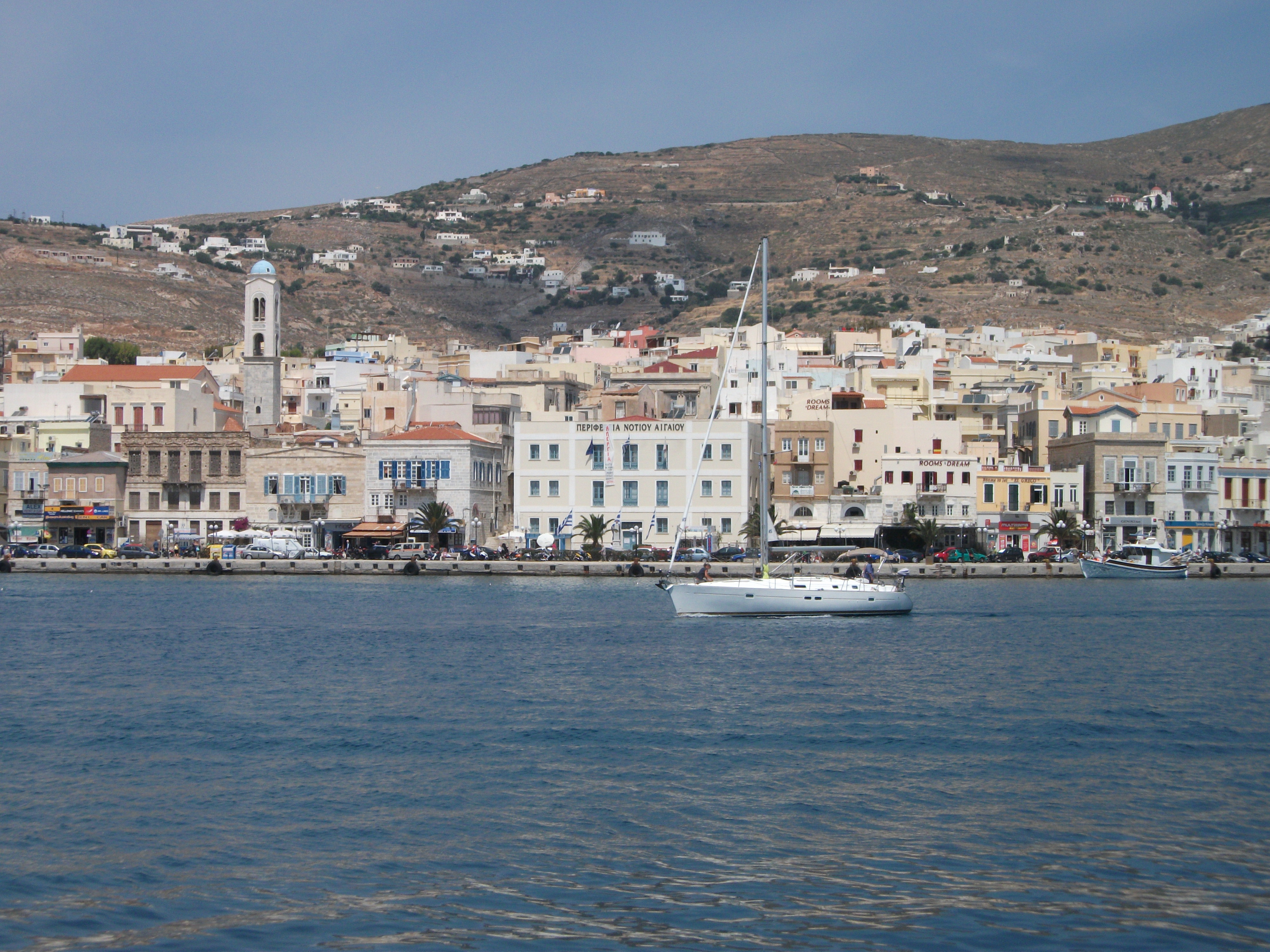
Ermoupolis
I once spent a truly memorable evening in Ermoupolis in a back street taverna where, half way through my meal, a bouzouki player arrived followed by an army of locals who fired in requests, sang traditional songs and danced on the street. They insisted the lone tourist in their midst sampled the delicious local mezes they were enjoying while plying him with too much of the local wine. Never was a hangover more worth the pain of the next morning.
From Ermoupolis regular buses fan out to beach resorts that are mostly located on the same main circular road round the south of the island. Kimi is the exception, lying a little to the north only 15 – 20 minutes from Ermoupolis. It’s quiet, a bit scattered and has a couple of decent beaches.

Galissas
Galissas is arguably the main resort on the circular road. It is divided into two distinct areas: the newer beachside settlement and the older, more traditional agricultural village just inland. It has a good choice of tavernas and places to stay. The beach is a sizeable strand of hard sand and there is a pebble alternative much favoured by nudists within a short walk. There’s a bit of nightlife in a couple of music bars that seem to be frequented by locals more than visitors.
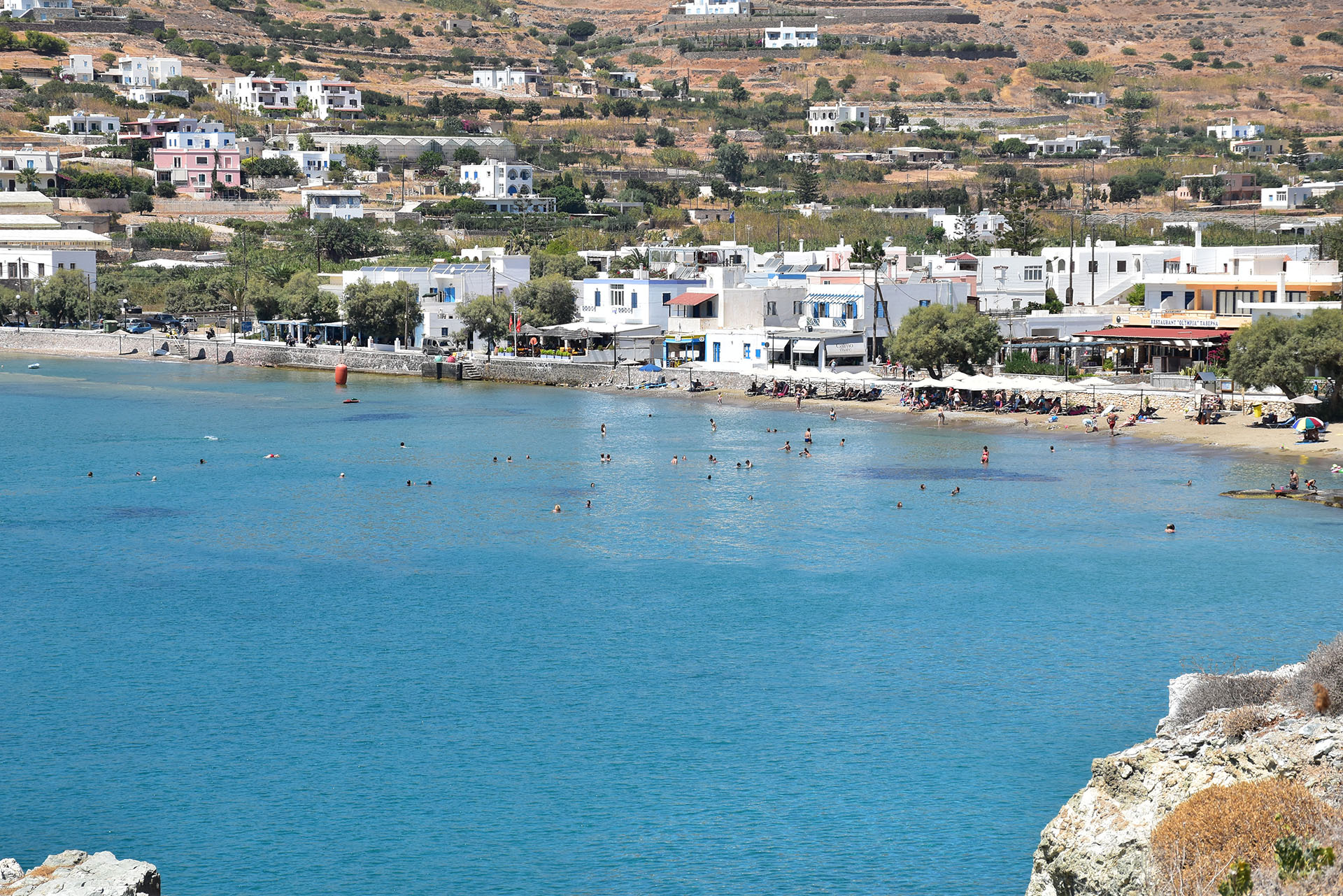
Finikas
Finikas to the south is quieter and has a narrow gritty beach with some shade. However, the beach is hard up against the main road and not always the place for a tranquil snooze in the afternoon sun. Posidonia, its near neighbour, is a bit more upmarket and close to the sandy beach of Agathopes. Heading east, Megas Yialos has colourful houses and a long, narrow beach. All three have a selection of places to stay and waterside tavernas.
Swinging back towards Ermoupolis, sleepy Arkadhi has a good family-friendly beach, while Vari is larger than its neighbours and appears to be popular with local teenagers. It is perhaps the most sheltered of the beaches on the main road, although the sands are overlooked by tavernas and rooms for rent meaning privacy is at a premium.

Vari
In general, the beaches of Syros are not as attractive as those of many other islands, but the villages are relaxed and friendly while Ermoupolis offers a pleasant option for anyone looking for a bit more biz and everyday local life.
Thirassia
Visited in 2016
Once part of Santorini, now it’s nearest neighbour. Shares the same unique scenery but not the crowds. A quiet escape from Santorini’s noise and bustle.

Thirassia is Santorini’s nearest neighbour and was once part of the same island before a cataclysmic volcanic eruption separated the two. Now it shares the same topography of sheer cliff faces overlooking a flooded caldera.
Most visitors to Thirassia come on day trip boat excursions from Santorini that combine a lunchtime stop on the island with time in the mud springs of the nearby volcanic Kameni islets. However, it is possible to stay overnight and there are four or five passenger ferries a day from Ia in the north of Santorini, as well as more occasional large car ferries heading to and from Piraeus.
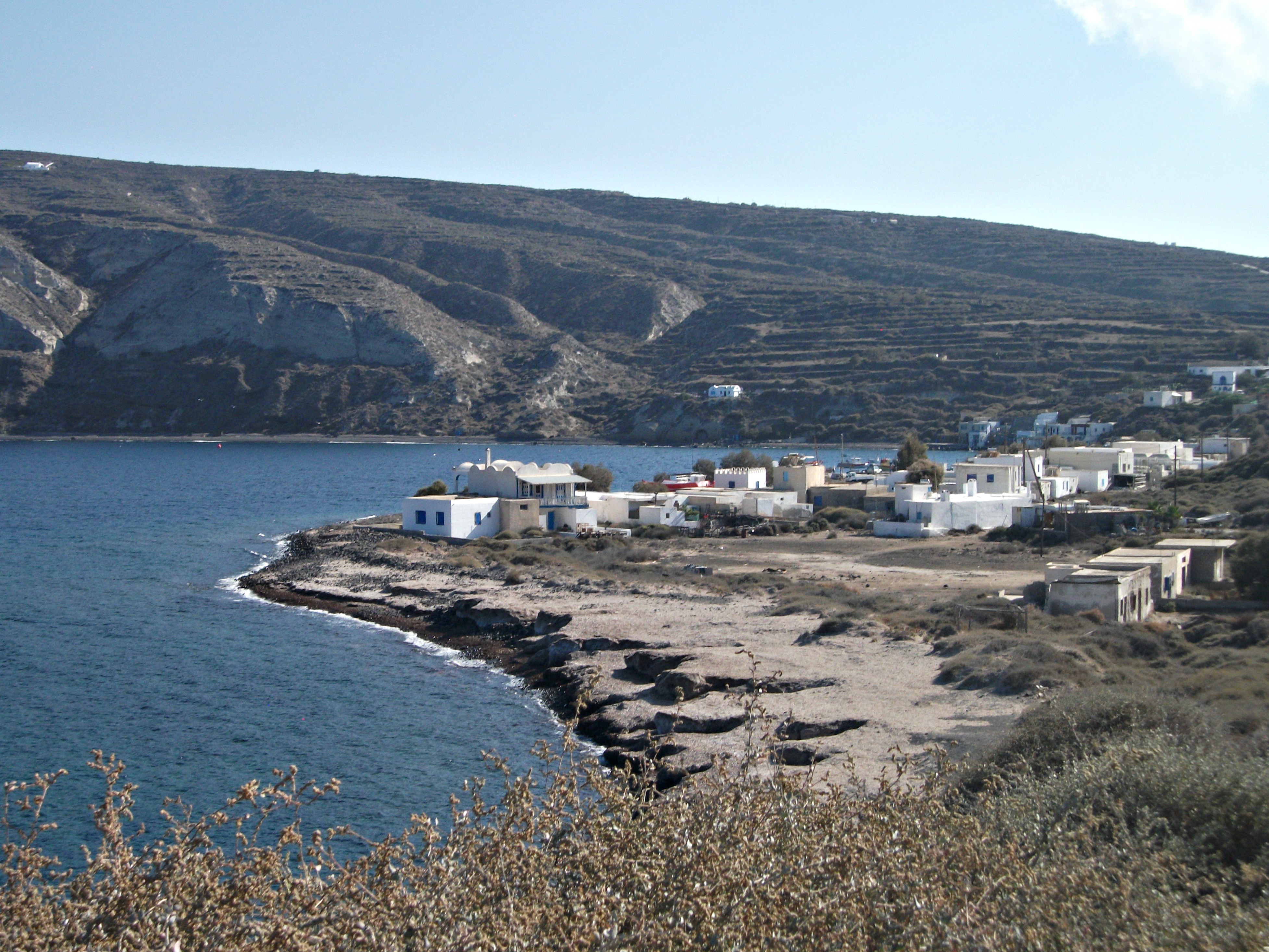
Riva
Ferries call in at Riva, a rather shabby, small port on the north of the island with a mediocre beach covered in bleached seaweed. It is best passed through as quickly as possible. A free community bus runs to the main village of Manolas. Alternatively, a pleasant walk along the main paved road takes you there in about 45 minutes.
Excursion boats dock for a couple of hours at Korfos, a characterless strip of tavernas and shops at the bottom of the cliff below Manolas to which it is linked by a steep footpath that snakes up the cliff face for several hundred feet. I tackled it with my usual hot headed enthusiasm in the full glare of the afternoon sun. By the time I got to the top I was all too aware of my advancing years and my limitless propensity to leak unpleasant quantities of sweat.

Manolas
Most day trippers don’t bother trying to make the climb up to Manolas, which is a quiet, slightly run down little village that offers spectacular views across the caldera to Santorini. However, it is not completely without visitors. I was enjoying lunch in a cliff top taverna that I had to myself until a tour party of about 50 people from Thailand descended upon it, most of them carrying their own oriental food in plastic Tupperware containers. Once they learned I had been to their country I was asked to pose for numerous photographs with them. I may now be a minor celebrity in the Far East.
Thirassia is geographically close to Santorini, but a million miles away from it in terms of atmosphere. In some ways it is the prettier island. It is certainly quieter and more relaxed, if a little rough round the edges. Well worth a visit if you want to escape the crowds on its neighbour, but if you want to see more of it use the local ferry from Ia rather than an excursion boat.
Tinos
Visited in 2010
An important site of pilgrimage for Greek Orthodox Christians. Lovely main town and excellent walking around the quiet and peaceful countryside.
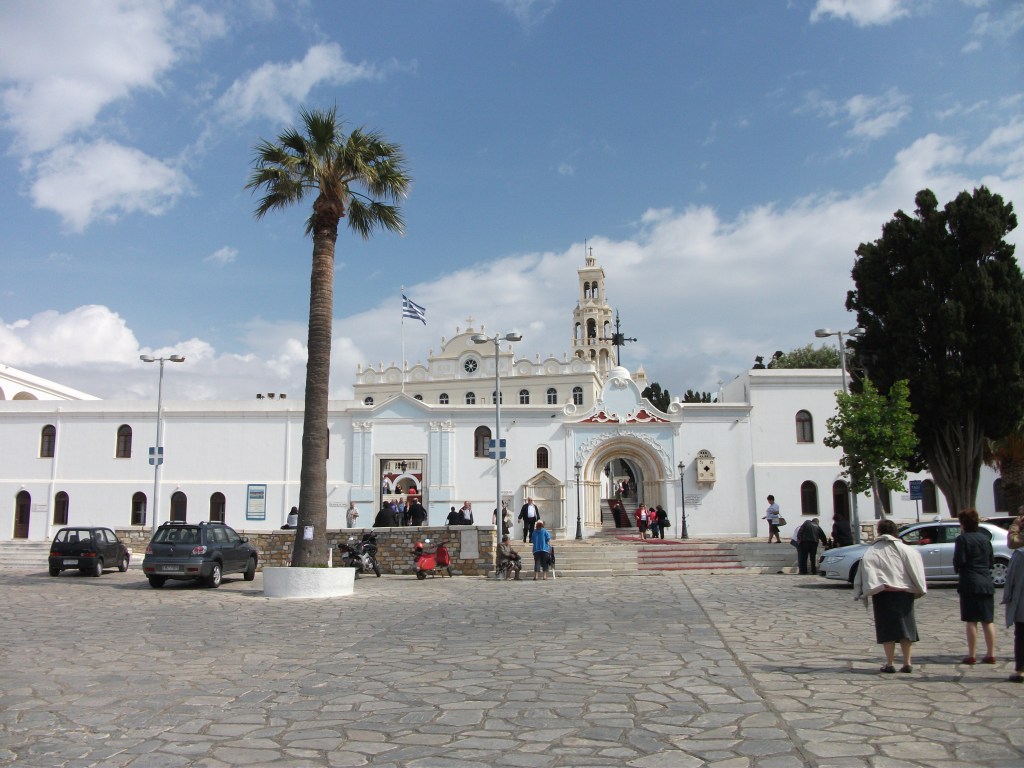
Tinos has long been a place of pilgrimage for Greek visitors attracted by the church of Panagia Evangelistra where a nun found a miraculous icon with alleged healing powers back in 1822.
Today, pilgrims continue to climb the hill from the waterfront to the church on their hands and knees. However, local authorities have covered part of the route with a carpet to soften the journey, which is lined by stores selling tacky religious souvenirs as well as knee and hand pads.

Tinos Town Pelican Crossing
The church is in Tinos’ main town, which shares its name with the island. It’s a friendly, workaday place with some good quality accommodation and restaurants. When I first visited, the waterfront was enlivened by a chilled out pelican who wandered freely through the traffic of the town and could sometimes be seen hitching a ride on a local scooter. I don’t imagine he’s still there, but I have no idea how long pelicans may live for.
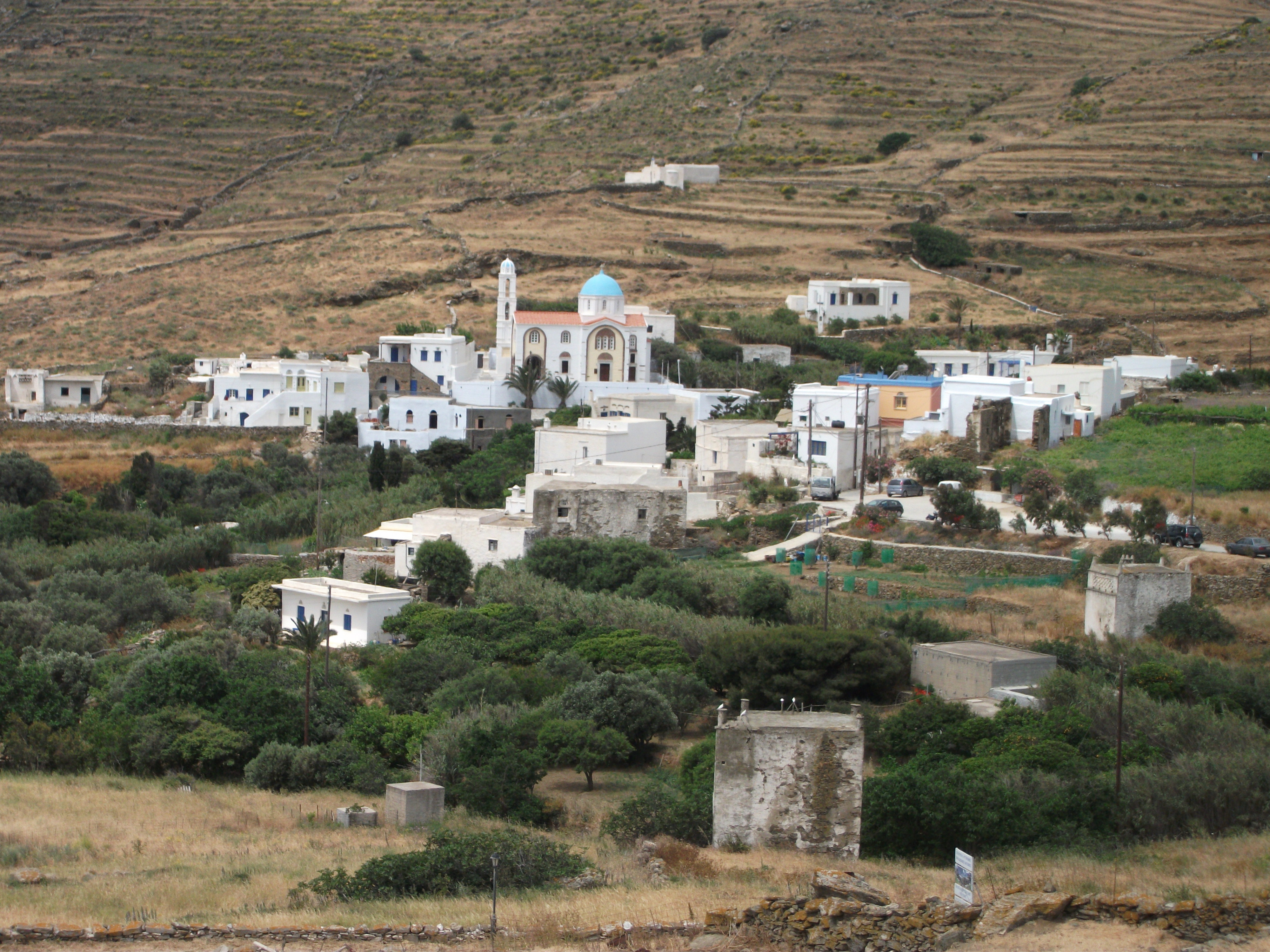
Tinos Village & Countryside
The countryside around Tinos Town is particularly attractive and criss-crossed by a well signed network of footpaths that provide enjoyable days of walking between picturesque local villages that skirt around the craggy Exoburgo mountain that dominates the south of the island. Tinos is renowned for its decorative dovecots that are liberally scattered across the landscape.
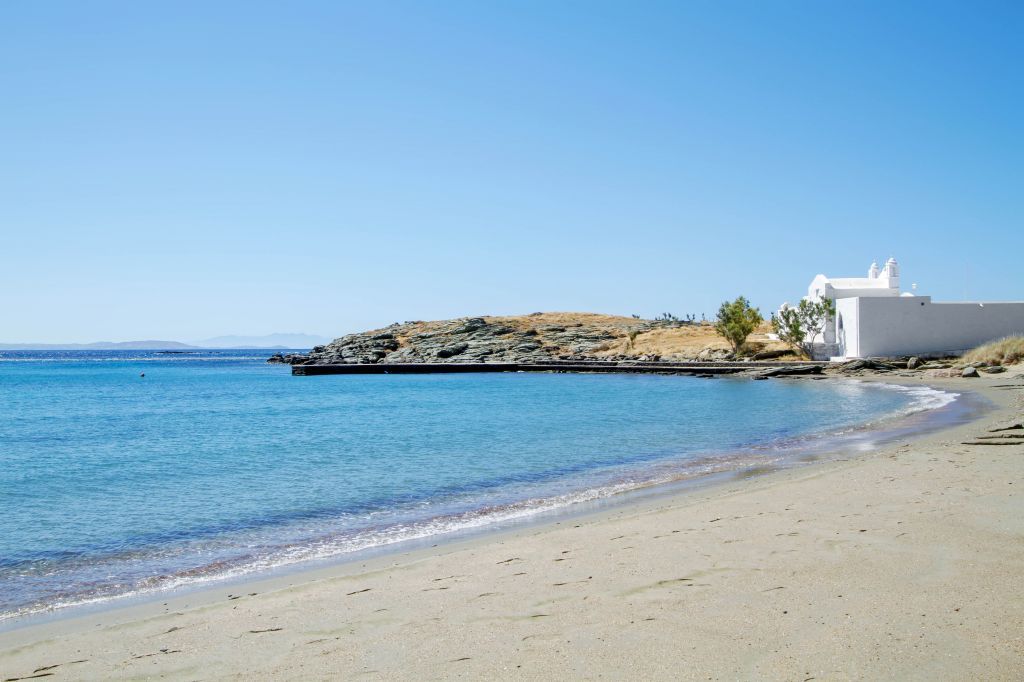
Porto
From Tinos Town, a paved road runs east to the upmarket beach resort of Porto passing other beaches along the way. Porto has a magnificent beach but felt a bit soulless and purpose built to me. The kind of place where visitors rarely venture outside their resort hotels or apartment complexes and prefer to spend their days by a swimming pool where waiters serve an endless selection of cooling drinks on an all-inclusive basis. However, I may be doing it a disservice.

Panormos
Another road heads north west out of town to the north of the island passing through the panoramic cliff top village of Kardhiani on its way to the marble quarrying centre of Pyrgos and the pretty seaside village of Panormos from where the marble was once exported. Now it has some pleasant tavernas and rooms to rent and is within walking distance of the beautiful beach of Rohari.
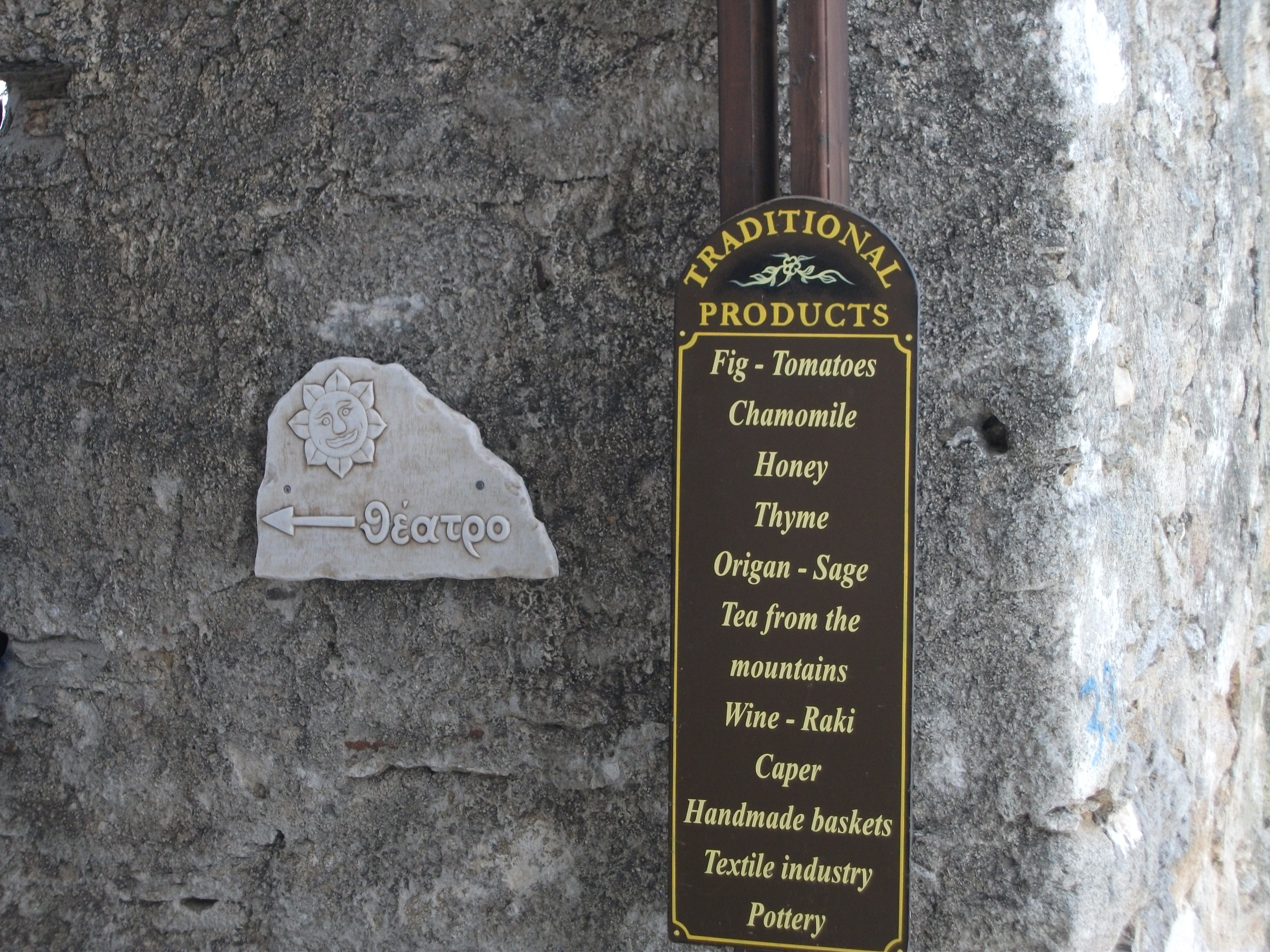
Tinos Produce
Tinos is well served with daily ferries and hydrofoils from Rafina that link it with Andros, Mykonos and Syros. It is apparently particularly busy around two major religious festivals on 25 March and 15 August when the holy icon is paraded through the main town. All guide books advise booking ferries and accommodation well in advance of these dates. At other times of year it is much quieter and offers some of the best easy walking on the Greek islands.
I really enjoyed Tinos. If you are on a tight schedule and can only visit one of the northern Cyclades, Tinos is the one to head for.
 Skimming Greece