
Lying In between the south coast of Attica – the part of Greece where Athens is located – and the east side of the Peloponnese peninsula, the half dozen Saronic Gulf islands offer some of the quickest sea journeys and most regular ferry and hydrofoil services to and from Piraeus, Greece’s largest and busiest port.
The most northerly islands, Aegina and Salamis, effectively fall within the Athens/Piraeus commuter belt and have large resident populations for their relatively small size. Salamis, in particular, is almost a suburb of Piraeus and is the most densely populated Greek island. Consequently, it tends to be bypassed by most overseas visitors to Greece.
The other islands are popular day visit excursions from Piraeus – some excursion cruises give time on three islands in one day. However, they all have a good range of overnight accommodation, largely catering for weekending Athenians. This can make it advisable to book in advance in peak season rather than turning up on spec expecting to find a bed for the night.
Each of the islands is small enough to be explored in some detail in one day. However, their atmosphere can change significantly in the evening once the excursion boats have departed. The islands furthest from Piraeus are the quietest and the most upmarket. Hydra probably has the greatest charm and tends to attract a more bohemian and artistic type of visitor.
The Saronic Gulf islands may not appeal to those who seek secret, out of the way places on the edge of the civilised world. However, they provide interesting diversions for a few days without the need to spend endless hours on ferries or hydrofoils to get to them.
Aegina
First Visited in 1989. Most recently visited in 2022.
Small but easily accessible from Athens with a lot of commuter traffic. Was the first capital of the modern Greek state. Busy in some places, tatty in others, but has quiet pockets.
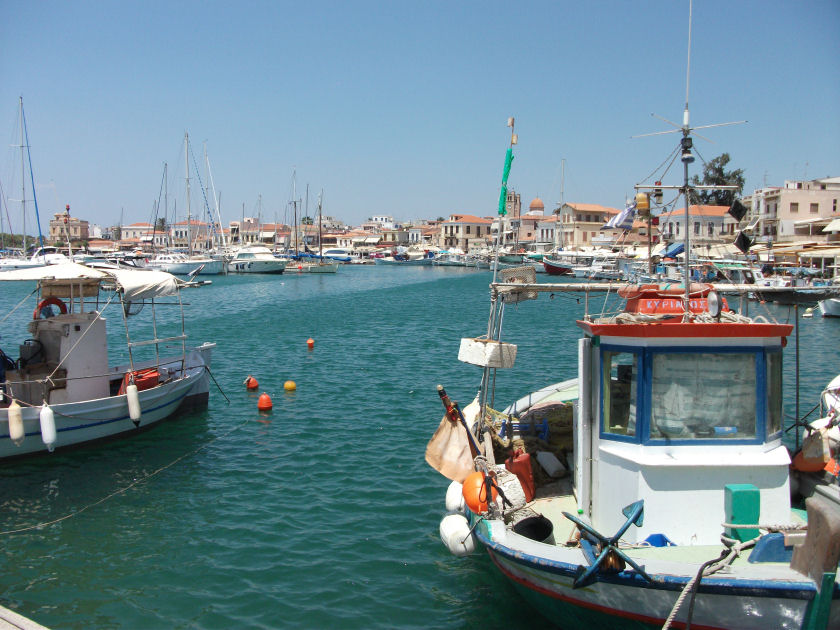
At one time, little Aegina almost rivalled Athens as a major power in ancient Greece. More recently, its main town, which bears the same name as the island, was the first capital of the modern Greek state between 1826 – 28.
Hydrofoils and ferries to and from Piraeus run as regularly as commuter buses and can get you to the island in under an hour. Most dock at Aegina Town, but a few head for the undistinguished residential town of Souvala on the north coast or the east coast beach resort of Agia Marina.
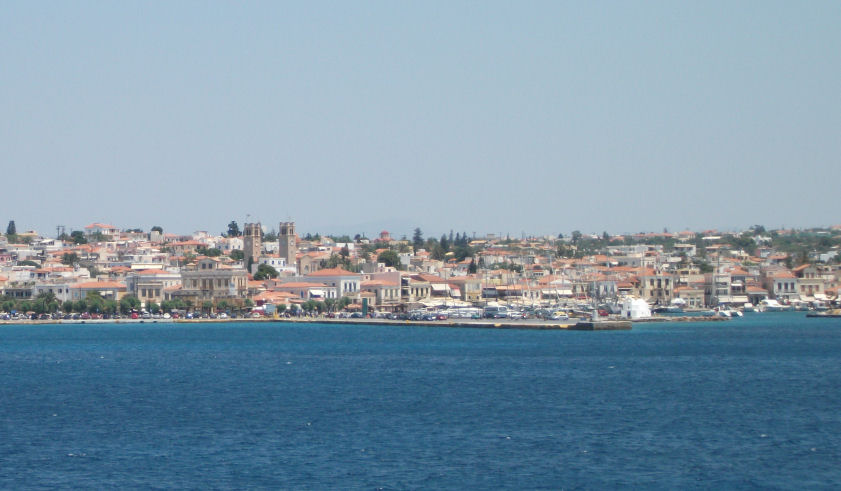
Aegina Town
Aegina Town has a busy and prosperous atmosphere with numerous fine mansions and public buildings hidden away in its back streets. The waterfront tavernas get custom more through their location than the quality and value of their food or service. The best food can usually be found a block or two further back in the area around the fish market, which is also the main shopping area. There are reasonable, if unspectacular, beaches within easy walking distance to the north and south of the town. Some of them offer sunbeds, which are usually accompanied by bars blaring out loud dance music.

Agia Marina
Agia Marina on the east coast has the air of a place that has seen better days with more than its fair share of empty buildings. Nonetheless, its narrow, sandy beach can still be packed with families. Nearby, the Temple of Aphaea is Aegina’s main historic site with extensive ruins spread out among pine trees.
The road continues south from Agia Marina to the sleepy fishing village of Portes before heading inland back to Aegina Town, passing through Pahia Rahi, which lies close to Mount Oros. This is the island’s highest point with expansive views and good walking trails.
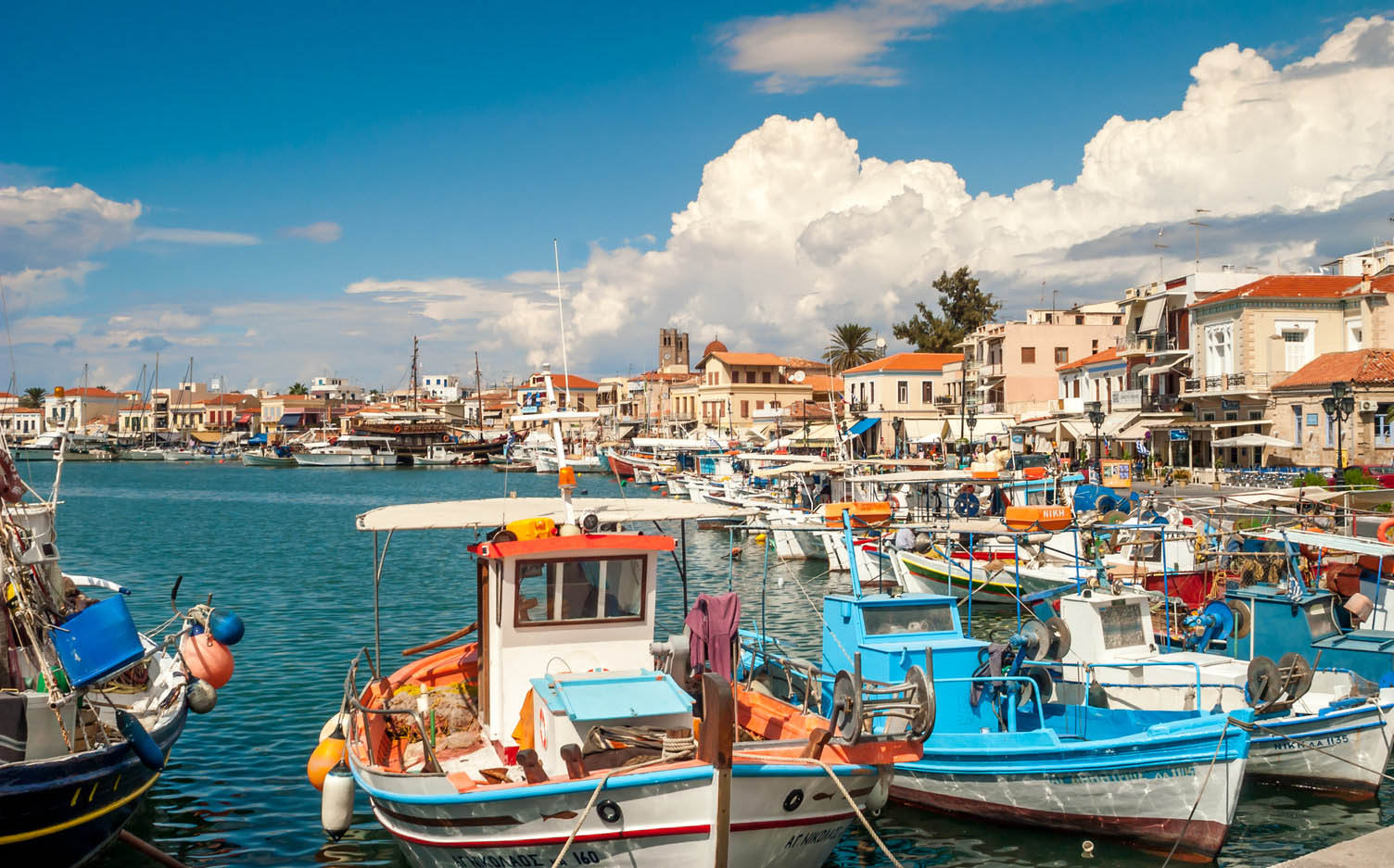
A coastal road south of the main town runs for 9km to Perdika, which I would rank as the most picturesque village on the island. Yachts in the bay and waterfront tavernas overlook the small, offshore islet of Moni, much of which is a nature reserve. Small boats cross over to Moni throughout the day carrying visitors looking for more tranquillity and better swimming.
Overall, Aegina is a pleasant little island without being too exciting. Perdika is the most attractive place to stay if you want to avoid the bustle of the main town and regular local bus services make it easy to get around if you don’t fancy car or bike hire. However, its proximity to Athens can mean that prices are higher than in many other parts of Greece.
Agistri
First Visited in 2013. Most recently visited in 2022.
The smallest and quietest Saronic island. Popular with weekending Athenians. Three attractive villages and good quality visitor facilities. Easy to access.
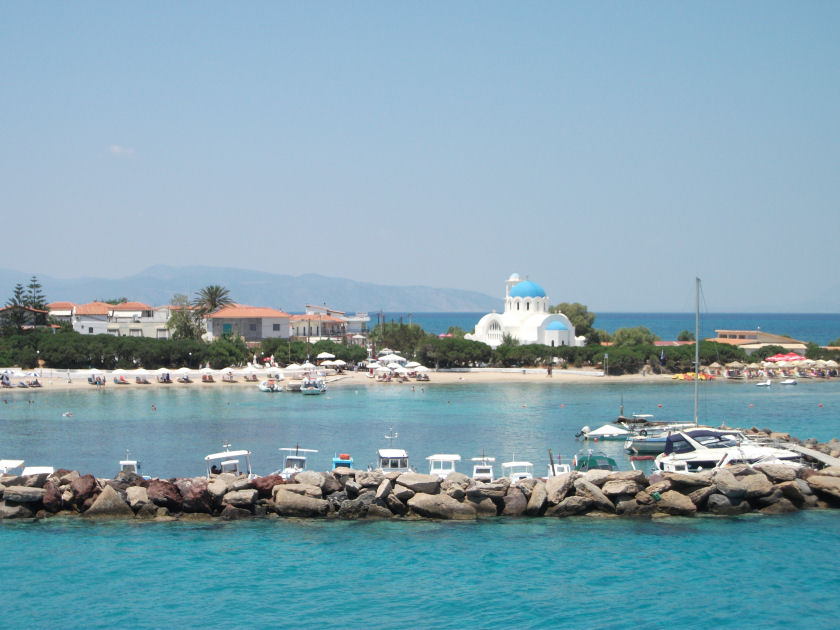
Pine covered Agistri is the smallest of the inhabited Saronic Gulf islands, but is still large enough to accommodate around 1,000 residents spread across three main villages.
There are regular ferry and flying dolphin services direct from Piraeus or via Aegina that can take as little as one hour to make the crossing from the mainland. Links to other Saronic islands tend to be more occasional.
Quieter than Aegina, Agistri still has a noticeable level of package holiday business. Its proximity to Athens also makes it a popular day visit and weekend destination for Greeks.
The two largest villages, Skala and Mylos, are both on the north coast within a couple of kilometres of each other – an easy 20 minute stroll along the attractive coast road.
Skala is the main ferry port. while Mylos handles most of the flying dolphin services. It’s advisable to make sure in advance which one your departure vessel is leaving from. I learned this the hard way on my first visit.
Skala is very much a resort village with a host of hotels, apartments, rooms, tavernas, bars and cafes. The main, well tended, sandy beach is probably the best on the island with shallow, child friendly water. However, much of the sand is covered by row upon row of closely packed sunbeds and the beach can get packed at weekends and peak times.
The village also hosts a wide range of operators offering activities such as guided cycling tours, kayaking and scuba diving. Agistri is a good cycling island, although there are also motorbike hire outlets for the less active. Car hire is also available but is probably unnecessary given the relatively small size of the island and the provision of regular local bus services to the main places of interest.
Skala is the place to head for night time action, although it isn’t too noisy or in your face.
Mylos
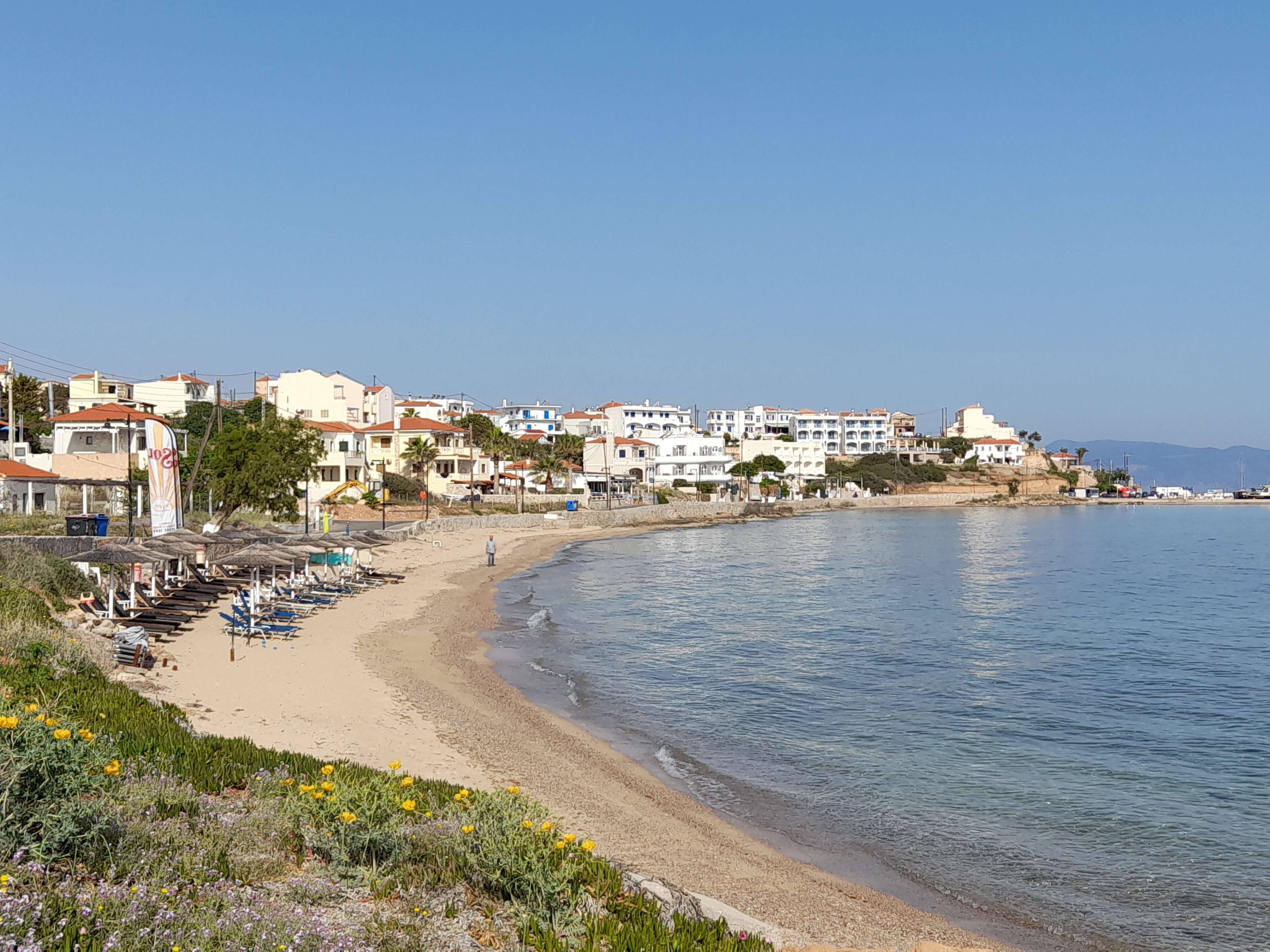
New looking studios and apartments spread out along the road between Skala and Mylos to the west. Mylos is smaller, quieter and more traditionally Greek than Skala, although it still has a good variety of places to stay, eat and drink. It’s beach is much smaller than that of Skala, but still offers soft sand with some sunbeds as well as free space on which to stretch out. I stayed there and enjoyed quiet nights and fine sunsets.

Limenaria
From Mylos, a good paved road heads south towards sleepy Limenaria, the third village, which is a farming community with little tourism infrastructure other than a couple of tavernas and a choice of minimarkets. However, Agistri’s main horse riding centre lies just outside the village. Buses run the 5km or so from Mylos a few times a day. However, on my first visit I set out to walk the road until a local in an old pickup truck insisted on giving me a lift as he was convinced I would go crazy in the June heat.
Dragonara
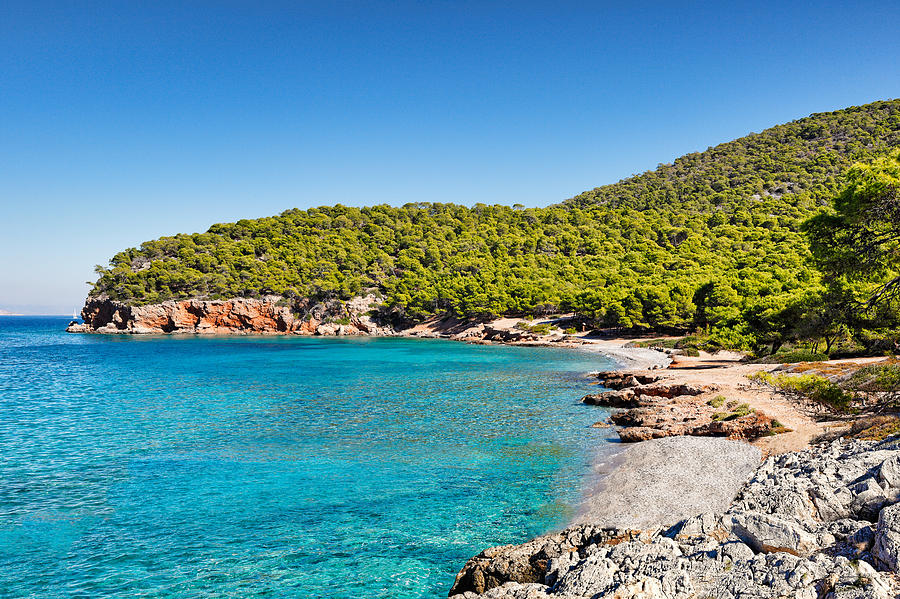
Along the way there is a side road down to Dragonara, a rather scruffy but surprisingly popular pebble beach on the island’s west coast. Alternatively, just beyond Limenaria are the man made bathing platforms of Mariza and Apollonas at the south of the island. The former is pretty basic with limited space, but the latter has a series of concrete sunbathing platforms among rocks where ladders give access to beautiful, cool, clear water. There is a taverna of sorts but it was closed when I visited, maybe because myself and the two other people sunbathing on the rocks were not enough to make it worthwhile opening. Local buses make it down to Apollonas two or three times a day.
There is another popular pebble beach at Chalikadha, a few kilometres to the east of Skala. However, signage to it is poor and, having taken a wrong turning, I wasted an hour of my life walking to and from the municipal rubbish dump.
I like Agistri. I first went there as a day visitor and returned to spend 3 days there. They were 3 days well spent, which enabled me to see most of the island. I enjoyed walking around it.
Agistri has a relaxed charm. There are plenty of places to stay, eat and drink. None are likely to win any awards but they are friendly and welcoming. It’s relatively easy to escape the crowds around Skala to find your own quiet corner or to day trip into the hustle and bustle of Athens if you need a shot of a more frenetic way of life.
Hydra
First Visited in 2013. Most recently visited in 2018.
The St Tropez of the Aegean. Sophisticated, bohemian and expensive. Interior is empty and barren; beaches are mediocre; but the main village is one of the most striking in Greece.
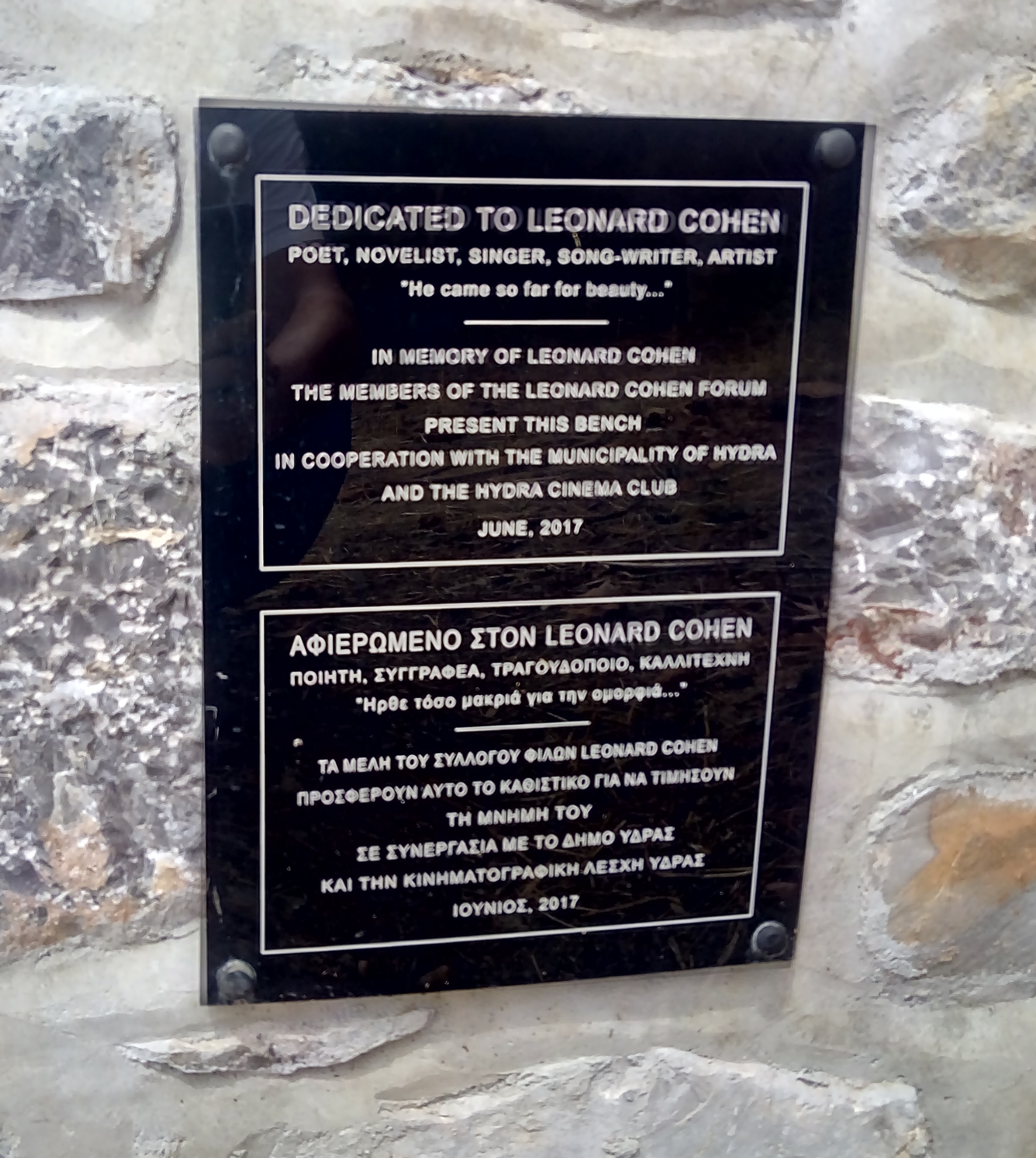
Music anoraks of a certain age like myself probably most associate Hydra with the late, great Leonard Cohen who lived there for a number of years in the early 1960s, crafting poems and songs inspired by his muse, Marianne. He also wrote his second novel “Beautiful Losers” there, apparently in a three week long, amphetamine fuelled frenzy. It shows – it’s a unreadable tirade of pornographic drivel.
Leonard Cohen Dedication
He retained a house on the island right up to his death and I believe his family still visit on a fairly regular basis. Directions to find it are easily sourced online. It’s an unremarkable building, distinguished from its neighbours only by its Star of David door knocker.
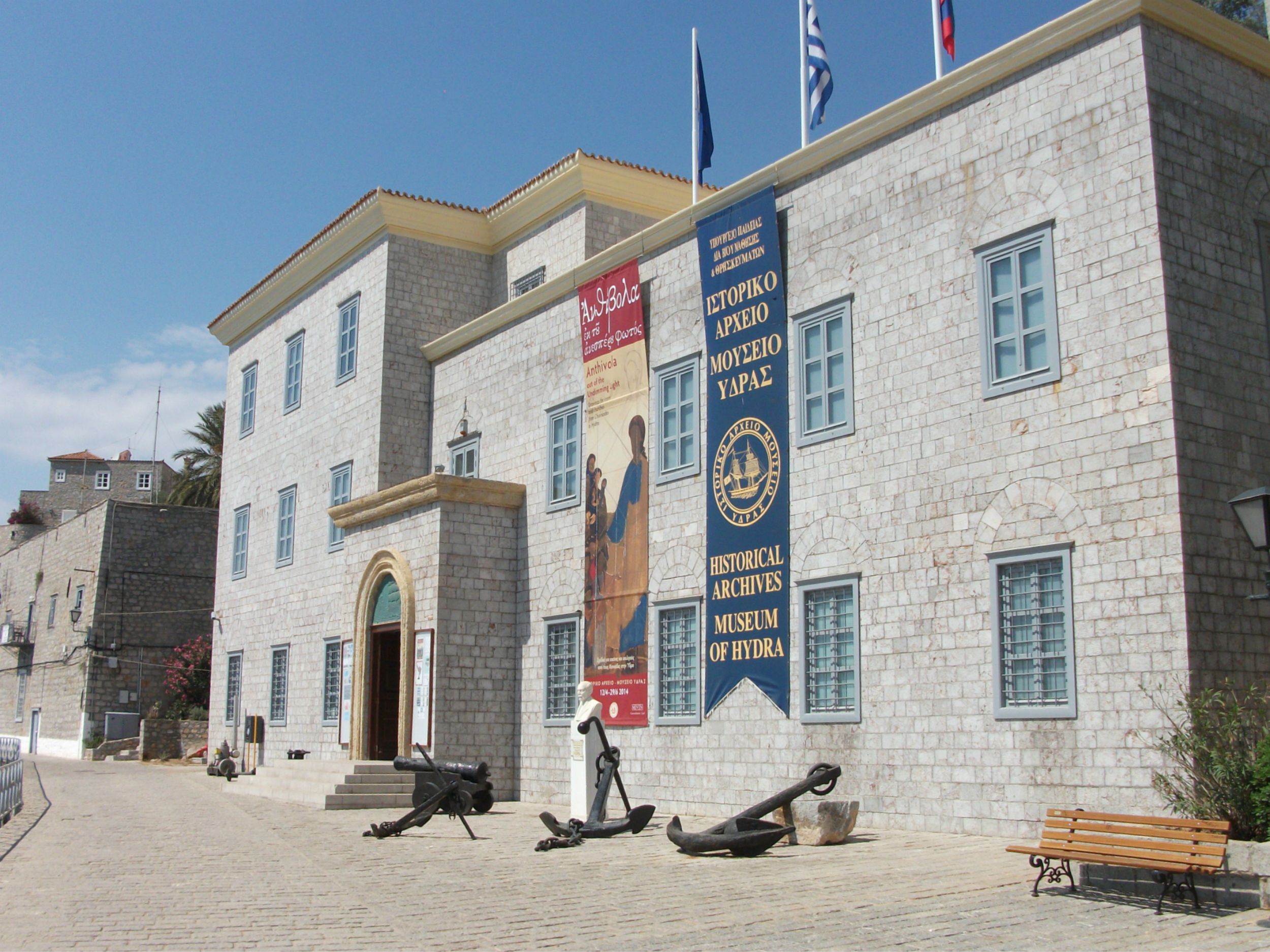
Hydra Museum
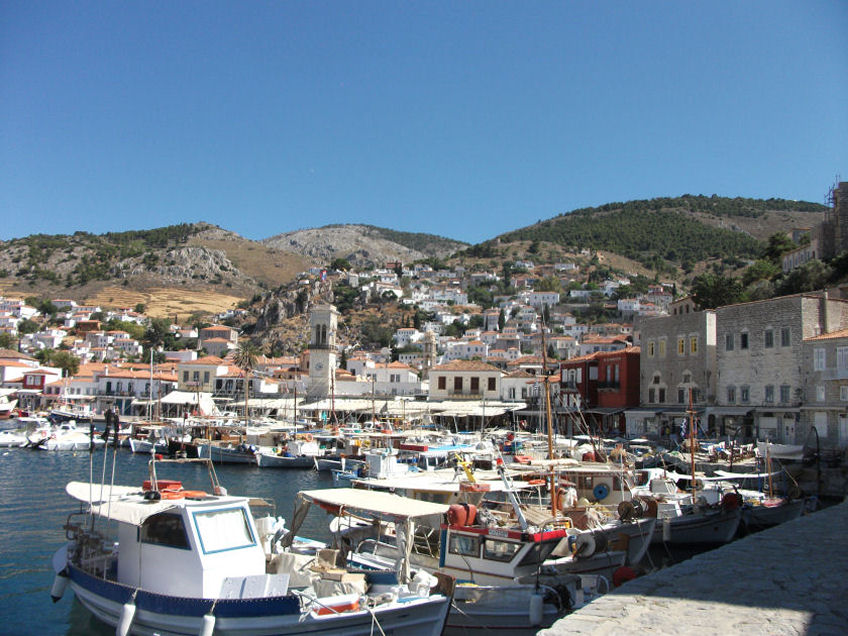
Thin and rocky, Hydra is pretty much a one village island, but what a village. One of the most picturesque and photogenic in all of Greece. It’s red roofed houses clamber up the hillsides from the harbour with its 18th century merchants’ mansions, some of which are now museums or art galleries. There are no motorised vehicles on Hydra, apart from the local bin lorry. Goods and provisions are transported on the backs of donkeys and walking is the only way to explore the labyrinth of steep and narrow lanes that open out on to shady squares with tavernas and shops.
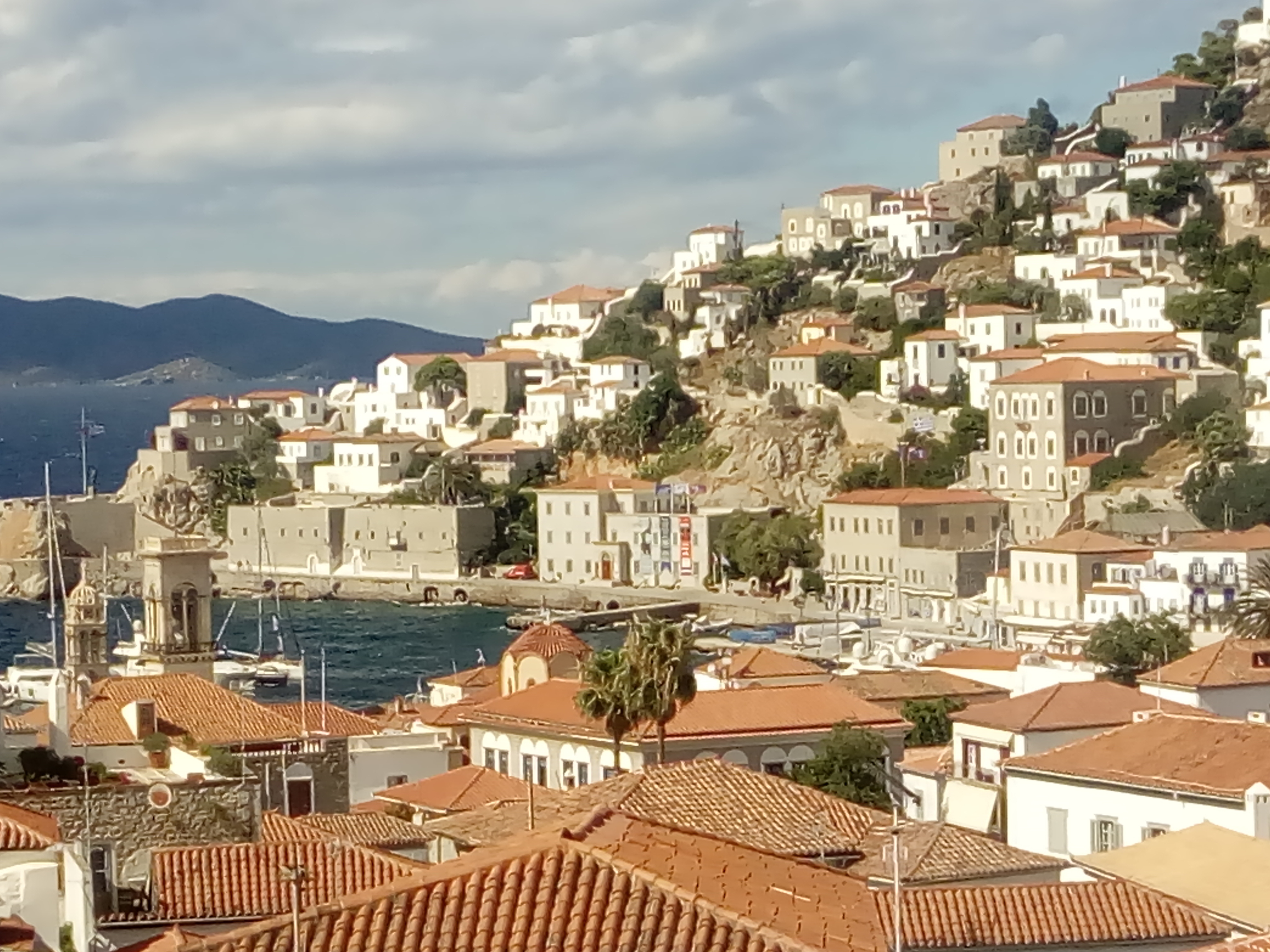
Hydra Town
Small boutique hotels abound in converted old buildings along with less expensive accommodation options, but Hydra is not a cheap island to visit. It attracts the beautiful people; the people with taste and enough money to indulge their passions. That said, scruffs like myself can still enjoy it and, like St Mark’s Square in Venice, it is worth paying a bit over the odds in the waterfront tavernas to enjoy the ambience and backdrop.
One thing Hydra lacks is noteworthy beaches. There are concrete bathing platforms immediately to the west of Hydra Town, after which a 30 minute walk along a traditional paved footpath brings you to Vlyhos, a cramped patch of shingle and pebbles where every inch of available space is given over to sunbeds. A better option is Mandraki, a 20 minute walk east from the main town where the beach is no larger or less stony, but tends to be quieter and is overlooked by a friendly taverna.
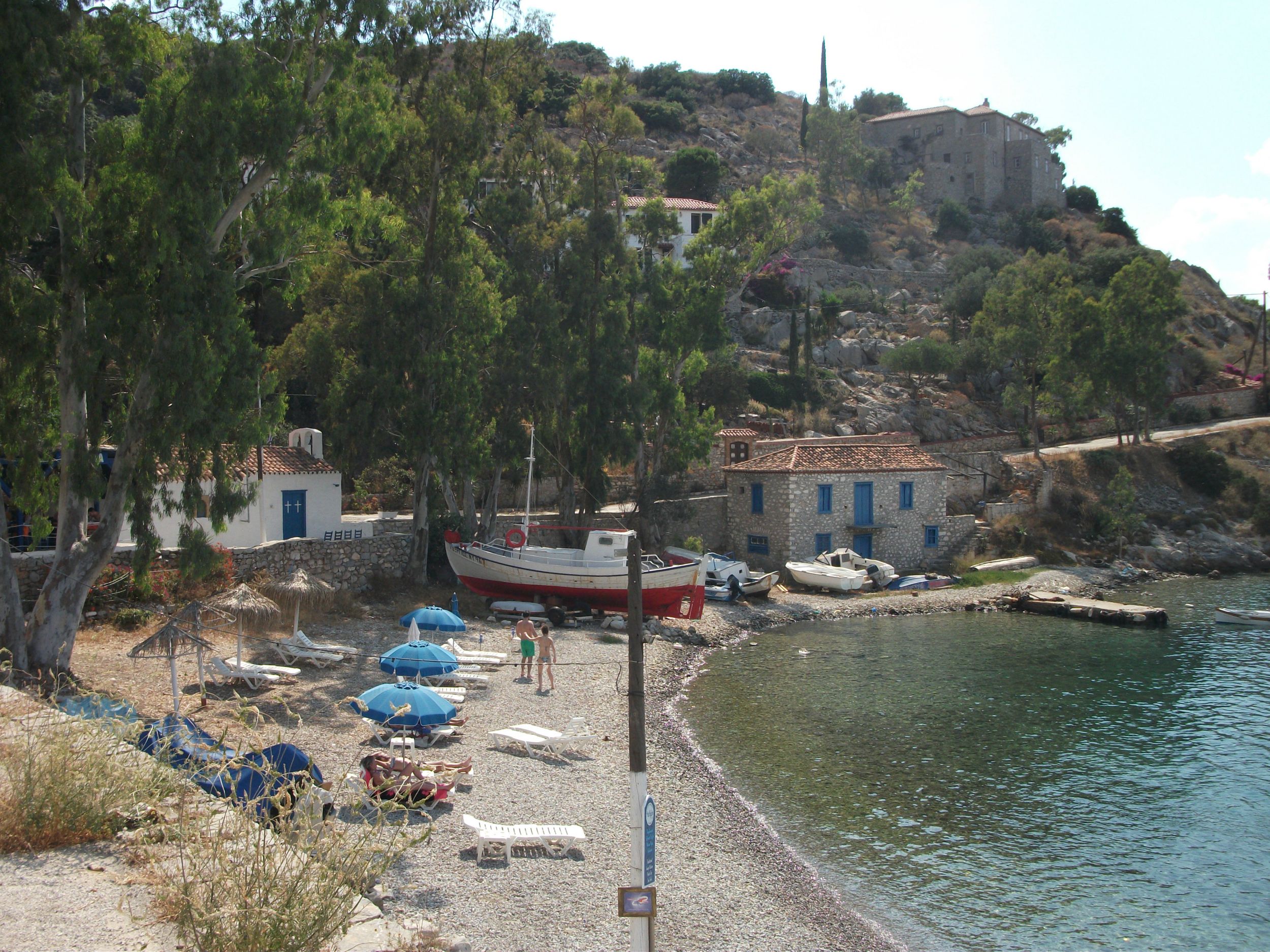
Mandraki
Excursion boats and water taxis run regularly from the town harbour to other more remote beaches on the south and west of the island, some of which are only accessible by sea. Bisti is perhaps the most popular remote option but, like all other beaches on the island, it is more pebbly and stony than sandy; tends to be dominated by sunbeds; and gets jam packed as the day wears on.
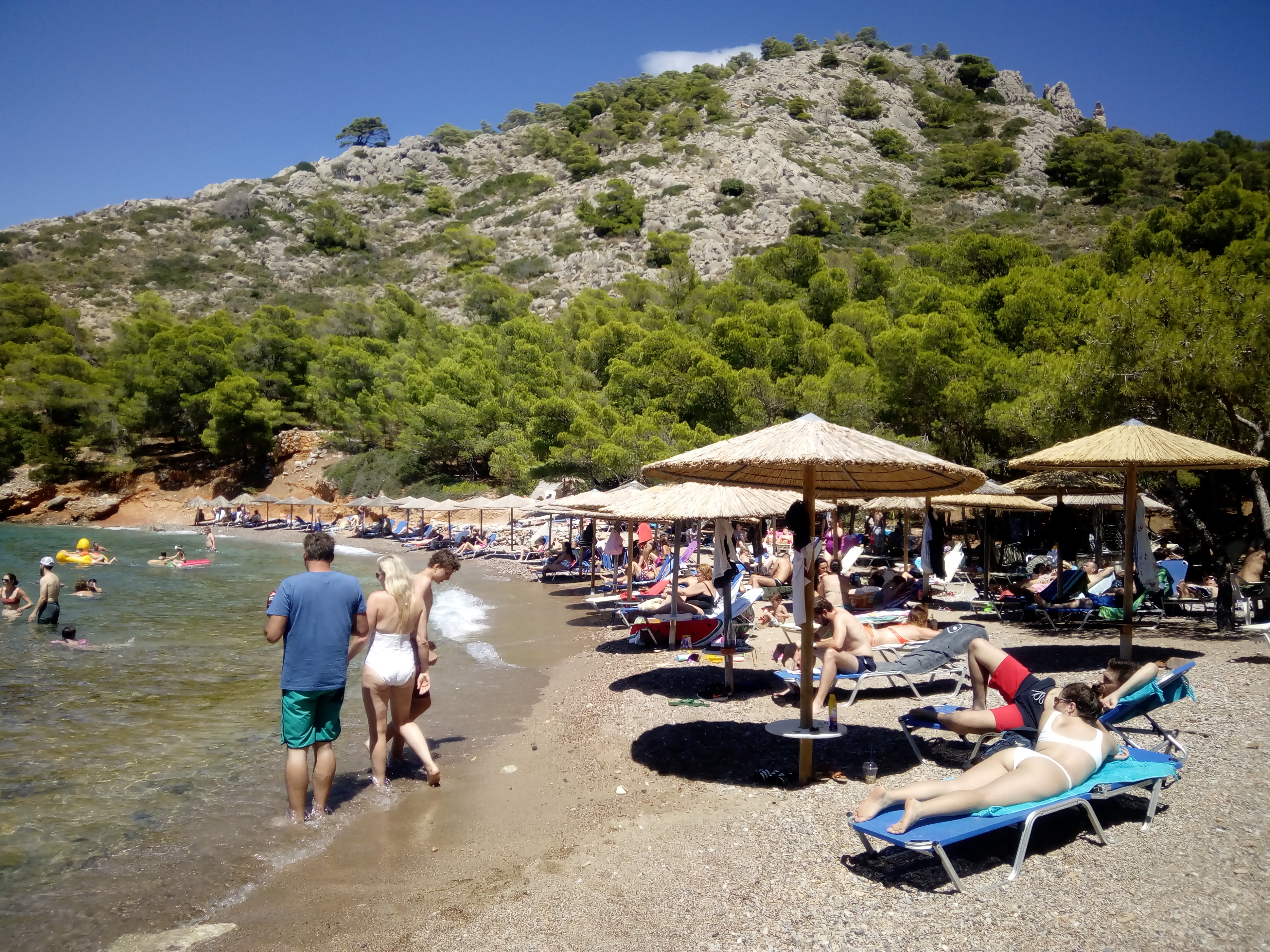
Bisti Beach
The interior of Hydra is mountainous and parched with only a few cottages occupied by herdsmen and the odd farmer tending vines or olive trees. Mount Eros is the highest point of the Saronic Gulf islands at 590 metres and there are well marked trails from the main town to monasteries at Profitas Ilias and Agios Nikolaos. Wear sturdy footwear and take water with you if exploring inland. Don’t expect any tavernas or mini markets.
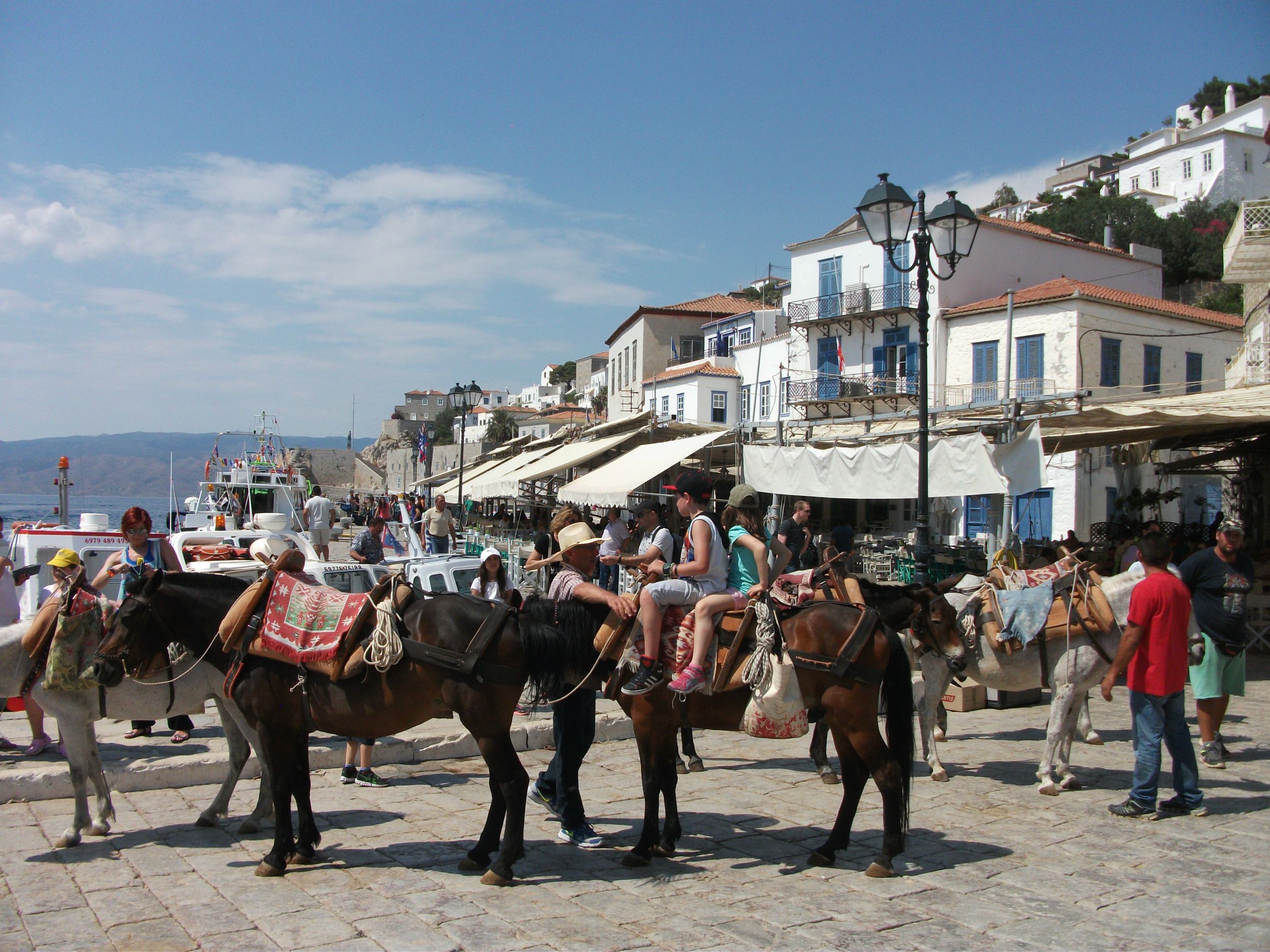
Transport on Hydra
Hydra Town is one of those places that visually takes your breath away and the island, as a whole, is somewhere where you can feel like you’ve joined the jet set for a few days, although you do tend to pay for the privilege. If you are in Athens with a day to spare and want to visit one Saronic island, make it Hydra. You’re unlikely to be disappointed.
Poros
First Visited in 2013. Most recently visited in 2018.
Really two islands. Maybe the busiest of the Saronic islands with a lot of package holiday business. Attractive but a bit overdeveloped in places. Beaches are generally poor.
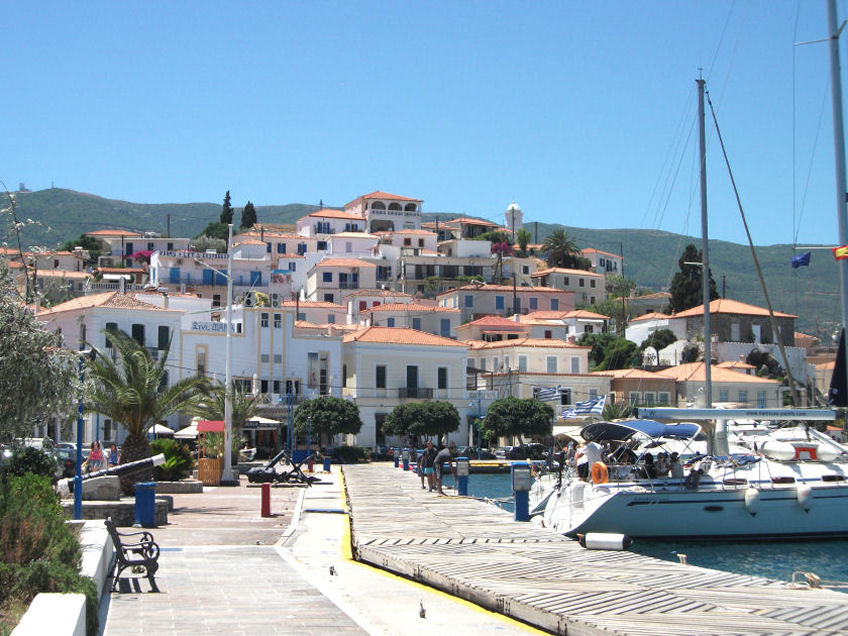
Poros is actually two islands, Sferia and Kalavria, which are divided by a narrow man-made canal that local kids enjoy dive bombing into.
Sferia, by far the smaller of the two, is home to most of the local population and largely covered by buildings. It is separated from the Peloponnese mainland town of Galatas by no more than a few hundred metres of water, giving it something of the feel of a riverside town. Local ferries and taxi boats chug to and from Galatas almost around the clock and regular hydrofoils from Piraeus and other Saronic Gulf islands add to the comings and goings.
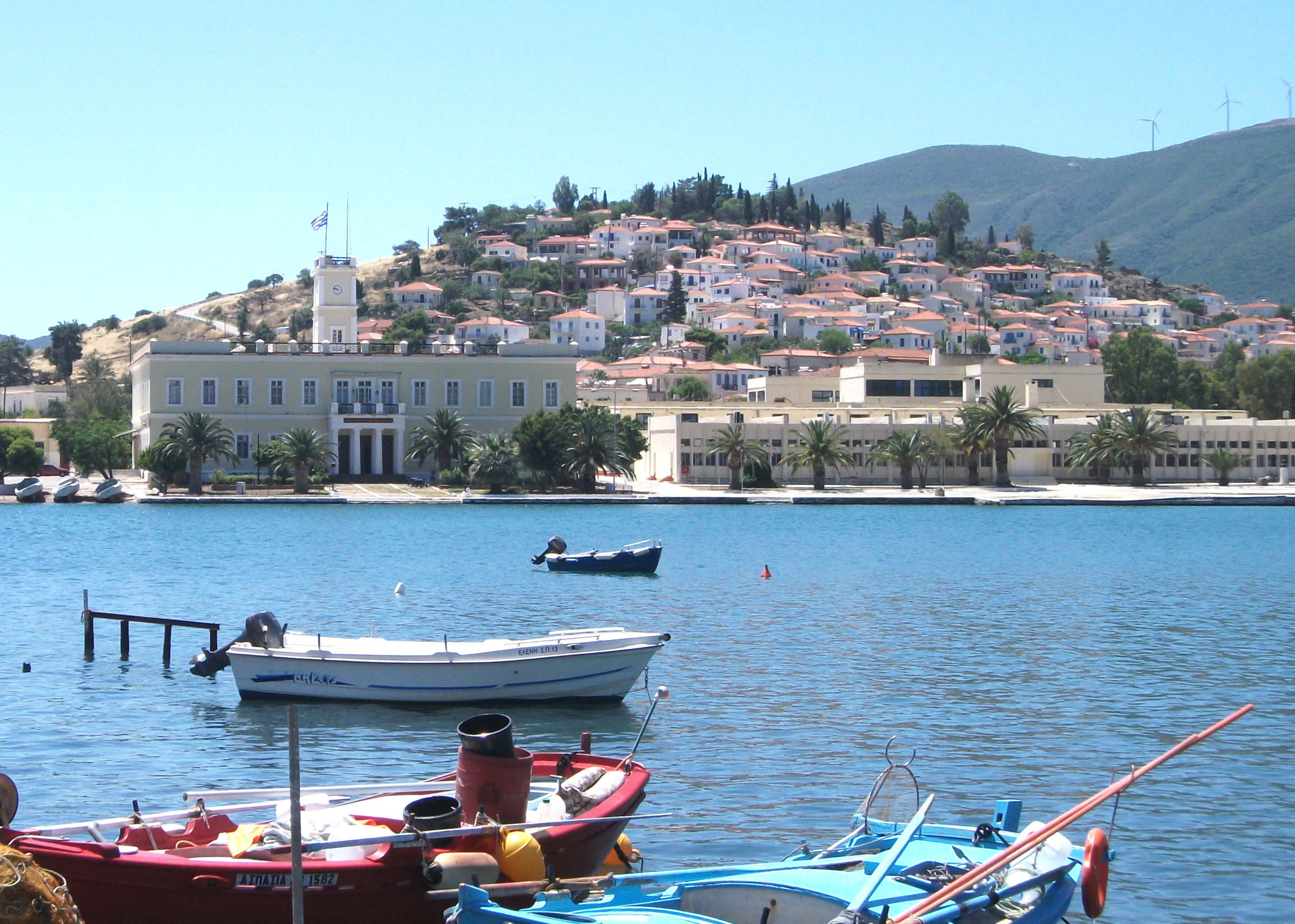
Poros Town & The Naval Cadets Training School
Poros Town on Sferia is the only real settlement. It’s an attractive little town with busy waterfront tavernas of variable quality, lots of shops, a few hotels, and streets that rise steeply up to a landmark clocktower from where there are views overlooking the rooftops. The most impressive building is the large, imposing Naval Cadets’ Training School at the north end of the island.
Most visitor accommodation is on the much larger Kalavria, primarily in unattractive ribbon strip developments facing Sferia which extend for a few kilometres each way from the bridge over the canal. The coast that houses most visitor accommodation has a series of fairly mediocre sand and shingle beaches that improve significantly the further out you go. The best is probably Russian Bay, a shadeless stretch of sand overlooked by the crumbling remains of the 18th century Russian naval base that gives it its name.
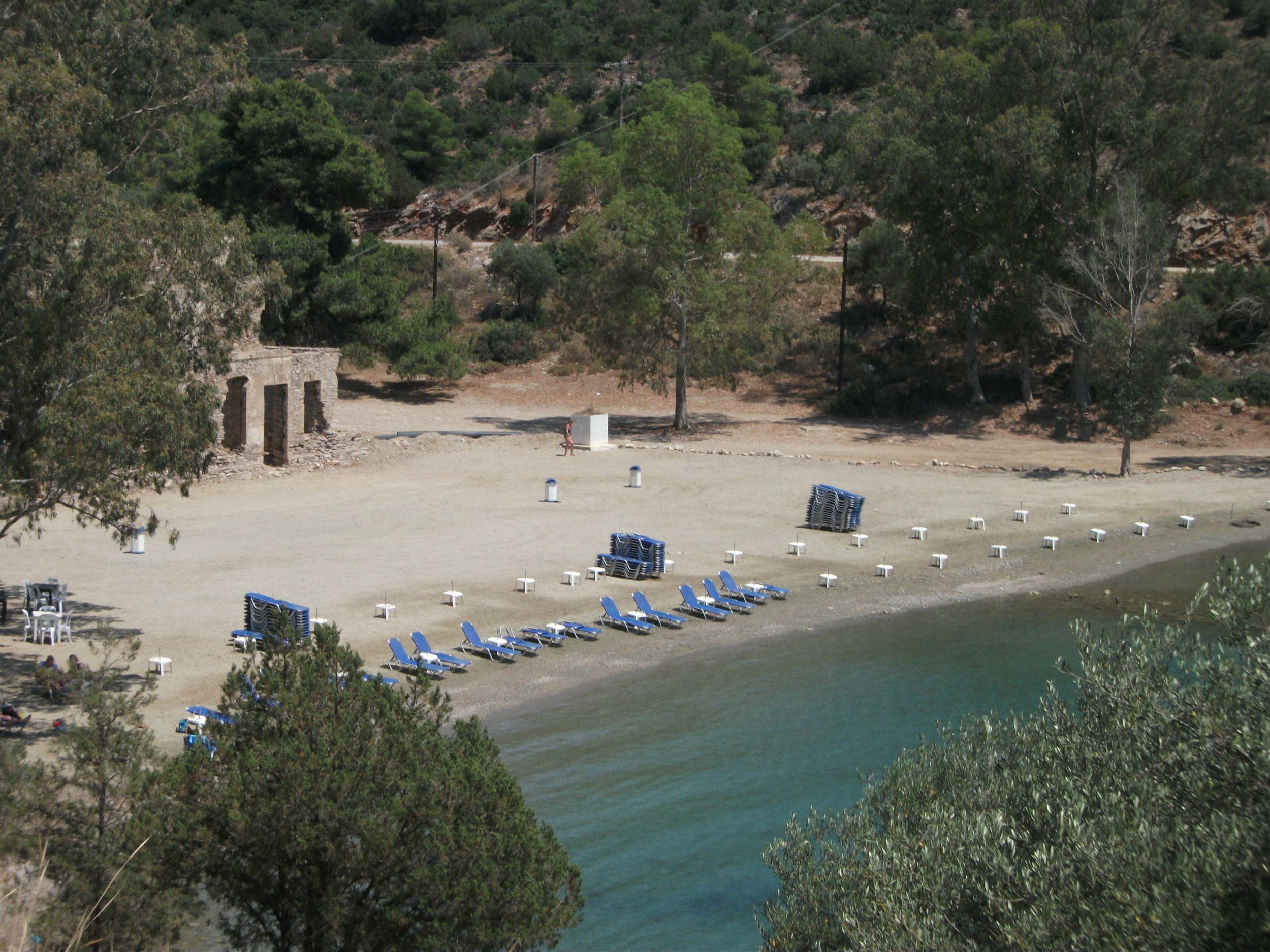
Russian Bay
Away from this coastal strip, Kalavria is largely covered by pine forest with a few areas of cultivation. The paved road that runs round the island can be covered in little more than an hour by motorbike if you’re determined and don’t want to stop anywhere. However, there are a few places worth a stop.
The monastery of Zoodhohou Piyis dates back to the 18th century but is now only occupied by a couple of monks. The attractively located, ancient ruins of the Temple of Poseidon are extensive and attract a lot of archaeological interest. A detour off the main road leads down to a scenic pebble beach at Vayionia on the north coast and there are numerous viewpoints giving expansive vistas over the island and across to the mainland.

Poros
Poros is a cheery little island with a lively nightlife. It’s far from unspoiled, especially in the main accommodation areas. However, Poros Town does not lack charm and the interior of Kalavria is attractive if not jaw-droppingly spectacular. A pleasant place to spend a few days.
Salamis
Visited in 2015.
Vitually a suburb of Athens with few overseas visitors. By far the most populated of the Saronic islands. However, the south is much quieter with some attractive scenery.

Scholars of ancient Greek history will know Salamis as the site of a decisive sea battle between the Greeks and the Persians in 480 BC. The strait between the island and the Attica mainland shrinks down to a width of little more than a kilometre at its narrowest point, an asset the Greeks used to their advantage in the battle.
The most northerly of the Saronic Gulf islands, Salamis is also by far the most populous with almost 40,000 residents – considerably more than the other five islands in the group put together.
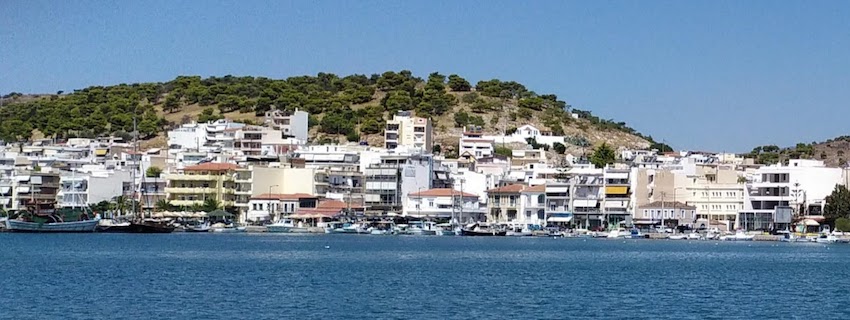
Salamis Town
Most locals live in Salamis Town in the north of the island. It is a working town rather than a tourist resort and many locals commute into Athens and Piraeus on a daily basis. The main ferry crossing is the short journey from Paloukia, a pleasant little town a few kilometres to the east which links to Perama, a suburb of Piraeus from where there are extensive public transport links into the heart of the cities. There are also regular ferries direct from Paloukia to Pireaus, a longer journey that passes alongside the impressive Pireaus shipyards.
I stayed in Selinia, about 5km south of Paloukia, which is probably the main resort village on the island. It’s a pleasant place of some size with a small, rather crowded sandy beach overlooked by tavernas; a couple of good hotels; and a lively main square where the locals promenade at night before congregating at the centrally located souvlaki café. At night it could be a village on any remote Greek island if it were not for the bright lights of the shipyards and Pireaus stretching into the distance across the water.
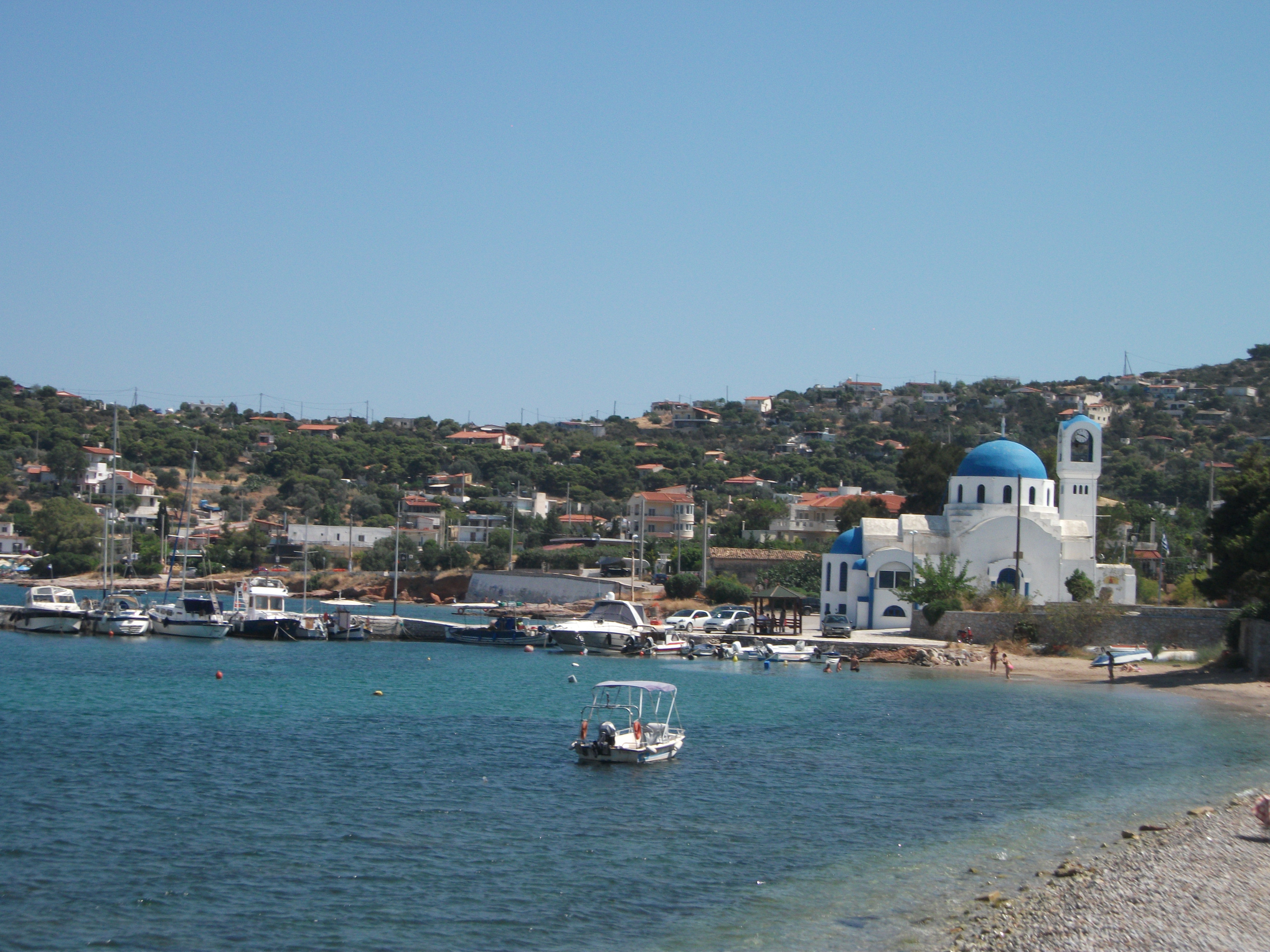
Selinia
To the south, it’s a pleasant walk to the smaller town of Eandio, a quieter version of Selinia from where roads spread out to the south of the island passing a number of small, peaceful coastal villages, some attractive beaches, and the monastery at Agios Nikolaou ton Lemonion. This end of the island feels completely different from the busy north, but is still largely undiscovered by overseas visitors. It’s possible to follow a circular route out of and back to Eandio that delivers enjoyable and undemanding walking with a few swimming opportunities and some drinking and dining stops in the relaxing tavernas along the way.

Eandio
Salamis is unfairly bypassed by the vast majority of visitors to Greece. It’s maybe not as attractive as some islands, including its neighbours in the Saronic Gulf, but I found Selinia a relaxing alternative base to the frenzy of Athens and Piraeus, which are easy to visit during the day to see the sights but can be pleasant to escape from in the evening.
Spetses
Visited in 2014.
The Saronic island furthest from Athens but still easily accessible. Not as sophisticated as Hydra, but not as busy as Poros. The main town is charming.
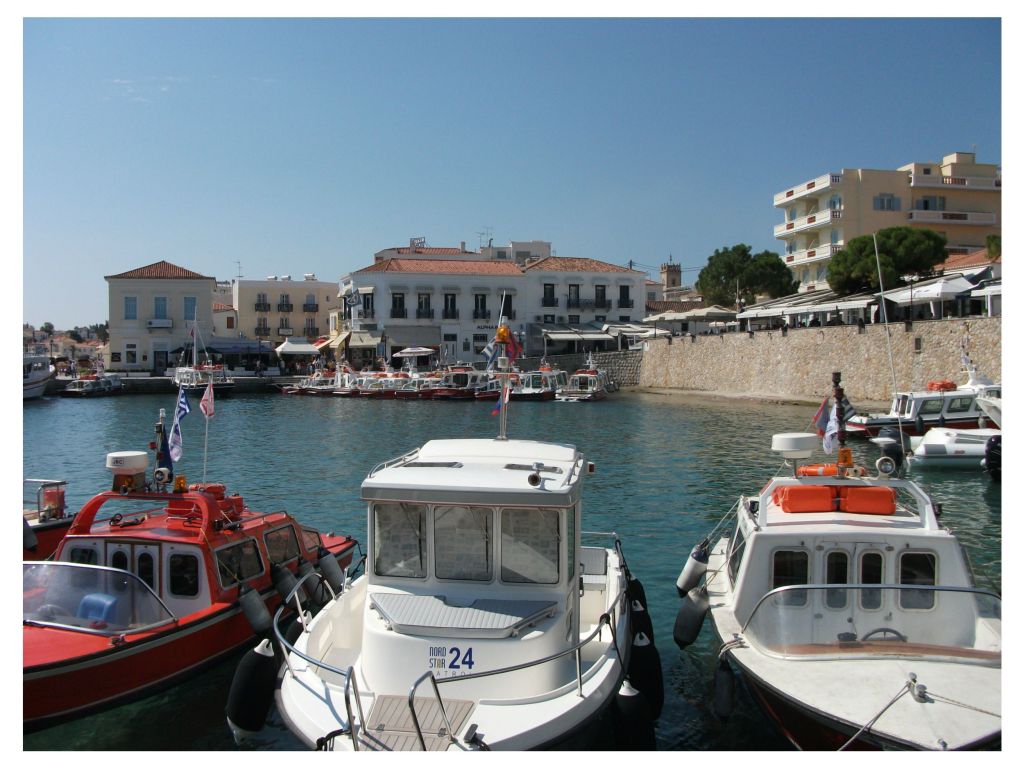
Spetses is the most southerly of the Saronic Gulf islands and the furthest from Piraeus. Hydrofoils from the mainland take somewhere between 2 – 3 hours to make the crossing and generally call into Poros, Hydra and the Peloponnese port of Ermioni on the way.
Spetses is scenically similar to Poros, being a small island with: one main town; a coastline dotted with small shingle beaches; and a largely undeveloped, pine clad hinterland. However, in atmosphere it is more akin to Hydra with a sophisticated and upmarket ambiance, which is reflected in high prices that do not deter the Athenians who flock there at weekends.
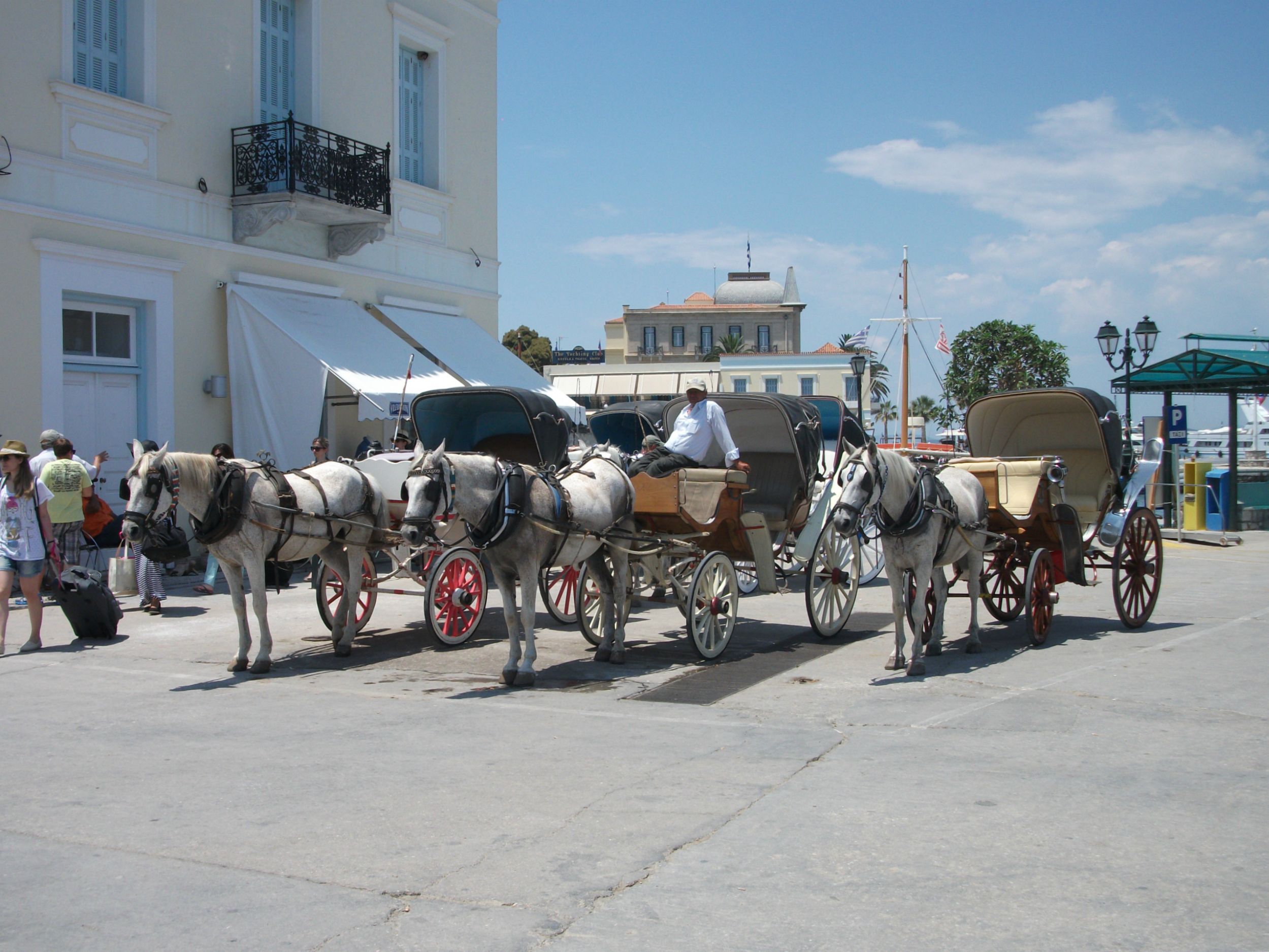
Spetses Horses
The best of Spetses can be found around and close to the main harbour where a raised fortification known as the Dapia still displays defensive cannons in front of its pleasant cafes and tavernas. Nearby, horse drawn carriages line up to transport visitors on tours round the town’s many splendid neoclassical mansions and gardens, some of which are open to the public or have been converted into museums. The landmark Hotel Poseidonion overlooks a statue of Bouboulina, a local heroine of the Greek War of Independence who commanded her own ship and was reputed to have seduced numerous lovers at gunpoint.
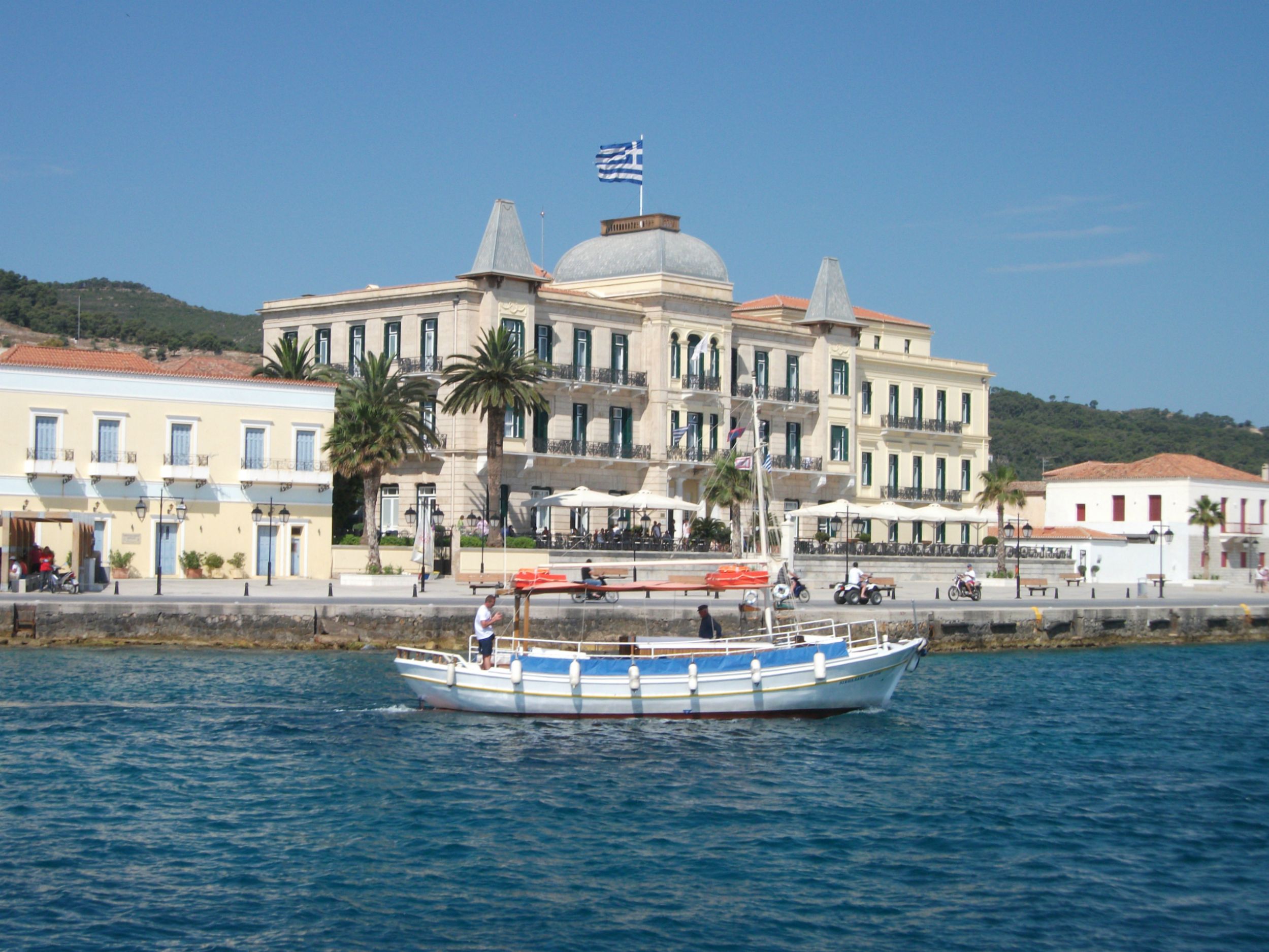
Hotel Poseidonion
To the east of the town centre, the anchorage at Palio Limani is overlooked by a lovely church with large mosaics in front of it and the bay at Baltiza houses a few boatyards that still make small vessels in the traditional manner.
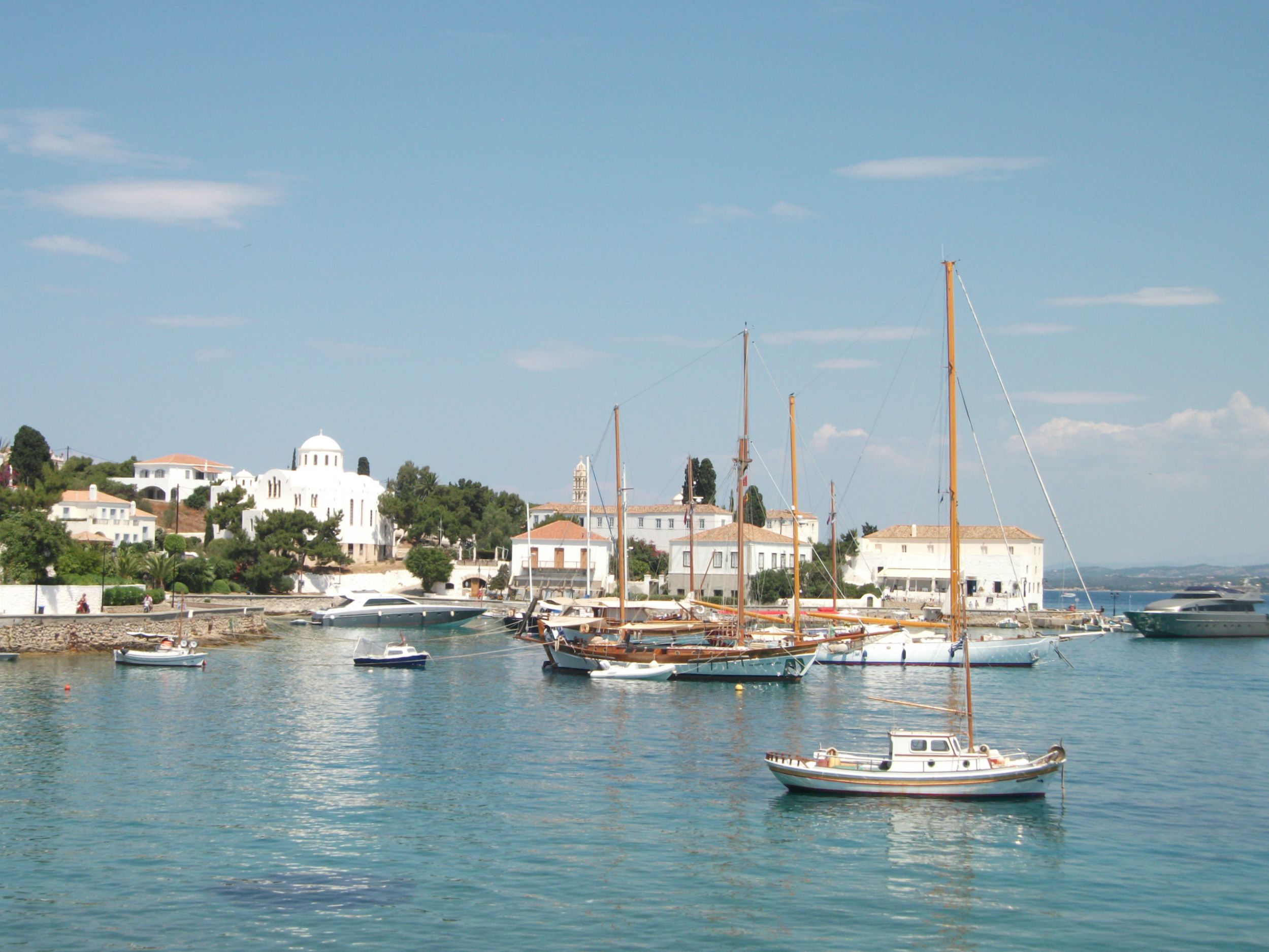
Palio Limani
The main beach in Spetses Town is pretty mediocre and most people stroll the 20 minutes west to the sand and shingle at Ligoneri where there are a few tavernas and, when I visited at least, hordes of excited local children shouting and running around as excited children do.
A circular paved road runs for about 25 kilometres right round the coast of Spetses. Motor bike hire is available to explore it, but many visitors prefer to do so by bicycle which feels more in keeping with the slow pace of the island.
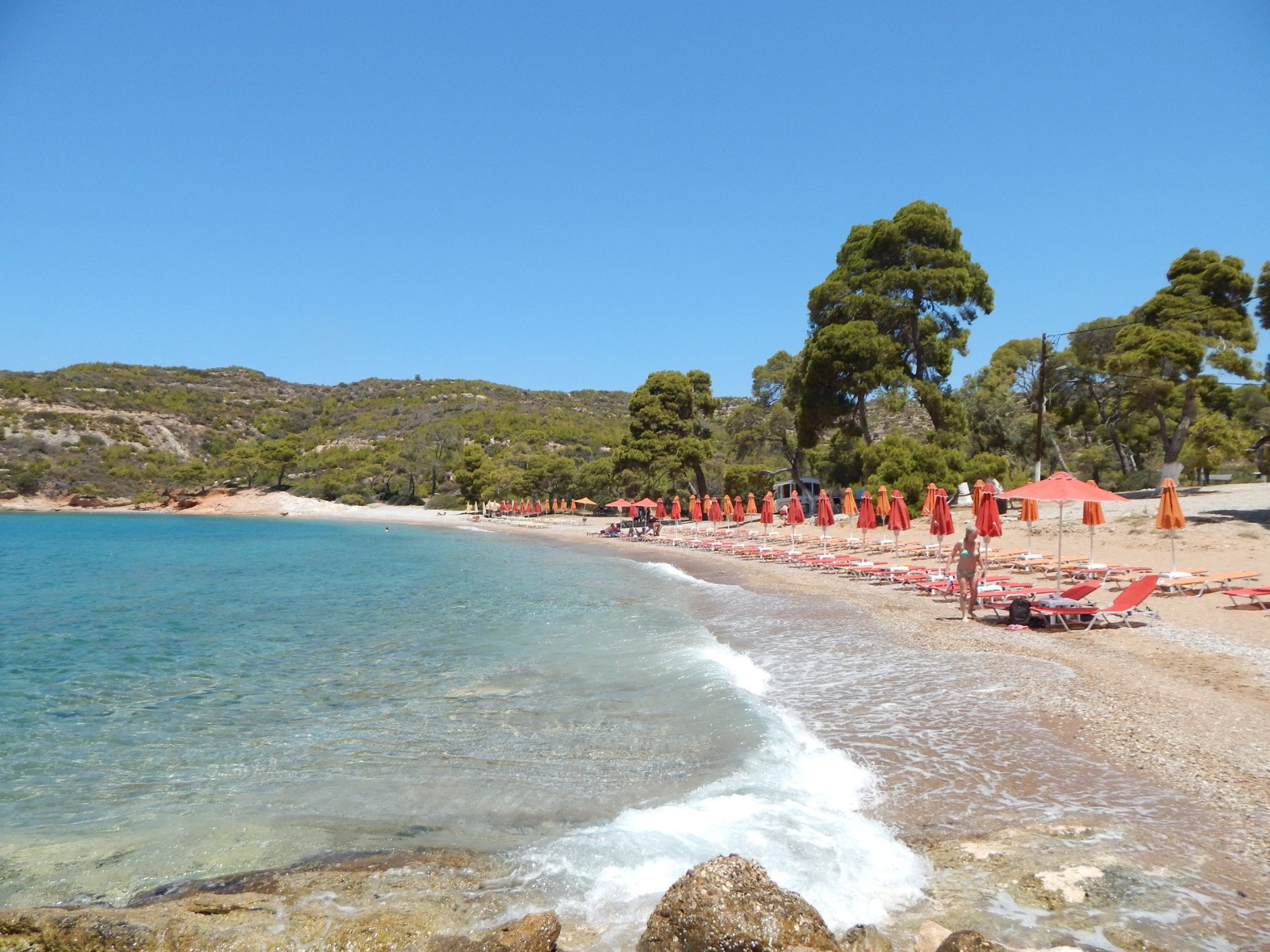
Agia Paraskevi
The road passes a number of beaches that are mostly a mix of sand, shingle and pebbles in varying proportions. Agia Paraskevi and Agii Anaryiri on the south coast are the most popular and have sunbeds and tavernas. Small boats and water taxis leave from the Dapia for those who want to find an out of town beach with the minimum of exertion. For walkers, a track runs across the centre of the island from the main town to Agii Anaryiri. Allow a couple of hours each way.
Spetses is an enjoyable day trip from Piraeus and other Saronic Gulf islands. It also rewards a longer stay as hours can be spent wandering through the streets of the main town or meandering along its coastline. It has an upmarket, cosmopolitan feel that will particularly appeal to visitors who like a good level of comfort and service rather than the more rough and ready attributes of remoter islands.
 Skimming Greece