
The name Sporades translates as “scattered islands” and covers a group of four main islands and numerous adjacent islets located off the Pelion peninsula in central Greece. All four of the main islands have some degree of tourism development.
Skiathos is the best known and busiest with an international airport and numerous large hotel developments adjacent to its magnificent beaches. Skopelos is quieter and more rural, but recently experienced a major boost in popularity on the back of the film “Mamma Mia”, which was largely shot there. Alonissos to the east is the quietest of the group and promoted mainly as a green destination lying within a national marine park.
Skyros is further east and a little isolated from the rest of the group, although it has direct daily flights to and from Athens. In recent years, it has built a reputation for “alternative” holidays based around yoga, meditation, wellbeing and holistic therapies. It also has one of the most attractive choras in the Greek islands.
Evia (also known as Euboea) lies to the south of the group and is Greece’s second largest island. It hugs the mainland for about 150 km. At its narrowest point, the strait between the island and the mainland shrinks to around 50 metres and is crossed by a couple of bridges, making Evia one of only two major Greek islands with a fixed link to the mainland (Lefkada in the Ionians is the other).
Despite its size, ease of access and beautiful scenery, Evia is largely bypassed by overseas visitors, although Athenians and other Greeks flock there in large numbers. I have only visited the south and centre of the island, so my comments on it are restricted to those particular areas.
Skiathos, Skopelos and Alonissos are all linked by fast and comfortable, year round hydrofoil services from Volos on the mainland. There are also shorter, seasonal ferry services from Agios Konstandinos further south on the mainland. Its airport aside, Skyros is most commonly accessed via the ferry port of Kymi on Evia which has regular bus services to and from Athens. Some of the ferries continue on to Alonissos in peak season providing a tenuous link to the rest of the Sporades.
The bridges between the mainland and Evia bring you immediately to the island capital at Chalkis, which is linked to Athens, about 100 km to the south, by a major motorway as well as regular express bus and train services. In addition, ferry services also run from about half a dozen different ports on the mainland to various points on the island. The nearest to Athens operate from the port of Rafina, which is a short bus or taxi ride from Athens Airport. From there it is a sail of about an hour to Marmari in the south of Evia.
Alonissos
Visited in 2015.
The quietest of the Sporades located in a National Marine Park. Sleepy informal atmosphere. Good walks, pretty scenery and attractive villages. Beaches are so so.
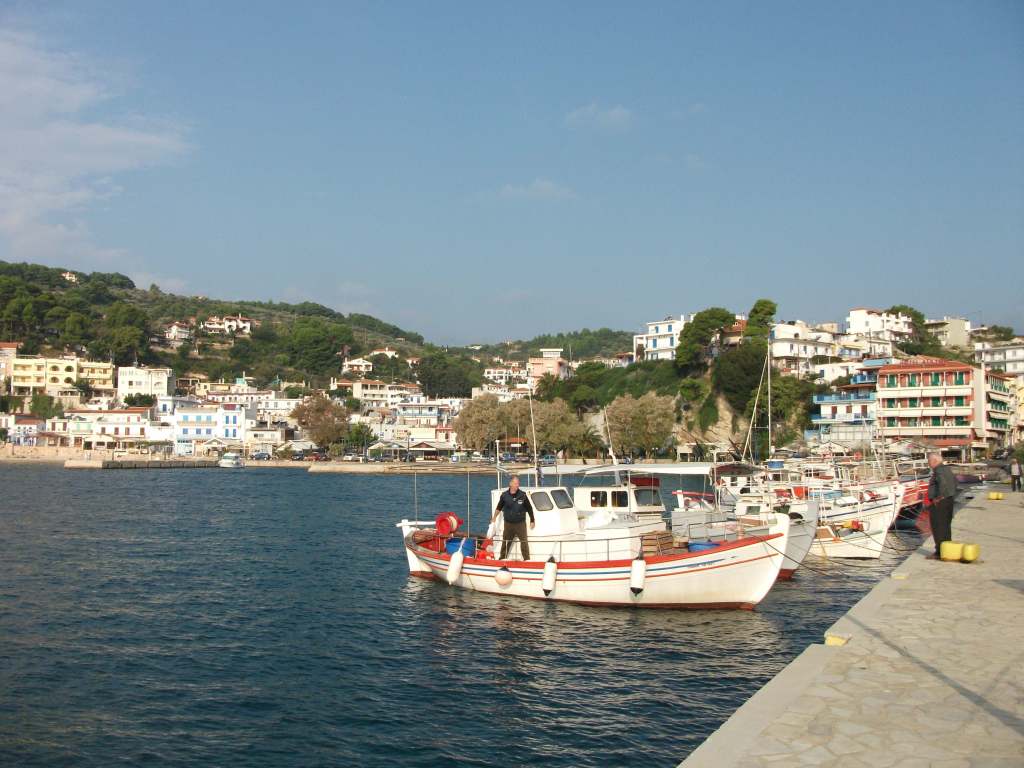
The least populated and quietest of the Sporades islands, Alonissos also boasts the longest sea crossing from the mainland as it lies at the end of the Volos – Skiathos – Skopelos route. Journey times can vary between 3 and 5 hours depending on the specific service.
Alonissos is a long, narrow island roughly stretching north to south. Most people arrive at the main port of Patitiri in the south. This is the largest village on the island, crammed into a narrow gully that climbs up from the harbour front. It is a friendly, informal place with a good choice of places to stay, eat and shop. It is also the main start point for bus services to other parts of the island, although these are very limited outside the main season.
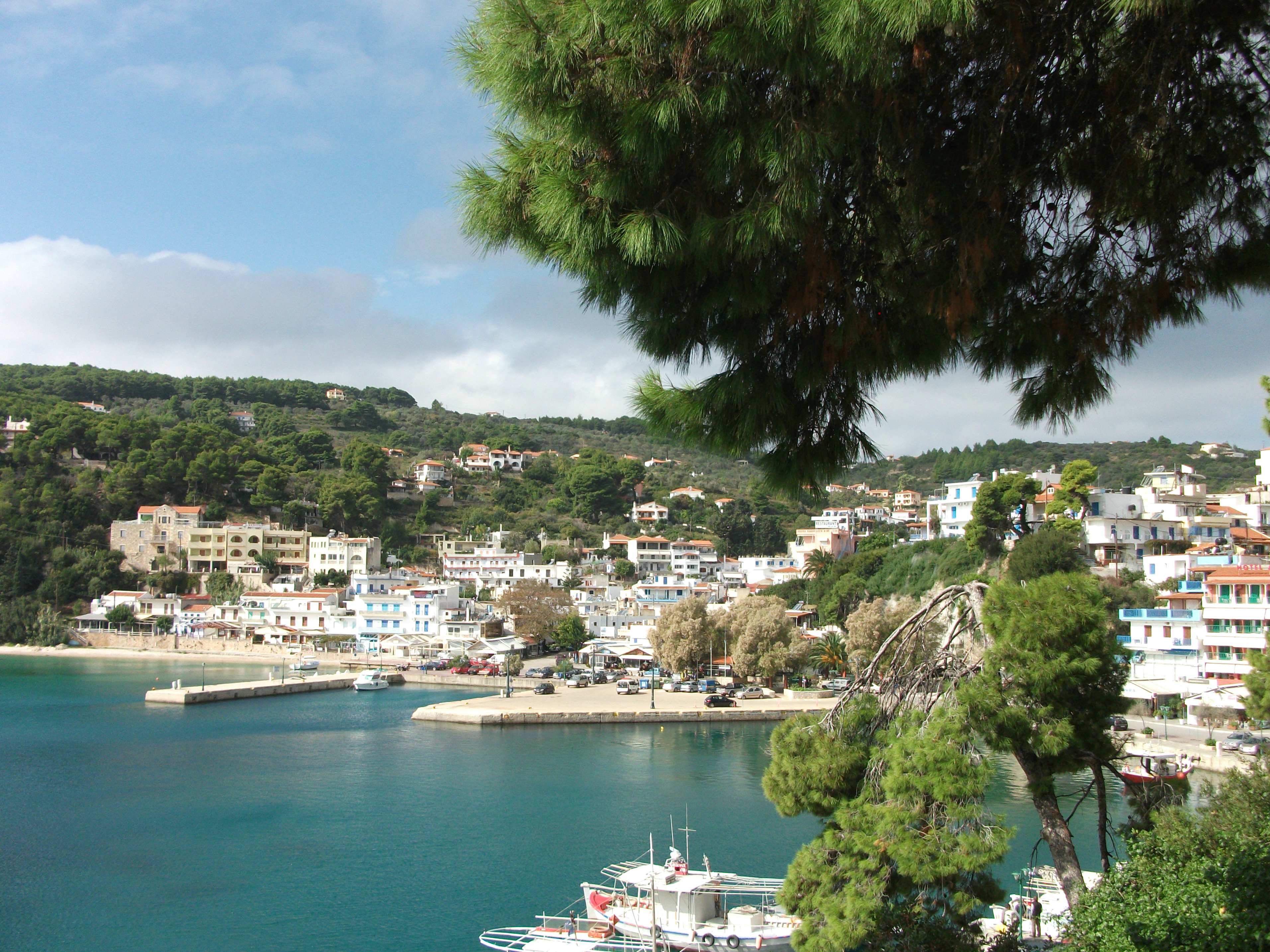
Patitiri
The narrow village beach is pretty uninspiring, but there are better options within easy walking distance at Vythisma and Megalos Mourtias. However, pebbles rather than sand are the norm for most of the island’s beaches, although there are a few exceptions.

Paleo Alonissos
The traditional capital of Paleo Alonissos is a walk of just under an hour uphill and inland. The village was largely abandoned after a major earthquake in the 1960s. However, it has recently enjoyed something of a renaissance as foreigners have renovated derelict houses, breathing new life into the place. There are a few places to stay and eat and, overall, the village has a quieter, more upmarket atmosphere than Patitiri.
In the main season, excursion boats sail north from Patitiri to beaches and small villages along the island’s east coast. I visited in October when walking was the only practical way to get around. However, I enjoyed the lengthy but scenic walk along the paved road to Steni Vala about halfway up the island. This is a popular spot for the yachting fraternity and overlooks the neighbouring island of Peristera, by far the largest of the other islands in the National Marine Park that also encompasses all of Alonissos. Many of the islands in the park are off limits to visitors but excursion boats do run to Peristera and the more remote Kyia Panagia in peak season. Both are largely deserted but offer sandy beaches.

Steni Vala
My journey back to Patitiri from Steni Vala was enlivened by a lift from a guy in a pickup truck who was transporting live fish. He didn’t speak a word of English but was a great fan of bespectacled Scottish duo The Proclaimers, so we spent the journey back bellowing “I Would Walk 500 Miles” at the top of our voices. I guess music is an international language. Well, at least “Da-da-da-da” certainly is.
I really enjoyed my time on Alonissos. Patitiri is the obvious place to stay, especially at quieter times of year, but the rest of the island is attractively forested with lovely coastal views and excellent walking. Highly recommended for an active chill out, if that’s not a contradiction.
Evia
First Visited in 2015. Most recently visited in 2019.
Second largest island in Greece hugging the mainland north of Athens. Popular with Greek visitors. Wide range of facilities and locations. Very easy to access. Maybe underrated.

I made a late decision to add a few days on Evia on to the end of one of my visits to Greece. I had sailed past it on ferries from Rafina on a number of occasions and felt it was time to get to know it better. It was a good decision and one which encouraged me to revisit the island a few years later.
In some ways, Evia is the easiest and quickest island to visit from Athens Airport. Simply jump on the regular bus from outside the airport terminal that takes about 45 minutes to get to the port of Rafina – a quicker journey than the alternative airport bus services into Piraeus or the centre of Athens. At Rafina, board one of the regular local ferries for the one hour crossing to Marmari on the south of the island.

Marmari
Marmari is a pleasant little village that primarily acts as the port for the larger town of Karystos, a few kilometres to the south. Karystos is a largely modern construct that was developed in the 19th century as a summer residence for King Otto of Greece. However, the undistinguished apartment blocks and the grid system of streets are balanced by a 14th century Venetian fort, a wide waterfront packed with tavernas, and a couple of excellent beaches. It’s a relaxing base for exploration.
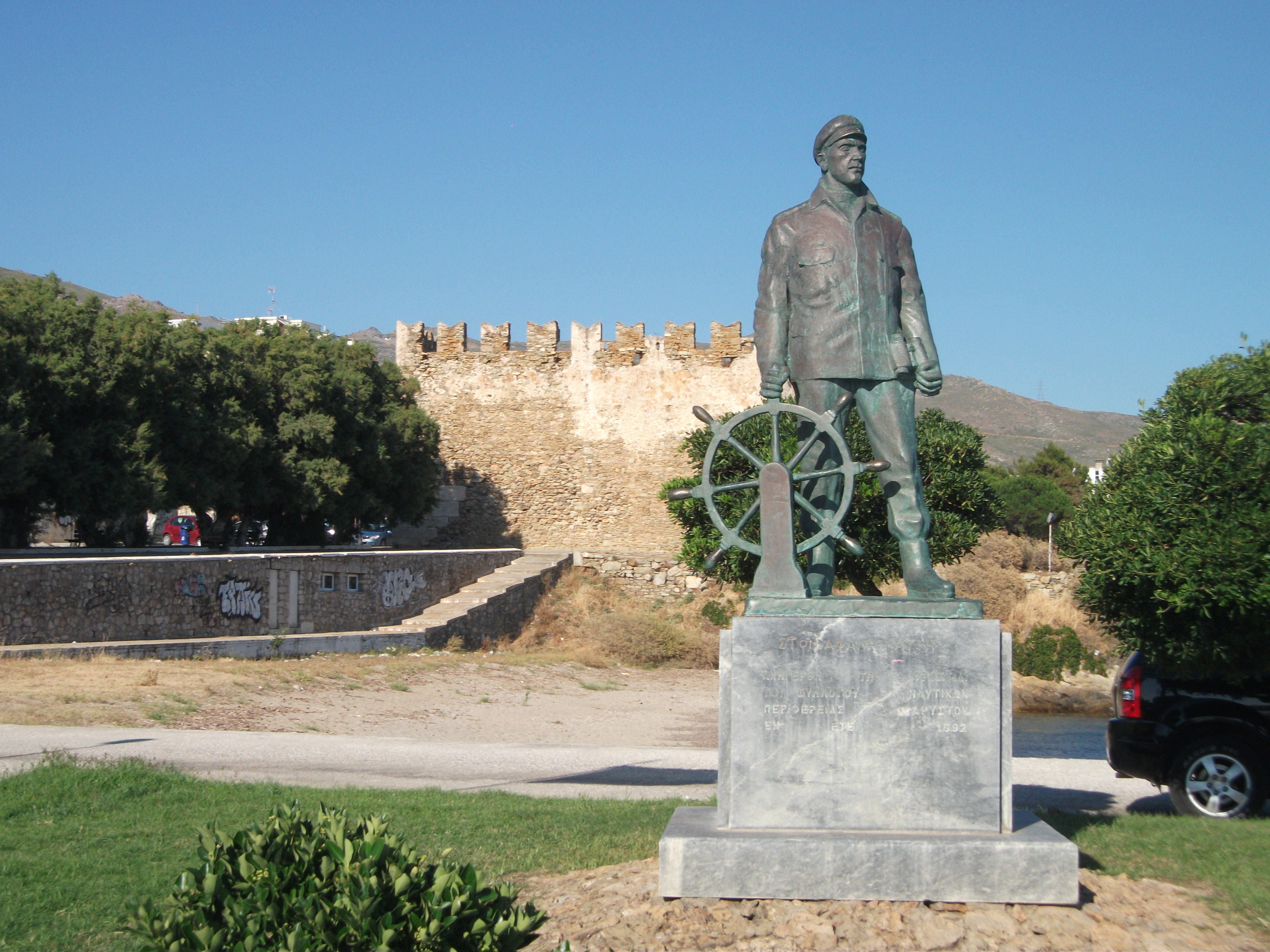
Karystos
The main island road continues south beyond the town past more deserted beaches, some of which are overlooked by abandoned or half built hotels that I guess never saw enough business to be viable. The main attraction in the far south is the climb from the hillside village of Myli to the summit of Mount Oti at about 1,400 metres. Myli itself has attractive views back down to Karystos and its bay. I was too lazy to attempt the climb up to the top of the mountain.
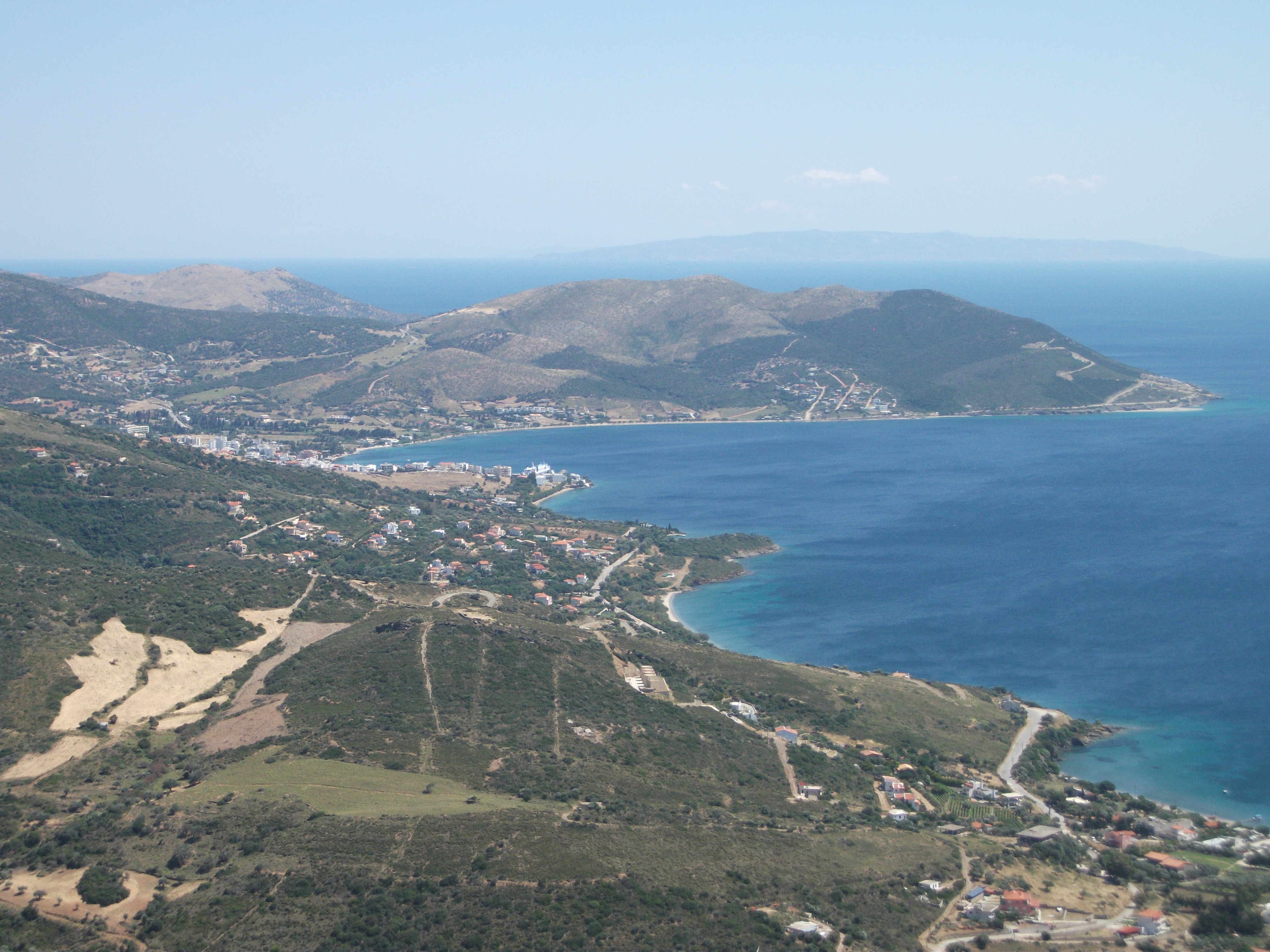
View from the Eagles’ Road Overlooking Karystos
Further spectacular views can be enjoyed on the main road west out of Marmari, which is known as the Eagles’ Road on account of the heights that it reaches. This runs towards the inland town of Styra and its pretty beach adjunct of Nea Styra, which has ferry services from Agia Marina on the mainland.
Kymi
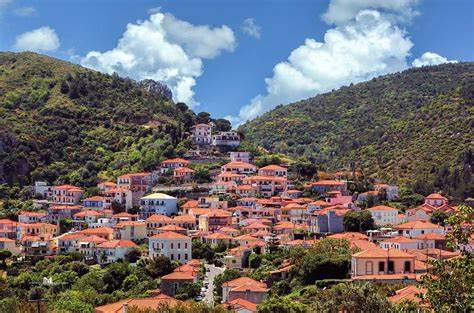
After Styra, a right turn off the main road at Lepoura heads for the port of Kymi on the island’s east coast. Kymi is built in two parts – the attractive inland hill village and the less appealing port of Paralia Kymi 4 km below that acts as the main ferry access to Skyros. The road towards them from Lepoura is a delightful mix of picturesque small villages, Byzantine churches and beautiful countryside.
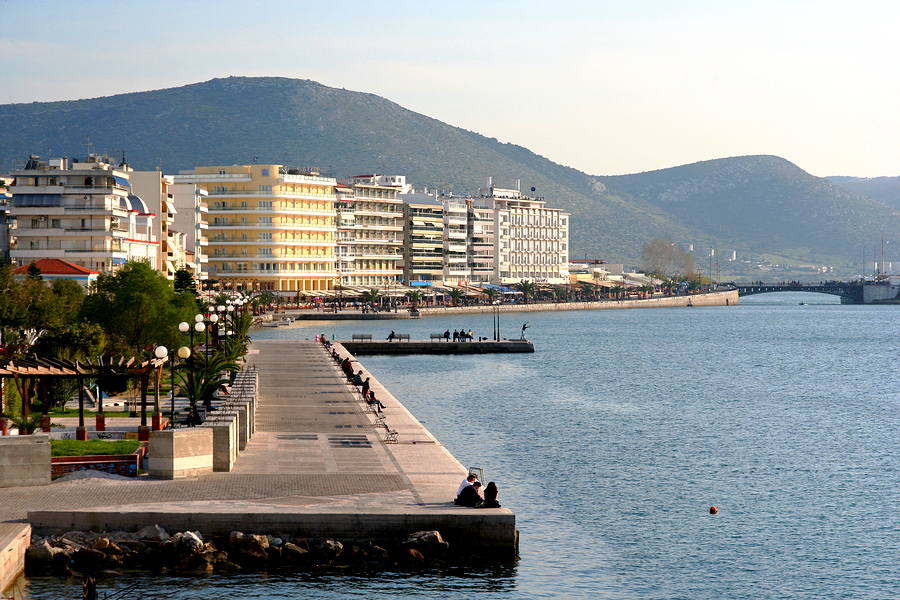
Staying on the main road carries you along the south west coast of Evia towards its capital, Chalkis, passing through various unattractive coastal towns of which only Amarynthos appeared to have much visitor appeal. Chalkis itself is a large workaday town of modern apartment blocks and streets snarled up by too many cars. However, its waterfront area beside the old bridge to the mainland is a pleasant enough place to wile away a few hours in the wide choice of restaurants and bars.
Chalkis
If you’re travelling to or across Evia by public transport, it’s worth noting that the main bus station in Chalkis lies on the edge of the town, a long walk from the waterfront area. The bus station is poorly signed within the town and is not the easiest place to find. If you are rushing to catch a specific service, a local taxi may be the best way of getting there.
The parts of Evia I have visited looked fertile and prosperous with agriculture taking precedence over tourism. There is a lot of explore and see on Evia, which is very much a working island but one that still offers relaxation and variety to visitors. It’s an easy island to get to and well worth adding on to any visit through Athens Airport.
Skiathos
Visited in 2015.
Small island with renowned beaches and many upmarket resort hotel developments. A bit like a mini Mykonos with less crowding and a more traditional Greek atmosphere.
To be honest, I went to Skiathos partly as a box ticking, island bagging exercise and partly because flying there from Athens was the quickest way to move on to Skopelos and Alonissos. I was expecting an over developed, ruined island catering for mass tourism. However, I was very pleasantly surprised, although I did visit in late October when the crowds had obviously gone and the sun was struggling to show itself through the clouds.
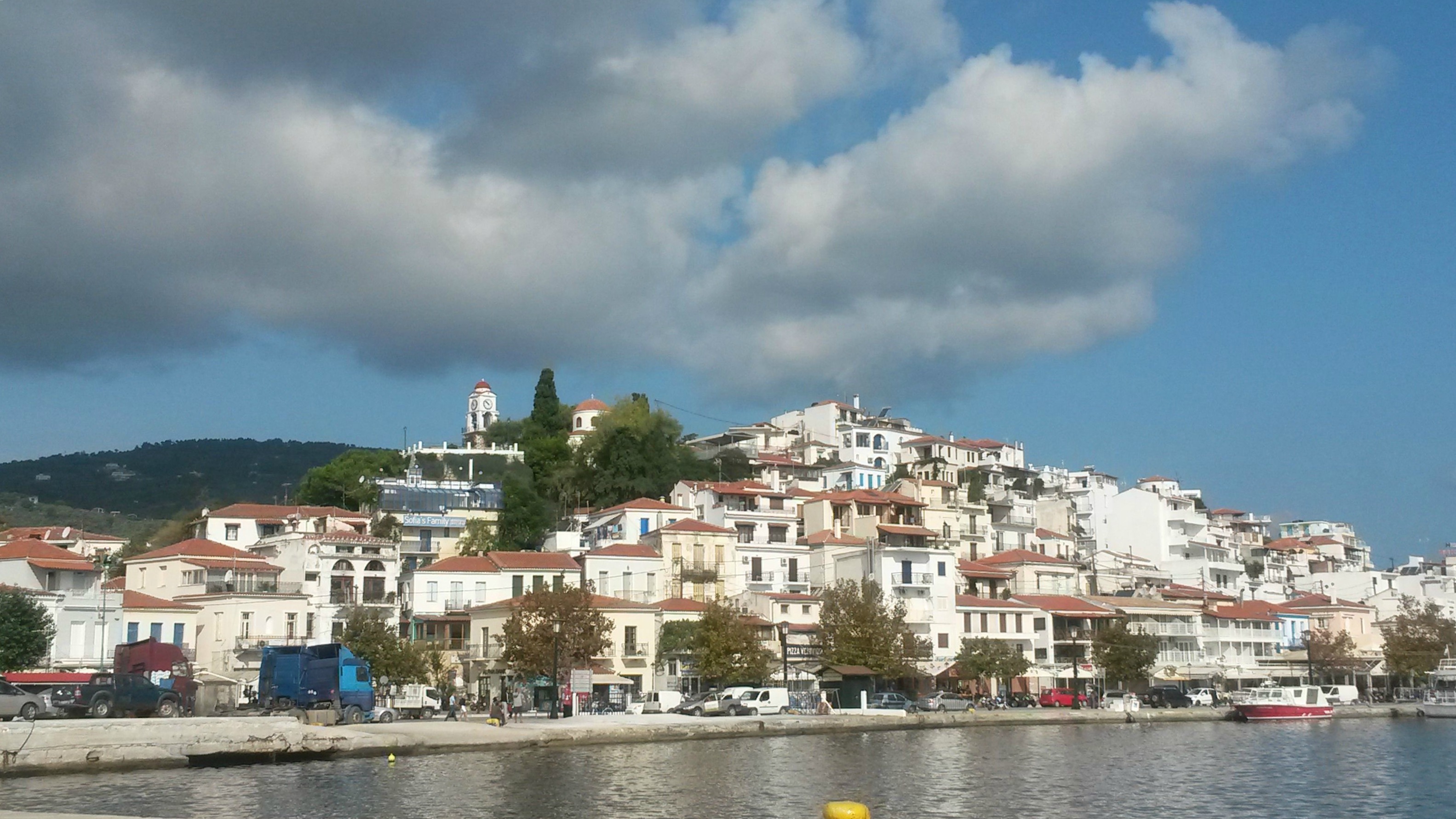
Skiathos Town is a traditional Greek island capital that has spruced itself up to cater for the overseas visitors who are now its main raison d’etre. It’s a typical jumble of close knit, white washed houses linked by a labyrinth of lanes and squares filled with upmarket restaurants, boutiques and beauty therapists. The waterfront is a succession of bars and tavernas that are probably lively and noisy in peak season. However, when I visited they were catering for only a few customers sitting behind plastic screens to huddle from the chilly wind.

Skiathos Town
The eastern parts of the town heading towards the airport are more modern and less attractive, but appear to be where the locals primarily live and work. There is a good choice of accommodation to suit all budgets in both parts of the capital.
Tourism in Skiathos was largely developed on the back of its beaches. It claims to have over sixty and, while that may be something of an exaggeration on a relatively small island, there is no questioning the variety and quality that is on offer. A regular bus service runs west along the south coast from Skiathos Town linking around a dozen popular, developed beaches, most of which are overlooked by upmarket resort hotels and apartment complexes that have begat a few tavernas, watersports centres, bike hire outlets and minimarkets at each location.
Koukounaries Beach
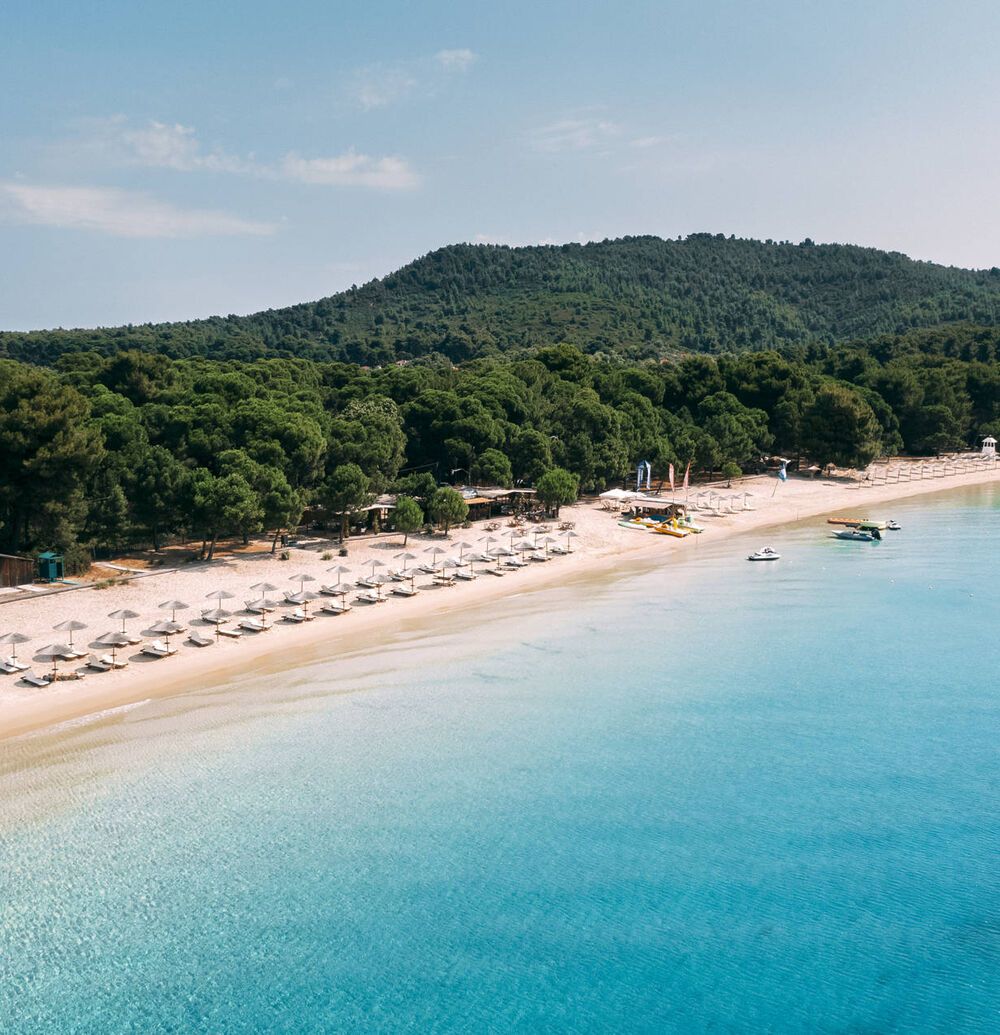
The bus route ends at Koukounaries, probably the best known beach on the island which has now developed into its second largest settlement. The beach is certainly a spectacular, wide curve of soft sand stretching for about 2 kilometres and backed by pine forest. The island’s main campsite is located here and, apparently, there is a lively, young vibe in the main season. Other, quieter beaches are within walking distance including Banana Beach, which is popular with nudists and gay visitors.
The north coast of Skiathos is much less developed and less visited. It has its own share of excellent beaches, most of which are accessed by dead end roads or footpaths in the absence of bus services. Excursion boats to some run from Skiathos Town and most have a taverna or two, while a few have options to stay in rooms or campsites.
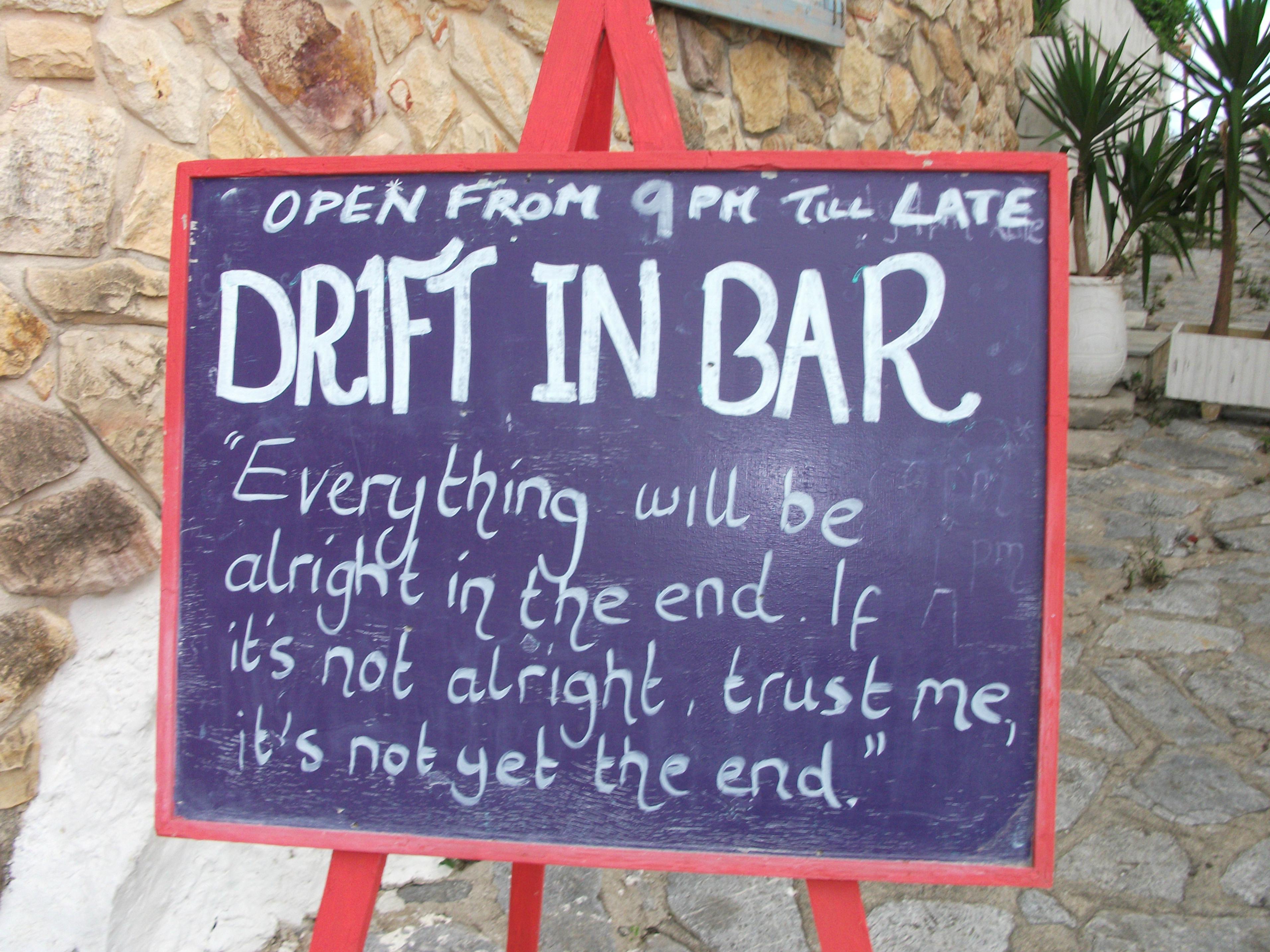
In The End
In some ways, Skiathos appeared to me to be an example of how to develop tourism without losing all your character or soul. It is package holiday country, but at the high value end of that market. It was surprisingly quiet outside the main season, which may be the best time to enjoy it even if the weather may mean you cannot take full advantage of its fabulous beaches.
Skopelos
Visited In 2015.
Larger, quieter and more rugged than neighbouring Skiathos. Location of the “Mamma Mia” movie. Good tourism facilities and a couple of pleasant and interesting towns.

Located less than an hour east of Skiathos by hydrofoil, Skopelos is larger, more rugged and quieter than its neighbour, although it also has a well developed tourism infrastructure. This has expanded in recent years to cater for additional visitor numbers attracted mainly by its setting as the main location for the hit musical movie “Mamma Mia”, which is referenced throughout the island.
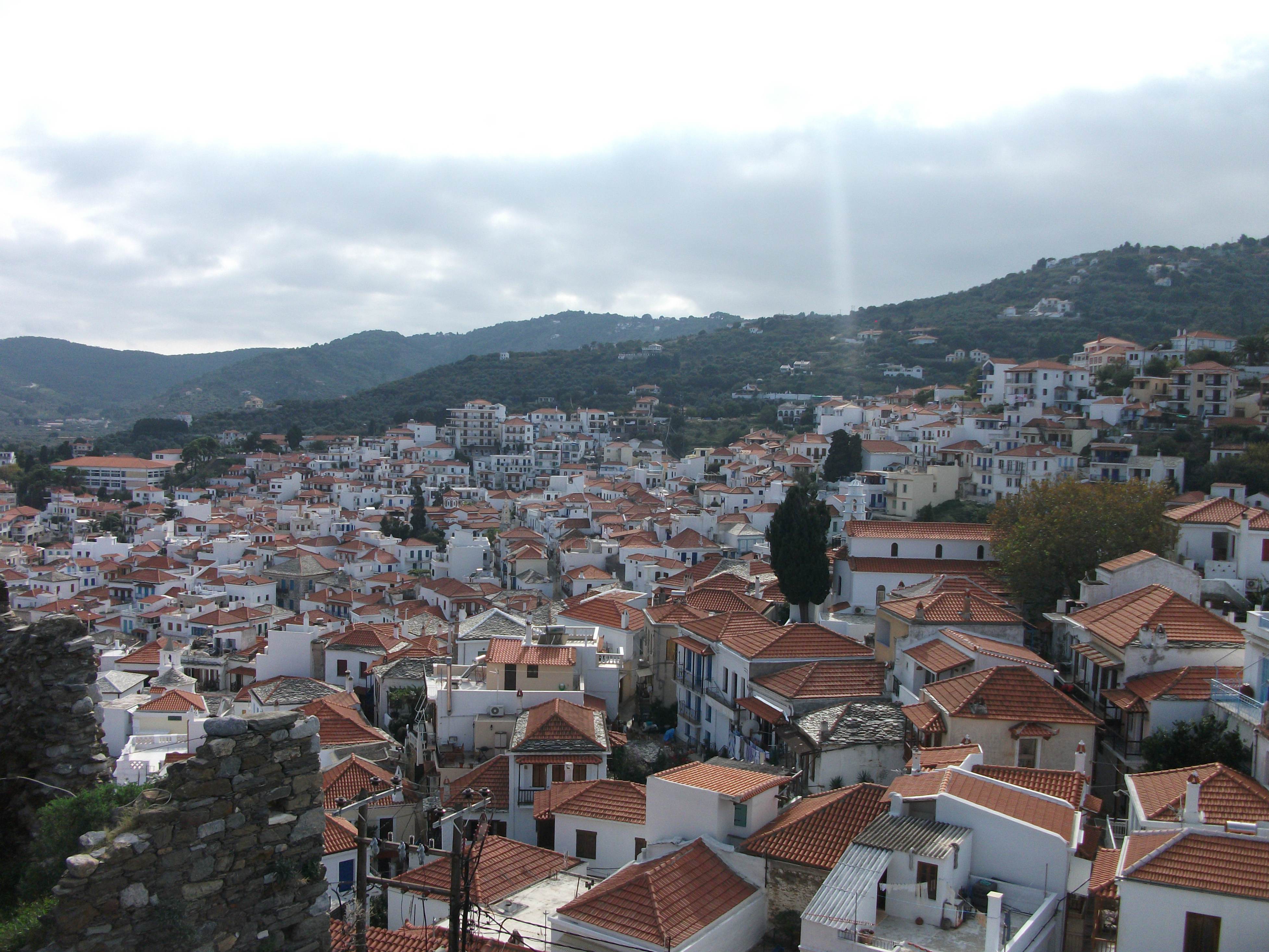
Skopelos Town
Skopelos Town is a picturesque jumble of white washed buildings climbing up from the wide bay and broad waterfront. Hours can be spent wandering around its lanes and alleyways discovering its reputed 120 churches and chapels and its appealing selection of little shops and tavernas. There is a wide selection of visitor accommodation, much of it located on the eastern edge of the town some distance away from the main quayside and the traditional town centre.
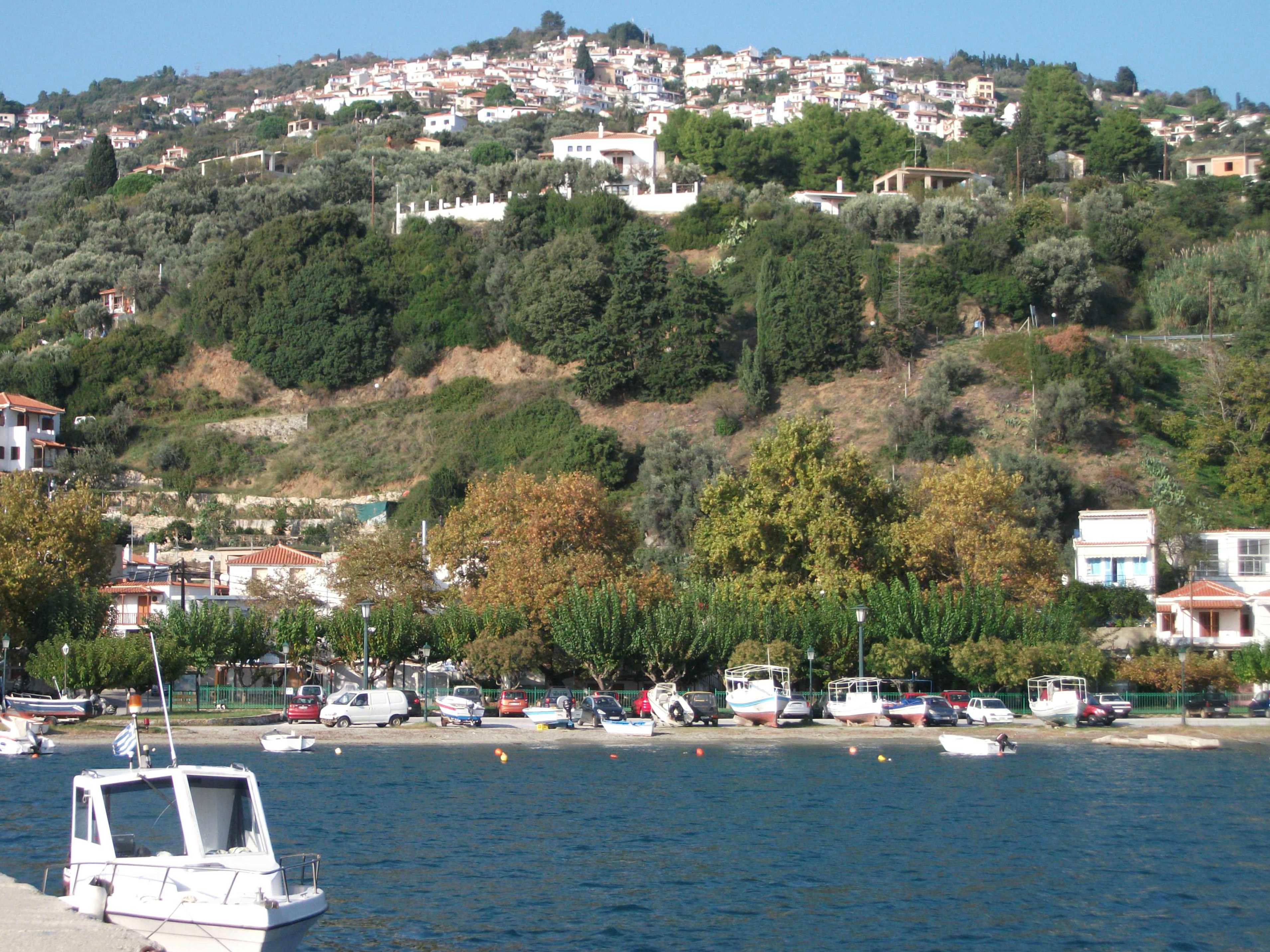
Glossa & Loutraki
Skopelos Town is located in the south east of the island. Many hydrofoils also stop at the island’s second town, Glossa, attractively located on a hillside 25 kilometres away on the north west coast. This a tranquil, sleepy place despite its size, although there are some good quality accommodation options and a choice of tavernas. It’s linked to Skopelos Town by regular buses and is well worth a day visit or an hour or two if passing through on your way to Loutraki, it’s even sleepier little port three km downhill.

Kastani – “Mamma Mia Beach”
The main road between Skopelos Town and Glossa passes most of the main beach resorts on the island. Beaches alternate between sand and pebbles, with the latter more predominant. Panormos is the largest of the resorts with the most places to stay, although Milia and Elios have better beaches. Kastani beach near Milia is now promoted as “Mamma Mia Beach” and is where most of the beach scenes in the movie were filmed.

Stafylos
Closer to Skopelos Town, I enjoyed a half day walk along the paved road south to the village of Stafylos, which has a heavily promoted but rather small and rocky beach that has not deterred development of visitor accommodation. From there, I swung west along the coast to Agnondas and Limnonari, smaller villages with better beaches and a few tavernas and places to stay. They looked like the places to head for if you want peace and tranquillity within easy reach of the island capital. The walk back to Skopelos Town along the main road offered panoramic views overlooking its buildings and wide bay. A very pleasant way to spend a few hours.
I liked Skopelos. It has a relaxed, friendly air where waiters and shopkeepers take time to talk to you and aren’t just rushing to relieve you of your money. It is scenically more attractive and interesting than Skiathos, although its beaches are not of the same quality. If you just want a sunbed next to a bar on a sandy beach, head for Skiathos. If you want to get out and about to explore and experience a slightly more authentic Greek atmosphere, Skopelos is the better choice.
Skyros
Visited in 2019.
Somewhat isolated with few ferry links to other Sporades islands. Noted for wellbeing and lifestyle holidays. Picture postcard main town with expansive beaches nearby.
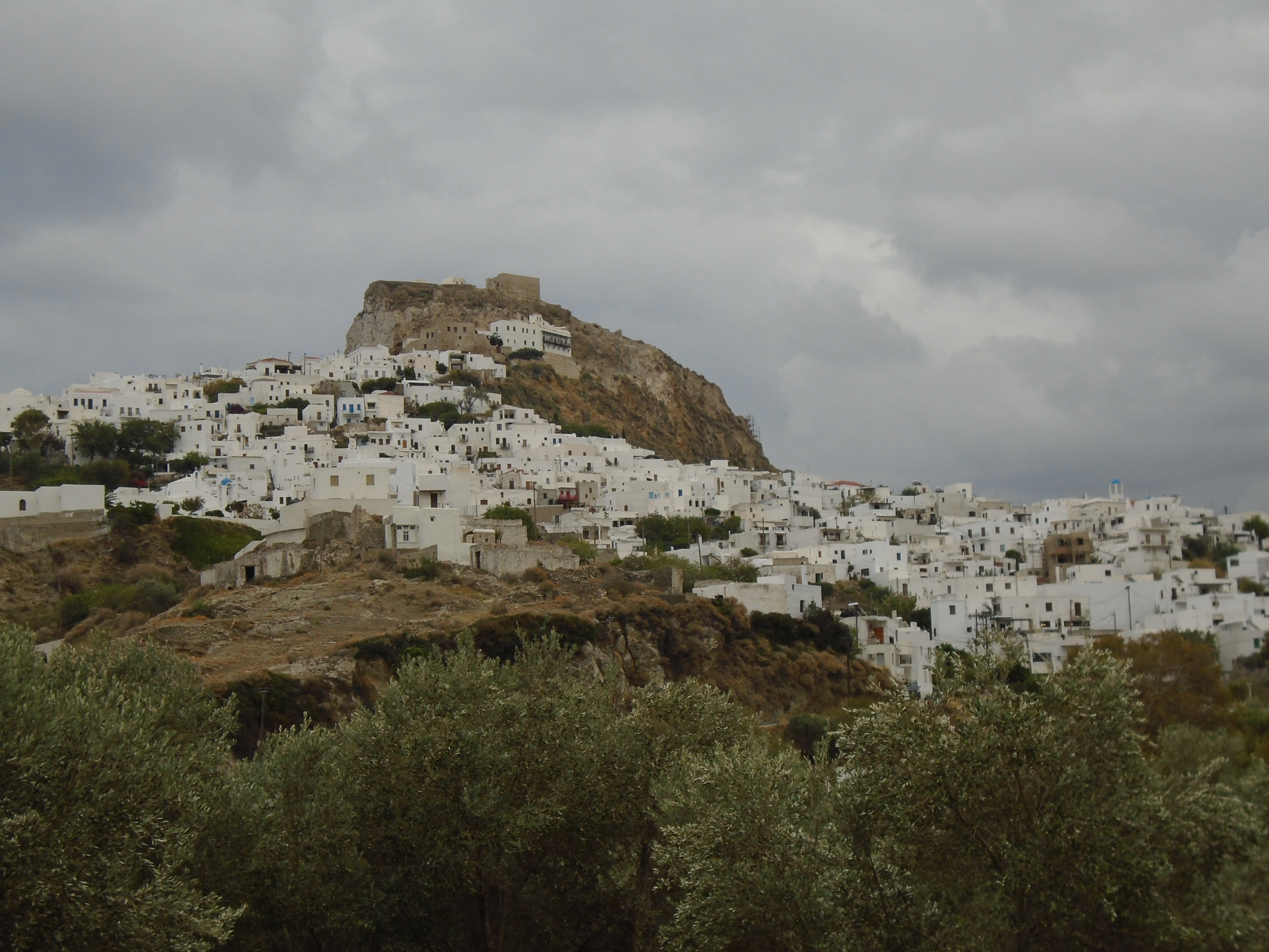
A Cloudy Chora
My first and, to date, only visit to Skyros was a 24 hour diversion. Finding myself with a spare couple of days towards the end of a holiday, I took the daily 0700 flight from Athens to land 25 minutes later on a grey, overcast island. 24 hours later I left a very wet and windy island on the 0800 ferry to Kymi on Evia, from where I took a direct bus that got me back to Athens in around 3 hours.
So, impressions after 24 hours on Skyros? Firstly, it is an island of two halves – a fairly green, well inhabited northern half; and a more barren, almost empty south. Although the north has a good deal of forestry, it is not on same intensive scale as the other Sporades islands. The island airport is in the north and is much larger than I expected, being primarily a military base and a pretty heavily protected one at that.

Chora
A 20 euro taxi ride from the airport brought me to the main square of Skyros Town, the island’s Chora. This is one of the most spectacular Choras in Greece – a wedding cake confection of whitewashed buildings climbing up a peak to a monastery from where there are expansive views. The lanes and alleyways hide a plethora of tavernas, cafes and shops that reward extended exploration. It is the kind of village that offers a good choice of visitor facilities but is still very much a place where locals live and work.
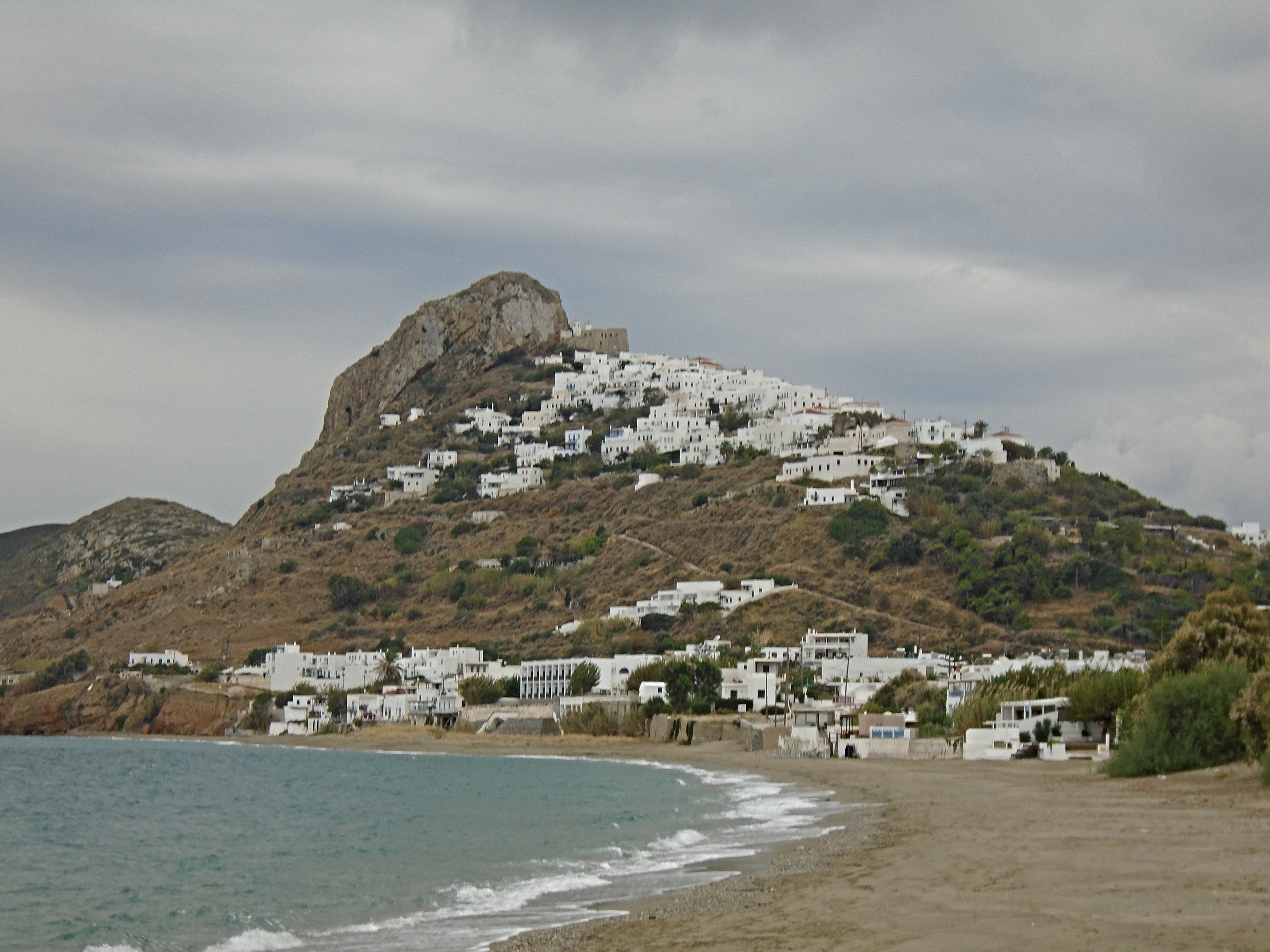
Chora & Magazia
The beach resorts of Magazia and Molos lie far below, but can be reached on foot within about half an hour – downhill anyway. They have the main stock of visitor accommodation and a few tavernas as well as huge, sandy beaches and magnificent views up to the Chora. They are fine as purpose built beach resorts go, but lack the charm and traditional ambiance of the Chora, which might be a better place to stay even if accommodation options there are more limited. There are three or four buses a day between the Chora and the beaches if walking sounds too strenuous.
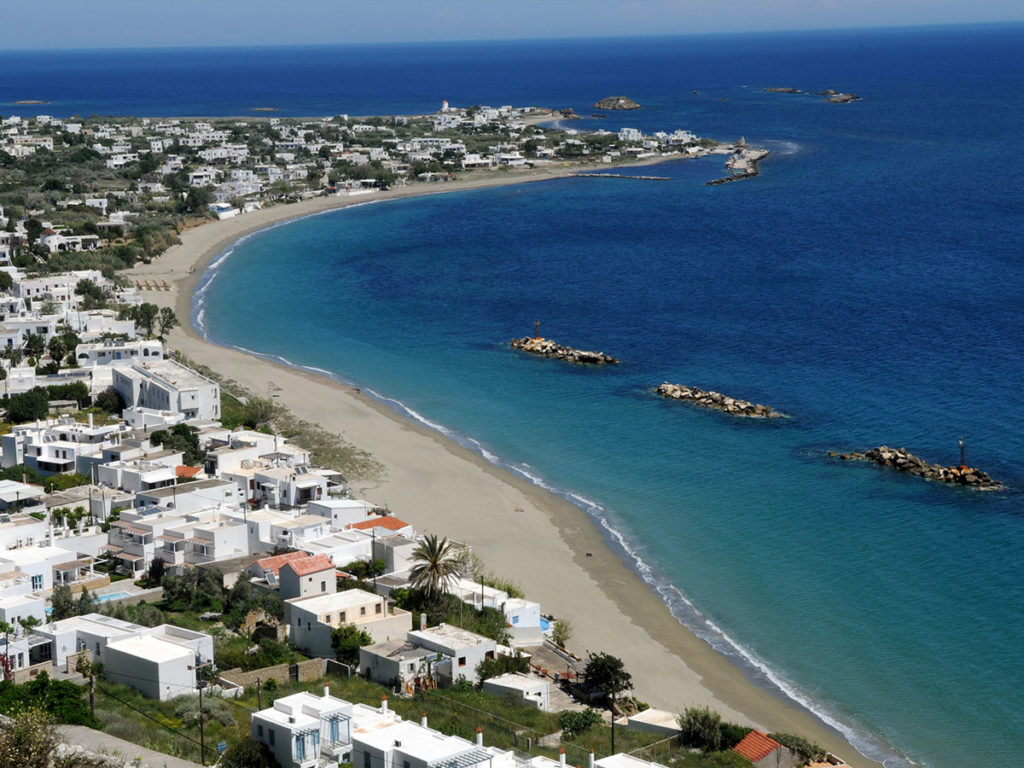
Magazia & Molos
Buses also run from the Chora to Linaria, the island’s port. This is an attractive little village with a few places to stay and half a dozen or so tavernas and cafes. It appeared to be popular with yachties and the harbour front area has lots of information boards on local wildlife, flora and fauna, and hiking trails. Unfortunately, heavy rain deterred me from following any of the latter.
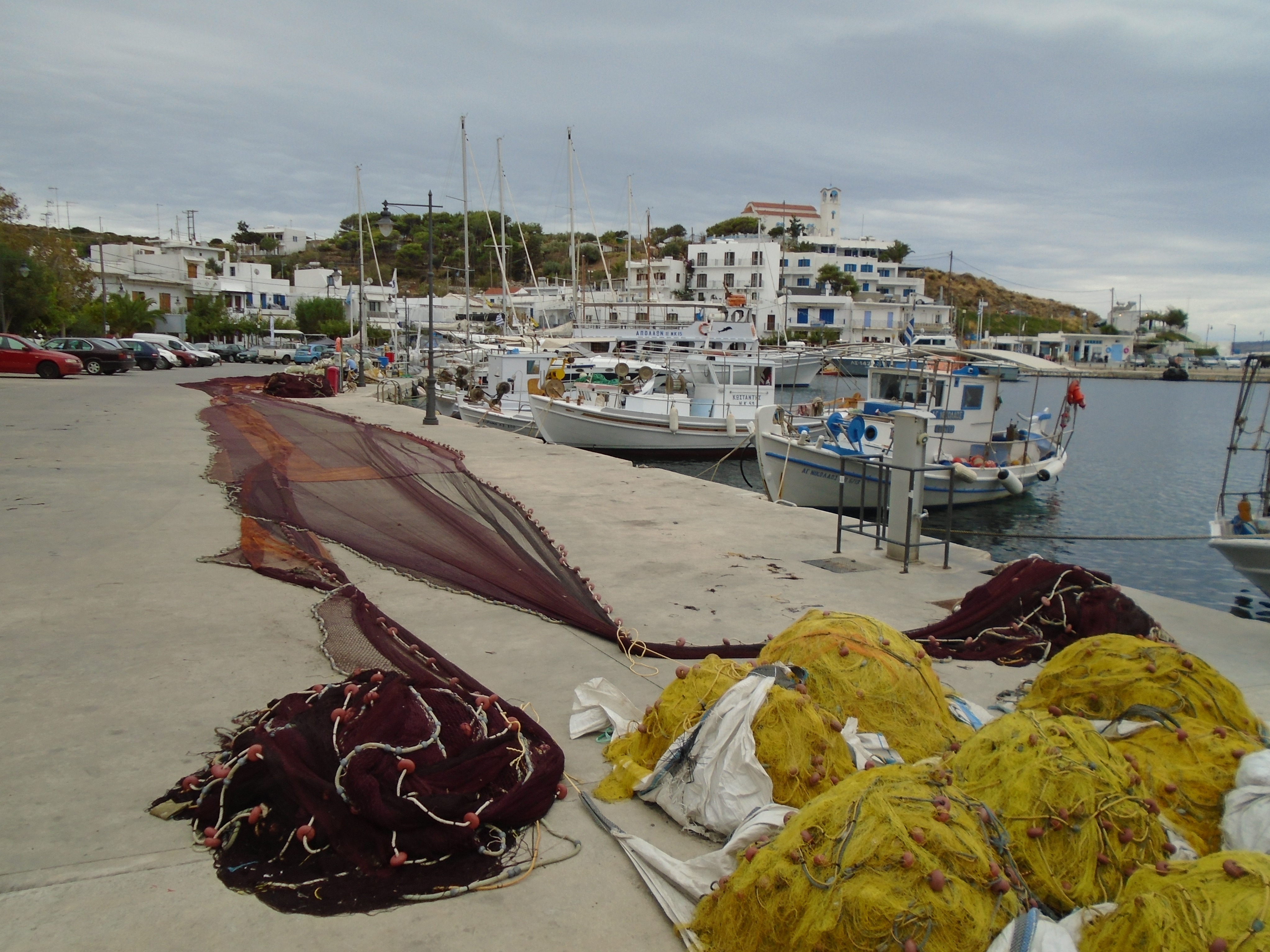
Linaria
Skyros has developed a strong niche for wellbeing and alternative lifestyle holidays. There are a few signs of these here and there, but much that will also appeal to more mainstream visitors. However, a lot of the visitor accommodation was already closed for the season by the first week of October. Nonetheless, Skyros is an island whose attractions and appeal are obvious. I hope to be back for a longer stay sometime soon.
 Skimming Greece